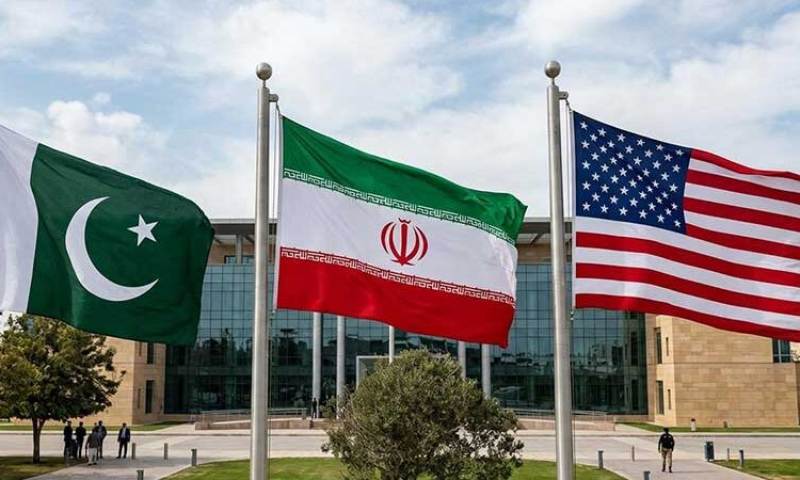
Islamabad, April 8, 2026: Pakistan on Wednesday announced a major diplomatic breakthrough, claiming that the Islamic Republic of Iran and the United States of America, along with their respective allies, had agreed to an immediate ceasefire across multiple fronts, including Lebanon, with effect from Wednesday.
Prime Minister Shehbaz Sharif revealed the development in an early-morning post on X, describing it as a significant step toward de-escalation in the Middle East. He also invited delegations from both countries to Islamabad on April 10 for what he termed the “Islamabad Talks,” aimed at achieving a comprehensive and lasting settlement of disputes.
The prime minister welcomed the reported ceasefire and expressed his “deepest gratitude” to the leadership of both nations, stating that they had demonstrated “remarkable wisdom and understanding” in pursuing peace. He voiced optimism that the upcoming talks in Islamabad would lead to sustainable stability and further positive developments in the coming days.
However, uncertainty remains over the agreement’s status. White House Press Secretary Karoline Leavitt said that while discussions were ongoing, no formal agreement had yet been finalised. “There are discussions about in-person talks, but nothing is final until announced by the President or the White House,” she clarified.
Trump signals conditional pause in hostilities
The reported breakthrough followed an urgent diplomatic push by Islamabad. US President Donald Trump announced early Wednesday that Washington would suspend military strikes against Iran for two weeks, provided Tehran fully reopened the strategically critical Strait of Hormuz.
Trump’s statement came just hours before the expiry of a 48-hour ultimatum he had issued to Iran, demanding a deal and reopening of the vital maritime corridor. A day earlier, he had escalated rhetoric, warning of severe consequences if Tehran failed to comply.
In a post on Truth Social, Trump confirmed that his decision followed direct conversations with Prime Minister Shehbaz Sharif and Pakistan’s Chief of Army Staff, Field Marshal Asim Munir. He described the move as a “double-sided ceasefire,” noting that most military objectives had already been achieved and a long-term peace framework was close to completion.
He further revealed that Washington had received a 10-point proposal from Tehran, which he described as a “workable basis” for negotiations. According to Trump, a two-week pause would allow both sides to finalise a comprehensive agreement aimed at ensuring long-term peace in the Middle East.
Iran responds positively, sets conditions
Iran also signalled conditional willingness to de-escalate. Foreign Minister Abbas Araghchi, speaking on behalf of Iran’s Supreme National Security Council, stated that Tehran would halt its defensive operations if attacks against the country ceased.
He expressed appreciation for Pakistan’s mediation efforts, particularly acknowledging Prime Minister Shehbaz Sharif and Field Marshal Asim Munir for their role in facilitating dialogue.
Araghchi added that Iran would allow safe passage through the Strait of Hormuz for a two-week period, subject to coordination with its armed forces and technical considerations. The Strait, a crucial global energy artery, previously handled around 20 percent of the world’s oil and liquefied natural gas shipments before the conflict escalated.
Iran’s reported 10-point proposal includes key demands such as guarantees of non-aggression, recognition of its nuclear rights, lifting of US and international sanctions, compensation for war damages, withdrawal of US forces from the region, and an end to hostilities across all fronts, including in Lebanon.
Pakistan’s diplomatic push
Pakistan has positioned itself as a key facilitator in efforts to end hostilities that began on February 28, when US and Israeli forces launched strikes inside Iran. Since then, Islamabad has engaged in intensive diplomacy aimed at promoting dialogue between Tehran and Washington.
In his appeal, Prime Minister Shehbaz urged both sides to observe a two-week ceasefire to allow diplomacy to take precedence. He also called on Iran to reopen the Strait of Hormuz as a goodwill gesture during this period.
Following the announcement, Deputy Prime Minister and Foreign Minister Ishaq Dar held a series of rapid consultations with his counterparts from Saudi Arabia, Turkiye, Egypt, and Morocco. According to the Foreign Office, these discussions focused on the evolving regional situation and Pakistan’s ongoing diplomatic efforts to promote peace.
Notably, foreign ministers from Saudi Arabia, Turkiye, and Egypt had recently visited Islamabad for a quadrilateral meeting on de-escalation in the Middle East. Pakistan had also coordinated closely with China, issuing a joint five-point initiative aimed at restoring regional stability.
Background: escalation and negotiation
The ceasefire announcement comes after weeks of escalating tensions and failed diplomatic attempts. Iran had previously rejected US proposals for ending the conflict, insisting on a permanent cessation of hostilities, guarantees against future aggression, and recognition of its sovereignty over the Strait of Hormuz.
Earlier responses from Tehran included both five-point and ten-point frameworks, outlining conditions such as lifting sanctions, ensuring compensation for damages, and securing international guarantees.
Despite earlier rejections and rising tensions—including threats of expanded military action—the latest developments suggest a potential opening for diplomacy, with Pakistan emerging as a central mediator in the process.
While the ceasefire’s final status remains uncertain pending formal confirmation from Washington, the proposed Islamabad Talks on April 10 are now seen as a critical opportunity to transform a temporary pause into a lasting peace agreement.