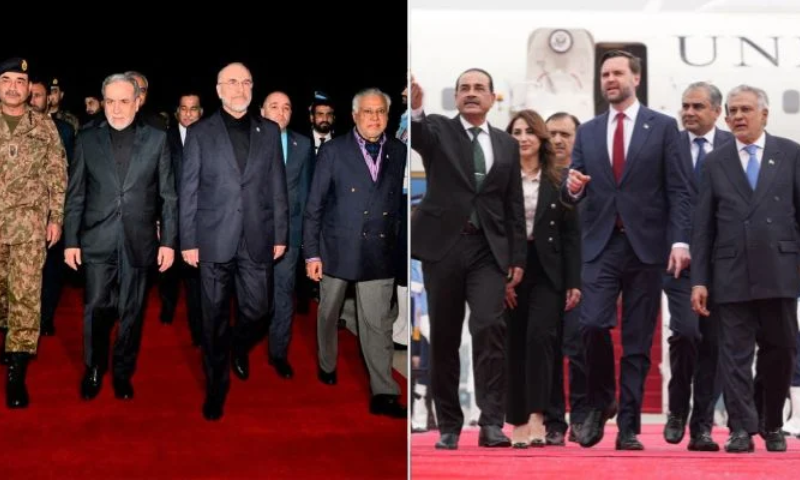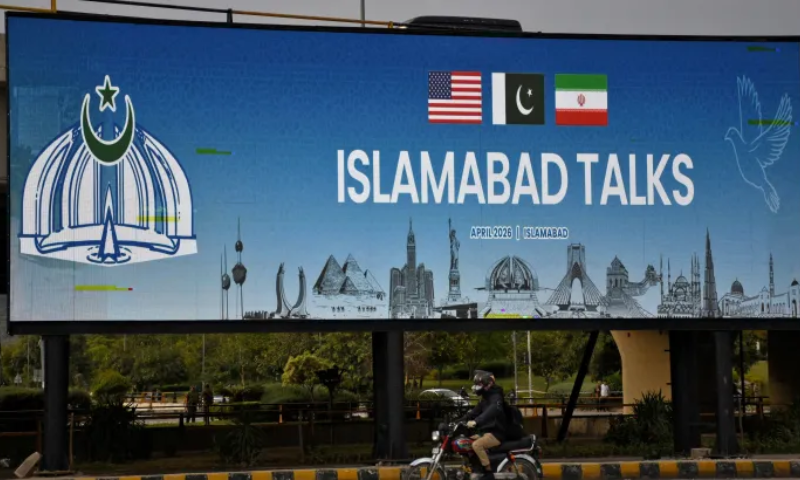
Islamabad, April 11, 2026: Direct negotiations between the United States and Iran have commenced in Islamabad, marking a significant diplomatic breakthrough aimed at easing tensions in the Middle East. State broadcaster PTV News confirmed the development, highlighting Pakistan’s pivotal role in facilitating the high-stakes dialogue.
The U.S. delegation is led by Vice President JD Vance, accompanied by President Donald Trump’s son-in-law Jared Kushner and Middle East envoy Steve Witkoff. The Iranian delegation is headed by Mohammad Bagher Ghalibaf and includes Foreign Minister Abbas Araghchi, along with other senior officials.
According to the Iranian government, the talks have entered the “expert-level stage,” with economic, military, legal, and nuclear committees joining the negotiations. Discussions are being held at the Serena Hotel Islamabad to finalize technical details. Reports indicate that expert teams from both sides have exchanged written proposals following initial in-person sessions.
Ceasefire creates diplomatic opening
The negotiations are taking place during a two-week halt in hostilities in the US-Israeli war against Iran, which began on February 28. The conflict, which reverberated across the Middle East and disrupted global economies, paused after Pakistan brokered a temporary ceasefire on April 8.
In a post on X, Iranian President Masoud Pezeshkian affirmed that Tehran’s delegation remains “fully committed” to safeguarding national interests. He expressed hope for courageous negotiations and reiterated that the government would stand by its people regardless of the outcome.
Shehbaz meets US and Iranian delegations
Prior to the commencement of direct talks, Prime Minister Shehbaz Sharif held separate meetings with the delegations from both countries.
During his meeting with the Iranian delegation, the Prime Minister appreciated Tehran’s participation and reaffirmed Pakistan’s sincere resolve to facilitate dialogue aimed at achieving meaningful results for regional and global peace. The meeting was attended by Deputy Prime Minister and Foreign Minister Ishaq Dar, Chief of Army Staff Field Marshal Asim Munir, and Interior Minister Mohsin Naqvi.
In a separate engagement with the U.S. delegation, Prime Minister Shehbaz expressed optimism that the Islamabad Talks would serve as a stepping stone toward durable peace. He reiterated Pakistan’s commitment to continuing its facilitation efforts for sustainable regional stability.
High-level arrivals in Islamabad
Vice President Vance arrived at Nur Khan Air Base on Saturday morning, where he was received by senior Pakistani officials, including Ishaq Dar and Mohsin Naqvi. Pakistan’s Foreign Office welcomed the U.S. delegation and underscored Washington’s commitment to achieving lasting peace.
The Iranian delegation arrived earlier the same day after a last-minute hurdle linked to Israeli strikes in Lebanon was resolved. Iran had conditioned its participation on a halt to such attacks—an understanding reportedly included in the ceasefire framework.
According to Iran’s Tasnim News Agency, the delegation also includes Supreme National Security Council Secretary Ali Akbar Ahmadian and Central Bank Governor Abdolnaser Hemmati.
Key issues and points of contention
Despite the diplomatic breakthrough, several contentious issues remain. Iran has demanded the release of approximately $7 billion in frozen assets and an extension of the ceasefire to Lebanon. Meanwhile, the United States is expected to push for restrictions on Iran’s nuclear program and limits on uranium enrichment.
Additional flashpoints include sanctions relief, missile capabilities, regional proxy networks, and navigation through the Strait of Hormuz. The negotiations are reportedly based on Iran’s 10-point proposal, accepted by Washington as a general framework.
Ahead of his departure from Washington, Vice President Vance described the talks as potentially “positive,” while cautioning that the United States would not tolerate delaying tactics. President Donald Trump struck a firmer tone, warning that military action could resume if diplomacy fails.
Cautious optimism for breakthrough
Officials and analysts remain cautious about the prospects of an immediate breakthrough, given the complexity and scope of the issues under discussion. However, the talks represent a rare diplomatic opening between Washington and Tehran.
Pakistan, which has played a central role in facilitating the dialogue, has pledged to continue its efforts to ensure success. Prime Minister Shehbaz Sharif described the negotiations as an opportunity to resolve contentious issues through diplomacy, acknowledging both the challenges and the stakes involved.
The Islamabad Talks are widely seen as a critical step toward de-escalation and a potential pathway to long-term peace and stability in the region.