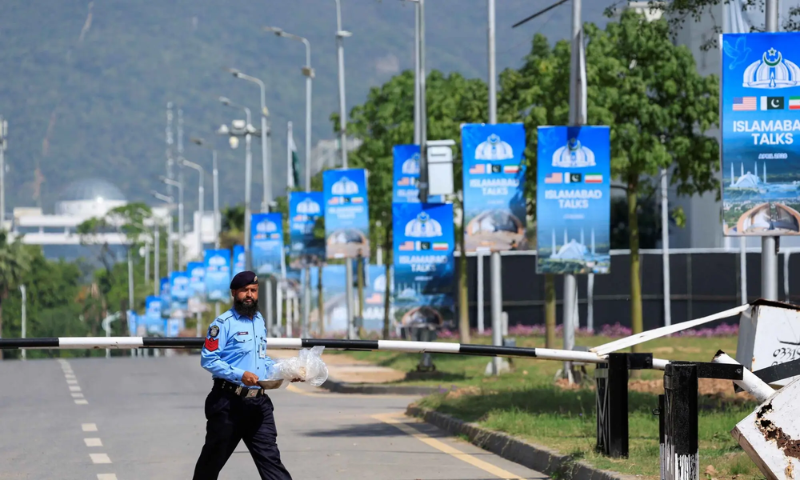
Islamabad, April 21, 2026: Uncertainty persisted on Tuesday over the expected second round of peace talks between the United States and Iran, as Pakistan’s Information Minister Attaullah Tarar said on Tuesday evening that Islamabad was still awaiting a formal response from Tehran regarding its participation.
In a statement, Tarar said Pakistan remained in constant contact with Iranian authorities but had not received confirmation as of late Tuesday evening. He stressed that a decision from Iran before the expiry of the two-week ceasefire—set to end early Wednesday morning Pakistan time—was “critical” to sustaining diplomatic progress.
“Pakistan has made sincere efforts to convince the Iranian leadership to participate in the second round of talks, and these efforts continue,” he said.
Pakistan pushes for dialogue
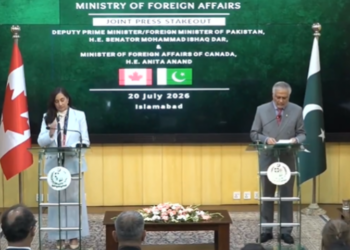
Earlier in the day, Deputy Prime Minister and Foreign Minister Mohammad Ishaq Dar, during a meeting with U.S. Chargé d’Affaires Natalie A. Baker, urged both Washington and Tehran to extend the ceasefire and prioritize dialogue.
According to the Foreign Office, Dar reiterated Pakistan’s consistent position that diplomacy remains the only viable path to resolving regional tensions and ensuring lasting peace. He emphasized the need for immediate engagement between the two sides, warning that the opportunity for de-escalation should not be missed.
The U.S. side acknowledged Pakistan’s efforts, with Baker conveying appreciation for Islamabad’s constructive role in facilitating dialogue and promoting regional stability.
Talks hang in balance
The developments come as Islamabad prepares to host a possible second round of direct negotiations following initial talks held earlier this month. While those discussions did not yield a formal agreement, they avoided a breakdown and helped maintain a fragile ceasefire brokered with Pakistan’s facilitation.
Despite expectations of a high-level U.S. delegation arriving in the capital, Iran has yet to officially confirm its participation. Iranian state media reported that no delegation had departed, while officials in Tehran indicated that any decision would depend on changes in U.S. policy and conduct.
Iranian President Masoud Pezeshkian has criticized what he described as “contradictory signals” from Washington, while Iran’s foreign ministry has accused the U.S. of actions inconsistent with the ceasefire.
Trump signals hardline approach
Meanwhile, U.S. President Donald Trump expressed confidence in securing a favorable agreement with Iran but indicated he was not inclined to extend the ceasefire.
“I don’t want to do that. We don’t have that much time,” Trump said in an interview, adding that the United States was in a “very strong negotiating position.”
He also warned that military action could resume if no agreement is reached, stating that U.S. forces were prepared for escalation if necessary. Trump further accused Iran of violating the ceasefire on multiple occasions.
Rising tensions at sea
Regional tensions have intensified, particularly around the Strait of Hormuz, a critical route for global oil shipments. Disputes over maritime security, including vessel seizures and naval blockades, have added to the already volatile situation.
The United States has continued enforcement measures targeting Iranian-linked shipping, while Iran has responded with countermeasures and strong warnings, raising concerns about potential escalation in key waterways.
The standoff carries significant global implications, particularly for energy markets. Any disruption in the Strait of Hormuz could affect a substantial share of global oil supply, increasing the risk of economic instability.
At the core of the dispute remain disagreements over Iran’s nuclear programme, U.S. demands for long-term restrictions, and Tehran’s push for sanctions relief and strategic autonomy.
With the ceasefire deadline approaching, officials in Islamabad describe the situation as highly fluid, with last-minute diplomatic efforts underway to secure Iran’s participation.
Pakistan continues to position itself as a key mediator, urging both sides to return to the negotiating table. The coming hours are expected to be decisive in determining whether dialogue prevails or tensions escalate further in the region.