Islamabad, April 30,2026: The National Assembly Standing Committee on National Food Security and Research on Thursday expressed serious concern over heavy financial losses suffered by potato farmers and criticised delays in implementing measures aimed at improving agricultural exports.
The committee’s 26th meeting was held at the National Agricultural Research Centre (NARC) in Chak Shehzad, Islamabad, under the chairmanship of Syed Tariq Hussain.
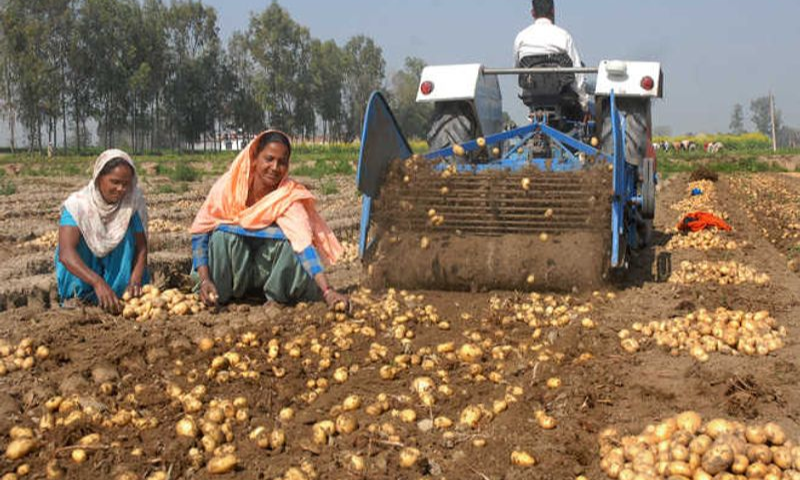
Discussing the potato crop crisis, the committee observed that despite earlier directives, the Ministry of National Food Security and Research had failed to take timely measures to protect farmers, forcing many to sell their produce below production cost and suffer major losses.
The panel warned that continued financial setbacks could discourage potato cultivation in the future, posing risks to agricultural sustainability and food security in Pakistan.
The committee noted that it had directed the ministry three months ago to explore new export markets, identify alternative trade routes, facilitate multiple-entry visas for exporters, and improve logistics and transportation arrangements, but little progress had been made.
In response, the committee directed the ministry to convene an urgent meeting at the Ministry of Foreign Affairs on Monday involving stakeholders from the ministries of commerce, foreign affairs, the Federal Board of Revenue (FBR), and customs authorities to formulate a coordinated export strategy for potatoes as well as upcoming crops including mangoes, maize and rice.
The committee also expressed concern over the frequent transfer of secretaries in the Ministry of National Food Security and Research, stressing the need for continuity in leadership and administrative stability.
Officials from the Foreign Office assured the committee of full support in facilitating engagement with importing countries but stressed the importance of sustained inter-ministerial coordination for tangible results.
The committee sought a detailed briefing in its next meeting regarding mango export agreements, new trade opportunities, visa facilitation, transport arrangements and alternate trade routes. Representatives from the National Logistics Corporation (NLC) and the Ministry of Communications were also directed to attend the next session.
Meanwhile, the Ministry of Commerce informed the committee that the ban on mango exports had been extended until May 30, 2026, instead of the earlier deadline of May 10.
The committee expressed dissatisfaction with the extension, saying it could negatively affect early mango varieties such as Dussehri and Sonaro, which are ready for harvest and export during this period, potentially causing losses to growers and exporters.
The vice president of the Multan Mango Growers Association informed the committee that although Pakistan produces between 1.6 million and 2 million tonnes of mangoes annually, only around five percent is exported due to limited value addition.
He also raised concerns about the growing presence of synthetic mango-flavoured beverages in the market, alleging that some products may contain harmful ingredients posing health risks, particularly for children.
Taking serious notice of the issue, the committee directed the ministry to obtain reports from the World Health Organization, the Ministry of Health and other relevant institutions within five days.
The committee further directed the Ministry of Science and Technology and the Pakistan Standards and Quality Control Authority to participate in the next meeting for technical and regulatory input.
Discussing rice exports, the committee acknowledged growth in the sector despite regional challenges but noted increasing competition after the resumption of Indian rice exports in international markets.
The panel urged exporters to adopt a more strategic approach to improve competitiveness, reduce production and logistics costs, strengthen quality standards and expand branding and market access in comparison with regional competitors, particularly India.