Washington/Tehran, May 8, 2026: The United States said Friday it was awaiting Iran’s response to a proposal aimed at ending the ongoing conflict, even as fresh military confrontations in the Gulf heightened fears of further escalation in the region.
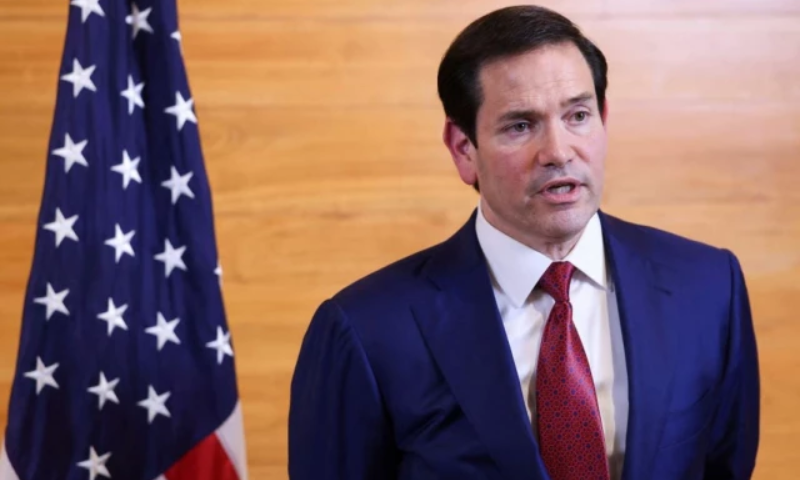
Speaking to reporters in Rome, U.S. Secretary of State Marco Rubio said Washington hoped Tehran’s response would pave the way for meaningful negotiations.
“We’ll see what the response entails. The hope is it’s something that can put us into a serious process of negotiation,” Rubio said.
The diplomatic push came amid renewed violence in and around the Strait of Hormuz, one of the world’s most strategically vital shipping lanes. The United Arab Emirates said its air defence systems intercepted two ballistic missiles and three drones launched from Iran, according to the UAE Defence Ministry.
Officials said the latest attacks caused three moderate injuries, adding that the total toll since the beginning of what the ministry described as “Iranian attacks” on the UAE had risen to 230 injuries and 10 civilian deaths involving multiple nationalities.
The ministry stated that UAE air defences had intercepted 551 ballistic missiles, 29 cruise missiles and 2,263 drones since the outbreak of hostilities. Authorities said the country remained fully prepared to confront any threat to national security.
Explosions were also reportedly heard off the coast of Abu Dhabi, where U.S. military assets are stationed, while the UAE maintained heightened security alerts. Meanwhile, Iran announced it had seized the oil tanker Ocean Koi in the Sea of Oman, accusing the vessel of attempting to disrupt Iranian oil exports.
Iranian state media said the tanker, previously sanctioned by the U.S. Treasury Department, was redirected to Iranian shores during a naval operation conducted by Iranian forces.
According to Washington, the Barbados-flagged tanker had been part of Iran’s alleged “shadow fleet” used to transport oil while evading sanctions. Iranian television broadcast footage showing armed forces boarding the vessel at night before escorting it to Iranian waters.
The Iranian military said the tanker and its cargo had been handed over to judicial authorities. Iranian Foreign Minister Abbas Araghchi accused Washington of choosing military escalation whenever diplomacy appeared possible.
“Every time a diplomatic solution is on the table, the U.S. opts for a reckless military adventure,” Araghchi wrote on X. He added that Iran would never “bow to pressure.”
The latest tensions follow a month-old ceasefire that took effect on April 7 after weeks of conflict triggered by joint U.S.-Israeli strikes on Iran beginning February 28.
U.S. President Donald Trump said three U.S. Navy destroyers passing through the Strait of Hormuz had come under attack but escaped without damage. “Three World Class American Destroyers just transited, very successfully, out of the Strait of Hormuz, under fire,” Trump wrote on Truth Social.
He later sought to downplay the confrontation, telling reporters: “They trifled with us today. We blew them away.”
Iran’s military, however, accused the United States of violating the ceasefire by targeting Iranian ships and civilian areas near Qeshm Island and coastal regions close to Chabahar Port. Iran claimed it retaliated by targeting U.S. naval assets east of the strait, although the United States Central Command denied any American vessels were hit.
The renewed clashes rattled global energy markets, with Brent crude reportedly surging above $100 per barrel in Asian trading amid fears of disruptions to oil shipments through the Strait of Hormuz. Analysts said financial markets still appeared to believe the conflict would remain limited in duration despite continued hostilities.
The crisis has also placed pressure on President Trump domestically, with U.S. gasoline prices reportedly climbing more than 40 percent since late February due to disruptions in Gulf oil supplies.
In another significant development, Iran reportedly established a new authority to regulate passage through the Strait of Hormuz and collect tolls from vessels transiting the waterway.
According to maritime publication Lloyd’s List, ships would now require transit authorization and must submit ownership, insurance and routing information before passage.
The move comes as Tehran maintains tight control over the strait amid the ongoing crisis.
China confirmed that a tanker carrying Chinese crew members had been attacked near the Strait of Hormuz earlier this week, although no casualties were reported.
Meanwhile, South Korea launched an investigation into a fire aboard the Korean-operated vessel HMM Namu near UAE waters after uncertainty over whether the incident resulted from an attack or technical failure.
At the same time, Israeli authorities reportedly arrested three soldiers and one civilian accused of spying for Iran by photographing sensitive military installations.
Despite the renewed hostilities, President Trump insisted diplomatic efforts with Tehran were continuing and expressed hope that an agreement could still be reached.
“It might not happen, but it could happen any day,” Trump said. “I believe they want to deal more than I do.”