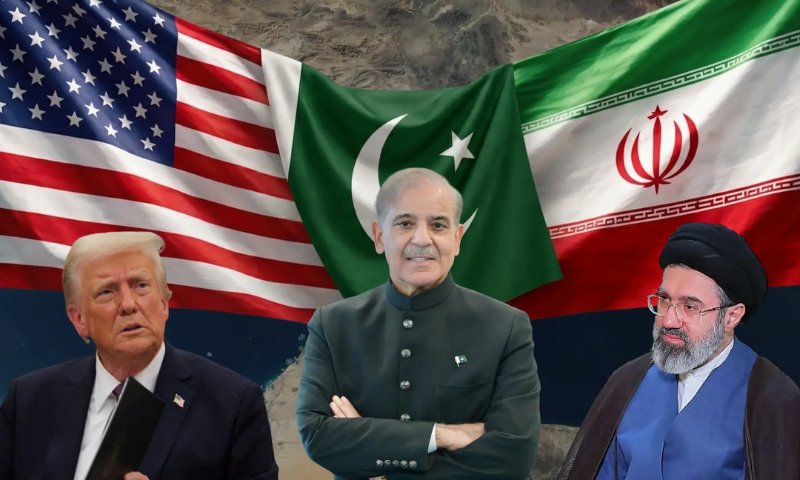
Islamabad/ Tehran/ Washington, May 18, 2026: Pakistan has conveyed a revised proposal from Iran to the United States in an effort to revive stalled negotiations aimed at ending the ongoing Middle East conflict, according to diplomatic sources.
A Pakistani source familiar with the mediation efforts told Reuters that Islamabad had shared Tehran’s updated position with Washington amid growing concerns over the fragile ceasefire and escalating regional tensions.
“We don’t have much time,” the source said, adding that both sides continued to shift their demands during negotiations.
Iranian Foreign Ministry spokesperson Esmaeil Baghaei confirmed that Tehran’s views had been communicated to the American side through Pakistan’s mediation channel.
The diplomatic push comes after US President Donald Trump recently described the ceasefire with Iran — reached in early April through Pakistani mediation — as being “on life support,” signaling deep divisions between the two sides.
Key issues blocking negotiations
Major disagreements reportedly continue over Iran’s nuclear programme, regional security arrangements, and control of the strategically vital Strait of Hormuz, through which nearly one-fifth of global oil and liquefied natural gas supplies pass.
Iran has demanded a permanent end to hostilities across the region, including in Lebanon, where Israel continues military operations against the Iran-backed Hezbollah.
Tehran has also insisted that discussions regarding its nuclear programme cannot proceed until hostilities fully cease. Additional Iranian demands reportedly include compensation for war damages, lifting of the US naval blockade, guarantees against future attacks, and restoration of Iranian oil exports.
Speaking at a televised press conference, Baghaei said Iran remained prepared for all scenarios and warned against further escalation.
Iran establishes new Hormuz authority
In a significant development, Iran’s Supreme National Security Council announced the formation of a new body called the “Persian Gulf Strait Authority” to oversee operations and developments related to the Strait of Hormuz.
The council stated that the authority would provide real-time updates on maritime activity in the strategic waterway, underscoring the increasing importance of the strait amid ongoing tensions.
Senior Iranian officials also issued strong warnings regarding the continued US naval presence in the region.
Mohsen Rezaei warned that the Gulf of Oman could become a “graveyard” for foreign vessels if tensions escalate further.
He said Iran viewed the US naval blockade as an act of war and reiterated that Tehran would not allow military buildups aimed at destabilizing regional security.
Regional reactions intensify
Regional tensions further escalated after drone attacks targeted infrastructure in Gulf states.
Saudi Arabia announced that its air defence systems intercepted and destroyed three drones entering its airspace from Iraqi territory. Kuwait and Qatar strongly condemned the attacks, expressing solidarity with Riyadh and reaffirming support for Saudi security measures.
Meanwhile, Oman and the United Nations condemned the drone strike on the Barakah Nuclear Energy Plant in the United Arab Emirates.
UN Secretary-General Antonio Guterres described attacks near nuclear facilities as “totally unacceptable” and warned against further escalation in the Middle East.
Israel and US prepare for possible escalation
Israeli media reports suggested that the Israeli military has been placed on high alert amid discussions with Washington over possible renewed strikes on Iran.
According to reports, a recent phone call between Trump and Israeli Prime Minister Benjamin Netanyahu focused on the prospect of renewed military operations.
At the same time, media reports indicated that US cargo aircraft carrying military supplies had recently landed in Tel Aviv as preparations intensified for potential future operations.
Separate reports by international media outlets also claimed that Israel had established covert logistical sites in western Iraq to support operations against Iran, though Iraqi authorities denied the allegations.
Iraq, meanwhile, reiterated that it would not allow its territory to be used as a launchpad for attacks against neighbouring countries.
Oil prices surge amid conflict fears
Global oil prices climbed sharply on Monday as fears of a broader regional conflict intensified.
Brent crude rose above $111 per barrel while US West Texas Intermediate crude crossed $107 per barrel, marking their highest levels in nearly two weeks.
Analysts warned that prolonged instability around the Strait of Hormuz could have lasting impacts on global energy markets, inflation, and economic growth worldwide.
The conflict has continued to fuel uncertainty despite a ceasefire brokered earlier this year through Pakistan’s mediation efforts, with diplomatic negotiations yet to produce a lasting settlement.