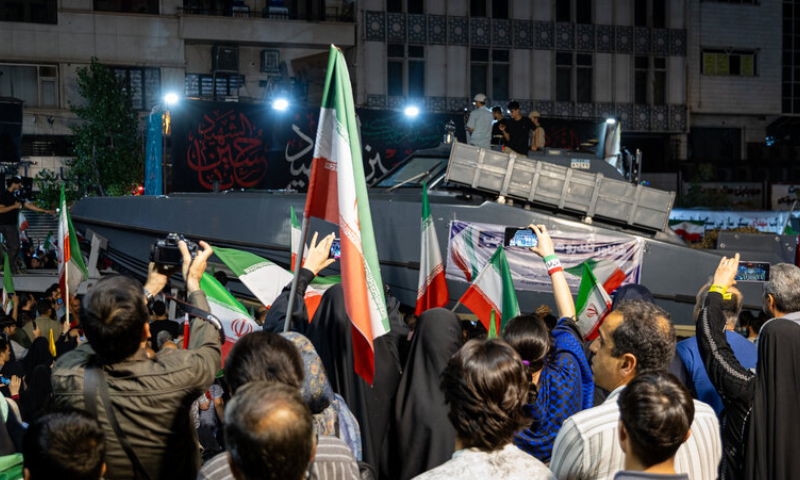
Tehran/Washington, May 31,2026: Iran’s top political leadership and military officials have reiterated firm conditions for any agreement with the United States, even as Washington intensifies efforts to revise a draft nuclear deal aimed at ending months of escalating tensions in the Middle East.
Iran’s Parliament Speaker and chief negotiator Mohammad Bagher Ghalibaf said Tehran would not accept any agreement with the United States unless it guarantees what he described as “the rights of the Iranian people.”
“There is no trust in the enemy’s words and promises,” Ghalibaf said during a virtual parliamentary session reported by state broadcaster IRIB. He added that Iran’s position would be based solely on “tangible results before commitments in return.”
Separately, a senior commander of the Islamic Revolutionary Guard Corps (IRGC) political wing, Yadollah Javani, said Iran’s adversaries had miscalculated its military and strategic strength, arguing that attempts to impose war had failed to achieve their objectives.
He said the United States now faces “decline and failure,” and claimed Washington must either accept Iran’s conditions or continue confrontation, according to remarks carried by the Islamic Republic News Agency.
On the US side, President Donald Trump said Iran had provided assurances it would not pursue nuclear weapons, while acknowledging that negotiations remain fluid and subject to revision.
Trump said he had received guarantees from Tehran but also indicated he was reviewing a revised proposal sent back for tougher terms, according to US media reports. He emphasized that any agreement must ensure Iran “can never possess a nuclear weapon,” while also linking the broader deal to reopening key maritime routes such as the Strait of Hormuz.
However, Iranian officials have reportedly disputed the completeness of the draft agreement, saying no final text has been approved and key issues remain unresolved.
Iranian parliamentary foreign policy chief Ebrahim Rezaei said Tehran prefers diplomacy but will not compromise on its red lines, while arguing that Washington is negotiating from a weaker position.
He also warned that restrictions on maritime routes could end either through negotiations or military developments, reflecting continued hardline rhetoric from Tehran.
Meanwhile, reports from IRGC naval statements indicated increased control and coordination over shipping in the Strait of Hormuz, with claims that vessels are transiting under Iranian security approval.
Iranian military officials also issued strong warnings against potential aggression. Deputy Chief of the Iranian Army for Coordination Habibollah Sayyari said Iran’s armed forces possess advanced capabilities and would respond decisively to any hostile action.
“Any aggression will be met with a stronger response than ever before,” he said during a visit to a naval university, according to IRNA reports.
US and Iranian officials remain engaged in backchannel discussions over a revised framework reportedly amended by the White House. The proposal is said to focus on nuclear restrictions, enriched uranium management, and sanctions relief, along with contentious provisions related to maritime security.
While US officials maintain that progress is possible, they have also signaled that negotiations could take longer if Iran does not accept revised terms. Iranian state media, meanwhile, has suggested a deal is close but not yet finalized, with major gaps still remaining between both sides.
Despite diplomatic momentum, both Washington and Tehran continue to present sharply divergent narratives, underscoring persistent uncertainty over whether a final agreement can be reached in the near term.