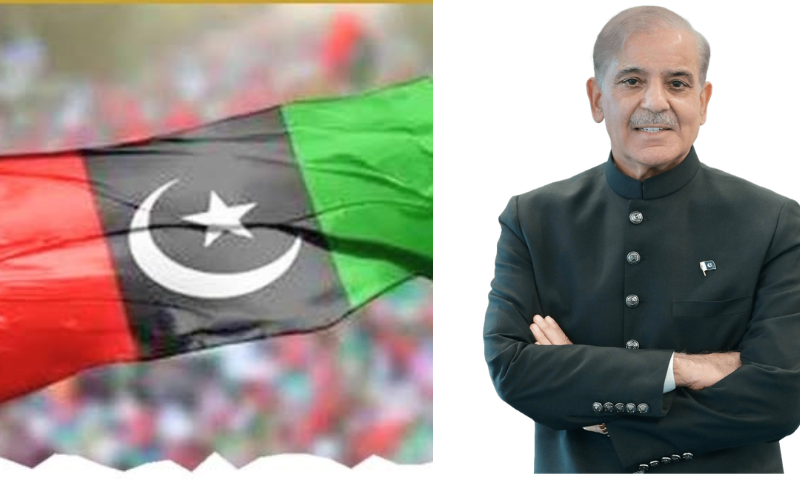
Islamabad/Gilgit, June 8, 2026: Prime Minister Shehbaz Sharif on Monday congratulated the people of Gilgit-Baltistan on the peaceful conduct of the region’s general elections and felicitated the Pakistan Peoples Party (PPP) for emerging as the largest political party based on unofficial results.
In a statement, the prime minister said the PPP deserved congratulations for securing the highest number of seats in the elections. He also extended his felicitations to President Asif Ali Zardari and PPP Chairman Bilawal Bhutto Zardari on the party’s performance.
His remarks came as the Bilawal Bhutto Zardari-led PPP emerged as the leading political force in the Gilgit-Baltistan elections, securing the highest number of seats according to unofficial and unconfirmed results received from 21 of the region’s 24 constituencies.
According to the results available so far, the PPP won nine seats, followed by independent candidates with seven seats. The Pakistan Muslim League-Nawaz (PML-N) secured four seats, while the Majlis Wahdat-e-Muslimeen (MWM) won one seat.
Prime Minister Shehbaz also congratulated successful PML-N candidates and praised the party’s campaign team for its dedication and hard work throughout the election process.
He described peaceful and transparent elections, along with active political participation, as a reflection of the strength of democracy. The premier also commended the Election Commission for conducting what he termed a transparent and impartial electoral process.
The prime minister further lauded the police and other law enforcement agencies for maintaining peace and security during the elections, saying their efforts played a vital role in the successful conduct of the polls.
PPP leads electoral race
According to unofficial results, PPP secured victories in constituencies GBA-1, GBA-4, GBA-5, GBA-7, GBA-9, GBA-10, GBA-11, GBA-12 and GBA-19.
The PML-N won constituencies GBA-18, GBA-20 and GBA-22, while MWM secured victory in GBA-8.
Independent candidates emerged victorious in GBA-3, GBA-6, GBA-16, GBA-21, GBA-23 and GBA-24, with final results from several constituencies still awaited.
The overall electoral picture indicates that PPP has emerged as the largest party in the Gilgit-Baltistan Assembly, though the final composition of the house will become clear after official results are announced.
Parties raise concerns over election process
Despite the ongoing vote count, several political parties voiced concerns regarding the transparency of the electoral process.
PPP Central Secretary General Nayar Bukhari alleged that attempts were being made to alter election outcomes and claimed that results from some constituencies had been delayed despite his party’s victories. He warned of protests if what he described as efforts to undermine the public mandate continued.
PPP leader Qamar Zaman Kaira also stressed the importance of timely issuance of Form-45s and urged party workers to remain vigilant while maintaining peace.
Pakistan Tehreek-e-Insaf (PTI) Chairman Barrister Gohar Ali Khan questioned the conduct of the elections, alleging restrictions on his party’s campaign activities and expressing concerns over the non-issuance of Form-45s to candidates.
He maintained that all political parties should be allowed to campaign freely and emphasized that whichever party receives the public mandate should have the right to form the government.
Separately, Jamiat Ulema-e-Islam-Fazl (JUI-F) leader Abdul Ghafoor Haideri expressed reservations over delays in announcing results, saying they had raised doubts about the credibility of the electoral process. He called for complete transparency and warned against any attempt to alter the public mandate.
Broad political contest
The elections witnessed participation from a wide range of political parties and independent candidates. PPP fielded the highest number of candidates, with 23 contestants, followed by PML-N with 22 candidates and 19 PTI-backed independent candidates.
The Istehkam-e-Pakistan Party (IPP) fielded 15 candidates, Pakistan Nazriyati Party (PNP) 11, while JUI-F and Islami Tehreek Pakistan (ITP) each fielded nine candidates. MWM nominated seven candidates, while Jamaat-e-Islami (JI) and Muttahida Qaumi Movement-Pakistan (MQM-P) fielded six candidates each.