Washington/Tehran, June 8, 2026: US President Donald Trump said on Monday that Israel and Iran were both seeking an immediate ceasefire, expressing optimism that ongoing negotiations could lead to a broader peace agreement despite renewed exchanges of fire between the two regional rivals.
In a post on Truth Social, Trump stated that “both sides, Israel and Iran, are looking to do an immediate ceasefire,” adding that final negotiations on peace were progressing and could succeed if not derailed by what he described as “ignorance or stupidity.”
His remarks came as tensions escalated sharply following the first direct exchange of fire between Israel and Iran since a fragile ceasefire brokered in April.
Iranian President Masoud Pezeshkian stressed that Tehran remained committed to diplomacy despite the latest military confrontation.
“Diplomacy and defence are the two wings of national power; we have neither left the battlefield nor the negotiating table,” Pezeshkian said in a statement posted on X, adding that Iran would not retreat in the face of threats.
Iran’s military command later announced the suspension of offensive operations against Israel, saying Tehran had delivered what it called a “painful response” and was halting military action for the time being. However, it warned that any further aggression, particularly in southern Lebanon, would trigger a much stronger response.
The Khatam al-Anbiya Central Headquarters stated that while operations had been suspended, continued hostilities would be met with “far harsher and more devastating” actions.
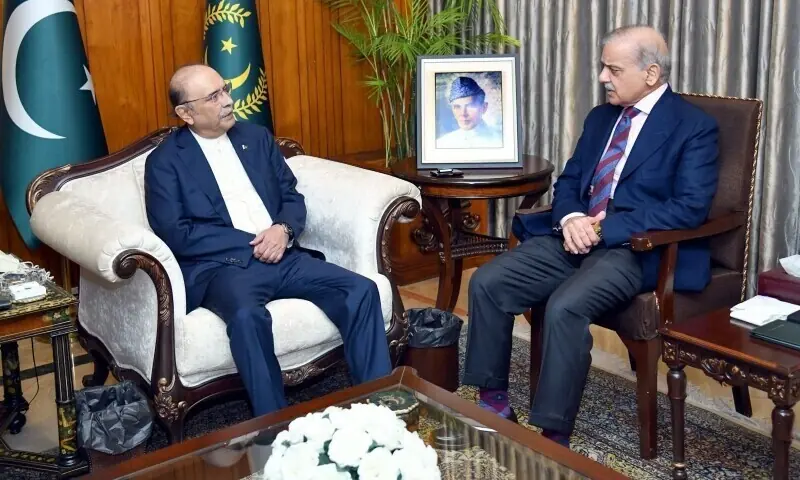
Prime Minister Shehbaz Sharif urged all parties to exercise restraint and return to diplomacy, warning that renewed violence could have serious regional and global consequences.
In a statement on X, the prime minister described the latest escalation as a stark reminder of the fragility of the existing ceasefire and the dangers associated with renewed conflict.
He said Pakistan, together with its regional partners, was working diligently to support diplomatic efforts aimed at achieving a peaceful resolution to the crisis.
“We sincerely urge all sides to exercise restraint and give peace a little more chance,” the premier said, emphasizing that diplomacy offered a far better path than continued violence and destruction.
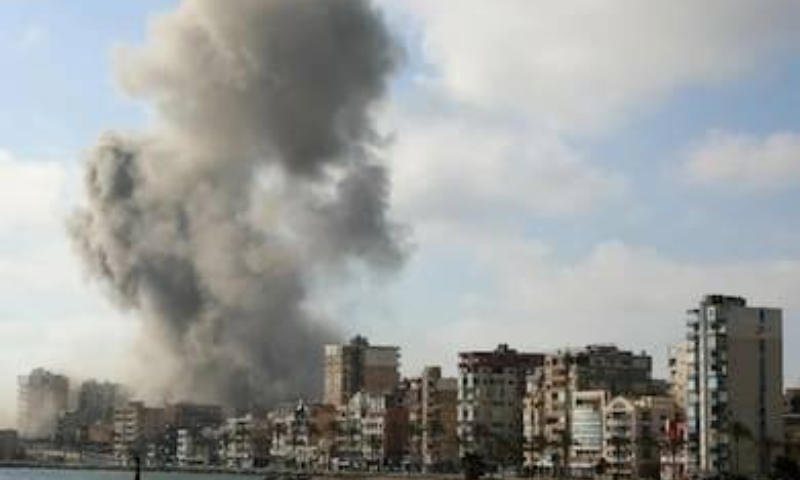
The latest escalation began after Israeli airstrikes targeted Beirut’s southern suburbs, an area Israel claimed housed Hezbollah command and planning facilities. The attack reportedly killed two people and injured at least 11 others.
Iran responded by launching multiple missile barrages toward northern Israel, marking the first such attack since the April ceasefire. Air raid sirens sounded across central and southern Israel, including parts of occupied East Jerusalem and the West Bank, as Israeli air defence systems intercepted incoming missiles.
Israel subsequently launched airstrikes against military targets in western and central Iran. Explosions were reported in Tehran, Isfahan, Tabriz and Karaj, while Iranian authorities confirmed damage to the Karun Mahshahr Petrochemical Company in Khuzestan province following an Israeli strike.
Iranian officials reported no casualties from the attack but warned that targeting civilian infrastructure and energy facilities represented a dangerous escalation.
The Islamic Revolutionary Guard Corps (IRGC) accused Israel of initiating a “dangerous game” by attacking civilian and industrial sites and claimed responsibility for retaliatory missile strikes on Haifa.
Iran’s Supreme Leader Mojtaba Khamenei issued a strongly worded warning amid the escalating confrontation, declaring that the “shaky Zionist regime has few days left.”
The statement came as both countries exchanged threats and military strikes, raising fears of a broader regional conflict involving Lebanon, Yemen and other actors aligned with Tehran.
Israeli military officials indicated that the confrontation could continue for several more days.
According to Israeli media reports, the military has begun preparations for a wider mobilization of reserve forces, while civil defence authorities imposed new restrictions on public gatherings and movement across the country.
Israeli Prime Minister Benjamin Netanyahu was expected to convene a meeting of the Security Cabinet to assess the evolving situation and determine the government’s next course of action.
Israel also temporarily closed its airspace after intercepting a missile launched from Yemen, while the Israeli military reported detecting additional missile launches from Iran throughout the day.
Iranian Foreign Ministry spokesman Esmaeil Baghaei accused the United States of bearing responsibility for Israeli actions, arguing that Washington, as a guarantor of the April ceasefire, should be held accountable for violations of regional peace and security.
He claimed Israeli actions were intended to sabotage diplomatic efforts and warned that the ongoing violence risked plunging the region into a wider conflict.
Baghaei also confirmed that indirect exchanges between Tehran and Washington were continuing, although he described the atmosphere as one of “extreme suspicion.”
European Union foreign policy chief Kaja Kallas called for an immediate cessation of hostilities and urged all parties to return to negotiations.
“The region does not need escalation,” she said, stressing that diplomacy remained the only viable path toward lasting stability.
Kallas emphasized the importance of preserving freedom of navigation, reopening regional trade routes and using any ceasefire as an opportunity to address broader issues, including nuclear concerns and regional security arrangements.
Meanwhile, Yemen’s Houthi movement announced a “complete and total ban” on Israeli maritime navigation in the Red Sea and claimed responsibility for missile strikes targeting Israeli positions.
The group said its actions were part of a broader response to Israeli military operations in Iran, Lebanon, Palestine, Iraq and Yemen, warning that further escalation would be met with intensified military operations.
Despite Trump’s assertion that both sides are seeking an immediate ceasefire and Iran’s announcement that it has halted offensive operations, the exchange of missile and air strikes throughout Monday underscored the fragility of the situation.
Diplomatic efforts involving regional and international actors continue behind the scenes, but with both sides maintaining military readiness and exchanging threats, prospects for a durable peace agreement remain uncertain.
The coming days are expected to be critical in determining whether negotiations can restore calm or whether the Middle East faces another prolonged and potentially wider conflict.