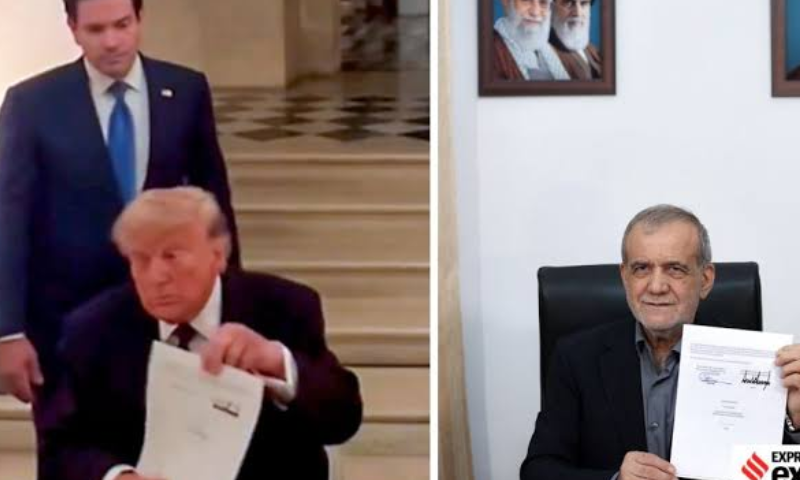
Washington/Tehran/Beijing, June 25, 2026: International reactions continued to pour in on Wednesday as the United States and Iran moved forward with negotiations under the Islamabad Memorandum of Understanding (MoU), with key stakeholders expressing support, concerns, and differing interpretations of the landmark agreement aimed at ending months of conflict.
US President Donald Trump said Iran had assured Washington that no tolls would be imposed on commercial vessels transiting the Strait of Hormuz, a vital global energy corridor. His remarks came amid ongoing discussions regarding navigation rights, maritime security, and implementation of provisions outlined in the Islamabad MoU.
Iran hails agreement as strategic victory
Speaking at a conference in Baku, Iranian Parliament Speaker Mohammad Bagher Ghalibaf described the agreement as a “declaration of America’s defeat,” arguing that the understanding had been achieved through Iran’s resilience rather than external pressure.
Ghalibaf said the agreement reflected the determination of the Iranian people and armed forces and reiterated Tehran’s longstanding position that regional security should be managed by countries of the region without foreign military involvement. He also emphasized Iran’s continued support for its regional allies and called for an end to hostilities in Lebanon.
China backs Islamabad understanding
China welcomed progress in the peace process and called for the agreement to be safeguarded and implemented.
Chinese Foreign Ministry spokesperson Guo Jiakun said the Islamabad MoU had sent a positive signal to the international community and reiterated Beijing’s support for dialogue, negotiation, and peaceful resolution of disputes.
China also reaffirmed support for Iran’s sovereignty and territorial integrity while encouraging improved relations between Iran and neighboring Gulf states.
Oman opens temporary maritime corridor
Meanwhile, Oman announced the opening of a temporary maritime corridor through the Strait of Hormuz in coordination with the International Maritime Organization (IMO).
Omani authorities said the measure was aimed at ensuring uninterrupted and toll-free navigation for commercial vessels while broader discussions on the future administration of the strategic waterway continue.
Under provisions of the Islamabad Understanding, Iran committed to working with Oman and other Gulf states on future navigation arrangements while ensuring safe commercial shipping during the transitional period.
US reassures Gulf allies
US Secretary of State Marco Rubio discussed the peace process with Mohamed bin Zayed Al Nahyan during a meeting in Abu Dhabi.
According to US officials, Rubio reaffirmed Washington’s commitment to the security of the UAE and discussed measures to ensure safe transit through the Strait of Hormuz and maintain regional stability.
Dispute emerges over nuclear inspections
Questions also surfaced regarding nuclear verification mechanisms.
Iranian Deputy Foreign Minister Kazem Gharibabadi stated that no arrangements had yet been finalized regarding access to nuclear facilities and stressed that such matters would be addressed under a future comprehensive agreement.
However, International Atomic Energy Agency (IAEA) Director General Rafael Mariano Grossi maintained that inspections of Iranian nuclear facilities would proceed in accordance with provisions outlined in the Islamabad MoU.
In Washington, political debate over the conflict intensified as the US Senate joined the House of Representatives in approving a resolution directing President Trump to halt military action against Iran.
The measure, passed with support from several Republican lawmakers, represents a significant congressional challenge to the administration’s handling of the conflict, although legal experts remain divided over its enforceability under the 1973 War Powers Act.
President Trump criticized the vote as “poorly timed and meaningless,” arguing that ongoing negotiations had placed Iran in a position where it was willing to make substantial concessions. He accused lawmakers supporting the measure of undermining US leverage during sensitive diplomatic talks.
Regional diplomacy continues
Separately, Iranian Foreign Minister Abbas Araghchi briefed senior Hamas official Basem Naim on recent negotiations and reaffirmed Tehran’s support for the Palestinian cause.
At the same time, Israeli Defence Minister Israel Katz stated that Israeli forces would not withdraw from southern Lebanon, even in the event of US pressure, highlighting continuing tensions on another regional front.
Momentum builds around peace process
Despite differing narratives surrounding the agreement, international actors broadly acknowledged that the Islamabad MoU has opened a new diplomatic channel between Washington and Tehran after months of conflict.
With working groups on nuclear issues, sanctions, and dispute resolution expected to begin substantive discussions in the coming weeks, attention is now focused on whether negotiators can transform the current framework into a comprehensive and lasting peace agreement within the 60-day timeline envisioned under the Islamabad Understanding.