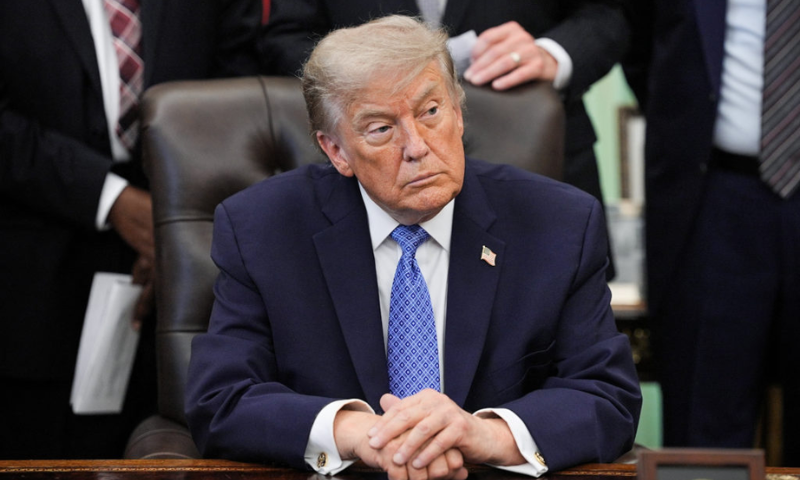
Washington/Tehran/Doha, June 30, 2026: US President Donald Trump on Monday announced that Iran had requested a meeting with the United States, saying the talks would take place in Doha on Tuesday, even as Iranian officials denied that any technical working group meetings had been scheduled this week.
In a post on Truth Social, Trump wrote, “Iran has requested a meeting. It will take place tomorrow in Doha,” without providing further details about the participants or agenda.
However, Iran’s Deputy Foreign Minister Kazem Gharibabadi said reports that technical working group meetings under the recently signed Iran-US memorandum of understanding would be held in Doha this week could not be confirmed.
“Although consultations with Qatar… are ongoing as usual, the news from some media outlets that technical talks by the working groups will be held in Doha cannot be confirmed,” Gharibabadi said in a statement.
He added that the first round of technical discussions would take place only after both sides agreed on a date and venue, with consultations continuing through intermediary countries.
Meanwhile, Iranian President Masoud Pezeshkian called for the release of $6 billion of Iranian funds frozen in Qatar under an agreement with the United States.
According to Iranian media, Pezeshkian said the funds should be returned to Iran under the existing arrangement, adding that efforts were also underway to secure the release of the remaining $6 billion, bringing the total amount under discussion to $12 billion.
Separately, Gharibabadi announced that Iran and Oman had held the first meeting of a joint committee on the Strait of Hormuz in Muscat. He said discussions focused on the future management of the strategic waterway within the framework of the Islamabad Memorandum of Understanding, signed earlier this month between Tehran and Washington.
The diplomatic developments came as commercial shipping through the Strait of Hormuz remained below normal levels following recent attacks on merchant vessels that heightened security concerns along one of the world’s busiest energy corridors.
Despite continued transit by several oil tankers and container ships, maritime traffic has slowed as shipowners, insurers and charterers reassess security risks after attacks on the Singapore-registered container vessel Ever Lovely and the Panama-flagged tanker M/T Kiku.
The Joint Maritime Information Center has raised the maritime threat level in the Strait of Hormuz to “substantial”, warning commercial vessels of increased risks posed by naval operations and potential sea mines.
US Ambassador to the United Nations Mike Waltz said Iran’s leverage over the strategic waterway was “diminishing day by day,” arguing that Gulf countries were expanding alternative oil export routes through pipelines bypassing the Strait of Hormuz.
He also claimed that Iran had become increasingly isolated over its proposal to impose transit fees in the waterway and warned that President Trump’s patience “isn’t going to last forever.”
Diplomatic efforts to ease tensions continued over the weekend, with French President Emmanuel Macron and Saudi Crown Prince Mohammed bin Salman discussing regional stability and the importance of ensuring freedom of navigation while supporting negotiations aimed at de-escalating the crisis.
The latest diplomatic activity follows reports that Washington and Tehran had agreed in principle to halt recent hostilities in the Gulf and resume negotiations under the 14-point Islamabad Memorandum of Understanding, which seeks to restore maritime security and address wider disputes, including Iran’s nuclear programme and navigation through the Strait of Hormuz.
While both sides have signalled interest in returning to diplomacy, recent military exchanges and conflicting public statements underscore the fragile nature of the current ceasefire and the uncertainty surrounding the next phase of US-Iran negotiations.