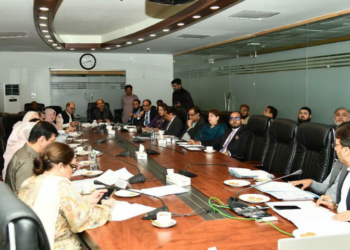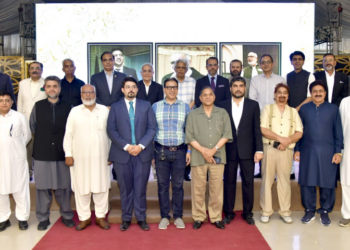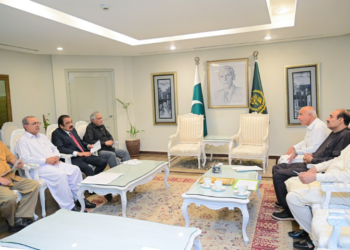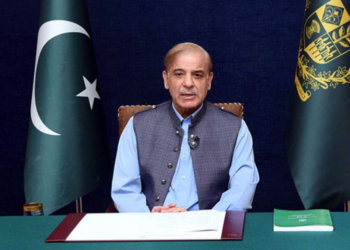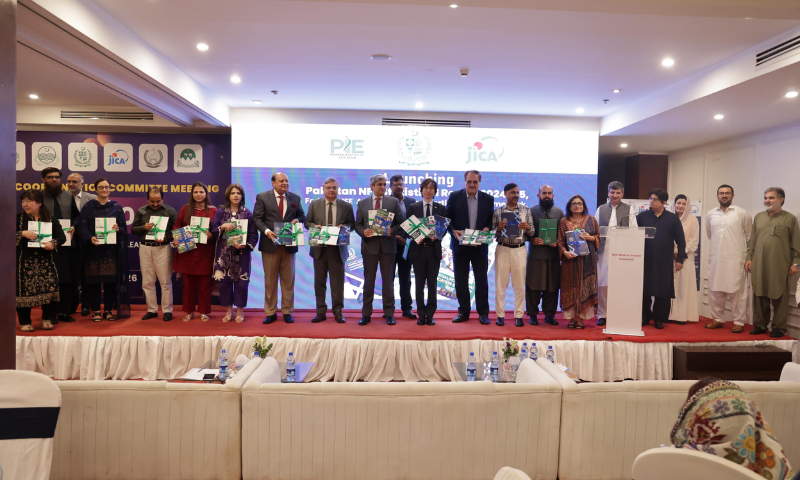
Islamabad, July 21, 2026: The Pakistan Institute of Education (PIE), in collaboration with the Japan International Cooperation Agency (JICA), has launched the Annual Statistical Report 2024-25 and the Federal Non-Formal Education (NFE) Strategy 2025, outlining a roadmap to reintegrate millions of out-of-school children into the country’s education system.
According to the report, 34,256 teachers are currently educating 1,238,573 children through 30,543 non-formal education centres across Pakistan. Female teachers account for between 83% and 86% of the teaching workforce, contributing to girls making up 55% of total enrolment. The centres are also serving 15,747 refugee children and more than 11,774 children from minority communities. The report states that 97% of non-formal education institutions provide primary-level education, while 3% cater to middle and middle-tech education, and 1% focus on adult literacy.
Addressing the launch ceremony, Federal Secretary for Education and Professional Training Nadeem Mehboob said that, following the declaration of a National Education Emergency, bringing the country’s 25.3 million out-of-school children back into the education system had become the government’s foremost priority.
He said the newly introduced strategy establishes a unified framework that combines general education with modern technical skills from primary to matriculation level, enabling children to acquire employable skills while continuing their education and contributing to Pakistan’s economic development.
Director General of the Pakistan Institute of Education, Dr. Zaigham Qadeer, highlighted the critical contribution of female teachers to the success of the non-formal education programme. He said a comprehensive digital monitoring mechanism and the Non-Formal Education Management Information System (NFEMIS) would maintain individual records of students to improve planning and evidence-based policymaking.
JICA Pakistan Chief Representative Yusuke Shinozaki commended Pakistan’s efforts to expand educational access and reaffirmed Japan’s commitment to providing technical and financial assistance for Accelerated Learning Programmes (ALP) and professional teacher training to improve educational opportunities for marginalized communities.
The report shows that Punjab has the largest non-formal education network, with 20,610 centres serving 678,751 students and supported by 17,750 female teachers. The province also enrols 504 children from minority communities.
Khyber Pakhtunkhwa operates 5,026 centres with 352,535 students, where girls account for 60% of enrolment and 11,537 refugee children are receiving education. Sindh has 1,152 centres enrolling 58,411 students, including 8,498 Hindu and 269 Christian children, while female teachers comprise 63% of the workforce. In Balochistan, 751 centres provide education to 38,115 students, including 2,012 refugee children and 54 Hindu students.
The Federal Non-Formal Education Strategy 2025, prepared by the Ministry of Federal Education and Professional Training, introduces structured learning pathways from primary to matriculation, including 18-month Middle-Tech and Matric-Tech programmes to be implemented in collaboration with the National Vocational and Technical Training Commission (NAVTTC).
To strengthen quality assurance, the strategy also proposes digital monitoring systems, hybrid learning models and biannual terminal assessments under the Federal Directorate of Education (FDE), ensuring continuity of learning and improved educational outcomes for children enrolled in non-formal education programmes.