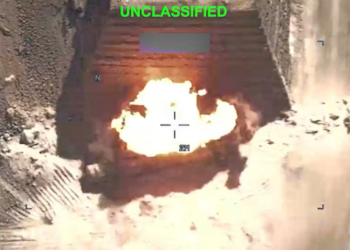
The Hague, June 25, 2025 : U.S. President Donald Trump and Defense Secretary Pete Hegseth have acknowledged uncertainty over the effectiveness of recent U.S. airstrikes on Iran’s nuclear sites, following a leaked Pentagon assessment suggesting the damage may have delayed Tehran’s nuclear program by only a few months.
Speaking at a NATO summit in The Hague, Trump appeared to soften earlier claims of total destruction. “The intelligence was very inconclusive,” he said, referring to the strikes on Iran’s Fordow and Natanz enrichment facilities. “It could’ve been very severe. That’s what the intelligence suggests.”
Despite this, the president later reverted to his earlier assertion: “There was obliteration.”
Trump also compared the U.S. use of massive bunker-buster bombs to the atomic bombings of Hiroshima and Nagasaki during World War II—framing both as decisive actions intended to end a conflict.
Defense Secretary Hegseth, who accompanied Trump to the summit, also appeared to temper his previous remarks. Having earlier claimed Iran’s nuclear capability had been “obliterated,” Hegseth on Wednesday described the damage as “moderate to severe.” He also announced an FBI investigation into the Pentagon leaks, while simultaneously dismissing the leaked material as “false.”
The Israeli military, meanwhile, said it was still assessing the extent of the damage but maintained that the air campaign had set Iran’s program back by years. “We pushed them years backward,” said a senior Israeli officer.
On Tuesday night, CNN cited a leaked Defense Intelligence Agency (DIA) report which suggested that the fortified Fordow and Natanz facilities had not been destroyed, and that centrifuges could be reactivated within months. The report was later confirmed as accurate by The Guardian and other outlets. However, it was classified as a “low-confidence” assessment, with officials noting that further analysis could reveal even less damage than initially estimated.
According to the DIA, Iran had relocated much of its highly enriched uranium—estimated at 400kg of 60% purity—prior to the strikes. That stockpile is now unaccounted for and no longer under the surveillance of the International Atomic Energy Agency (IAEA), raising serious concerns within the non-proliferation community.
Nuclear experts have warned that the disappearance of enriched uranium, combined with growing hostility toward international oversight, could prove disastrous for global non-proliferation efforts.
Amid the escalating tension, Iran’s parliament is preparing legislation that would enable Tehran to exit the 1968 Nuclear Non-Proliferation Treaty (NPT), under which it is obliged to forgo nuclear weapons development and allow monitoring by the IAEA.
IDF spokesperson Brigadier General Effie Defrin offered an upbeat Israeli assessment on Wednesday, saying, “The results were even better than we expected. We believe we delivered a significant blow to Iran’s nuclear infrastructure.”
Israeli intelligence has reportedly estimated that the strike has delayed Iran’s nuclear capabilities by up to two years.
However, with international inspectors unable to verify the current state of Iran’s uranium stockpile or the operational condition of its nuclear facilities, fears are mounting that the Islamic Republic may be moving toward a more clandestine and unpredictable nuclear trajectory.