Tallinn/Cairo/Washington, July 2, 2025: Israel has expressed serious intent to reach a ceasefire and hostage release deal with Hamas, as diplomatic efforts led by the United States, Egypt, and Qatar intensify to halt the nearly 21-month-long war in Gaza that has killed tens of thousands and displaced millions.
Speaking at a press conference in the Estonian capital Tallinn, Israeli Foreign Minister Gideon Saar said Tel Aviv had accepted U.S.-mediated proposals aimed at securing a 60-day ceasefire and the release of hostages held by Hamas. “We are serious in our will to reach a hostage deal and a ceasefire. We said yes to U.S. special envoy Steve Witkoff’s proposals,” Saar said following talks with Estonian Foreign Minister Margus Tsahkna.
Saar cautioned, however, that Hamas remained a major obstacle to peace. “Hamas is not only responsible for initiating this war on October 7 but also for its continuation. Pressure must be applied. The international community must back American initiatives and end any illusions Hamas may have,” he added.
His remarks came a day after U.S. President Donald Trump announced that Israel had agreed to the terms necessary to finalize a 60-day ceasefire deal. Trump described recent negotiations as “long and productive,” urging Hamas to respond favorably to the proposal. “I hope, for the good of the Middle East, that Hamas takes this deal—because it will not get better, it will only get worse,” he warned in a social media post.
Trump said the proposed ceasefire would provide a window to negotiate a lasting end to the war, although Israel has maintained that a permanent cessation of hostilities can only occur if Hamas is defeated, disarmed, and removed from Gaza—conditions Hamas has firmly rejected.
On Wednesday, Hamas confirmed it was reviewing the latest proposals conveyed by Egyptian and Qatari mediators but stopped short of endorsing the U.S.-backed plan. “We are ready and serious about reaching an agreement,” said Hamas spokesperson Taher al-Nunu, stressing that any deal must include a complete end to the war and a full Israeli withdrawal from Gaza.
A Hamas delegation was expected to meet Egyptian and Qatari officials in Cairo later in the day, according to an Egyptian official speaking on condition of anonymity due to the sensitivity of the negotiations.
While the U.S. proposal reportedly includes a partial Israeli withdrawal and a surge in humanitarian aid, it does not commit Israel to a full end-of-war agreement—something Hamas continues to demand. Previous ceasefire arrangements have broken down over this central point of contention.
The proposed deal is believed to involve the phased release of hostages—possibly around 10 in the initial stage. Hamas has stated that it is willing to release the remaining 50 hostages in exchange for an end to hostilities and a full Israeli pullout.
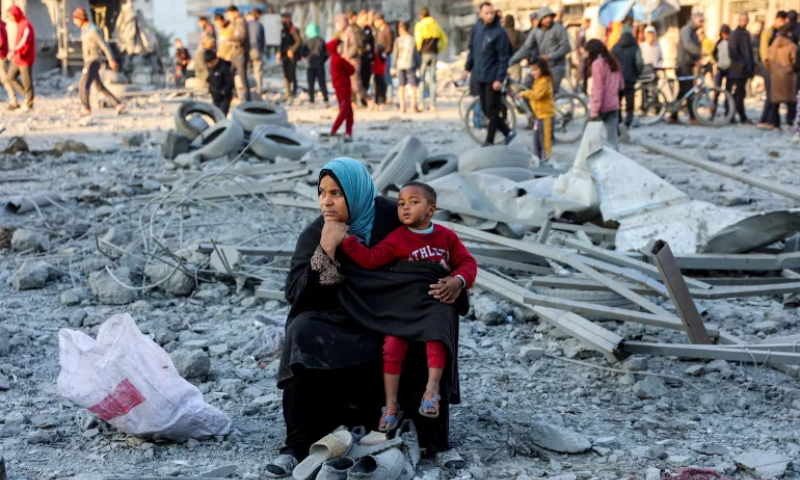
The diplomatic push comes as the humanitarian crisis in Gaza deepens. According to the Gaza Health Ministry, Israeli strikes on Wednesday killed at least 40 Palestinians across the territory, including women and children. The Israeli military said it was reviewing the reports but reiterated that Hamas’s operations within civilian areas were responsible for such casualties.
The war, triggered by Hamas’s cross-border attack on October 7, 2023—which killed around 1,200 Israelis and resulted in the capture of over 250 hostages—has devastated Gaza. More than 56,000 Palestinians have been killed, according to health officials in the enclave, while over 90% of the 2.3 million population has been displaced. Much of Gaza’s infrastructure lies in ruins, and humanitarian organizations have repeatedly warned of imminent famine.
Trump is scheduled to host Israeli Prime Minister Benjamin Netanyahu at the White House on Monday, following earlier talks between senior Israeli and U.S. officials on Gaza, Iran, and broader regional security.
As global attention turns to whether Hamas will accept the latest truce proposal, observers say the coming days could be critical in determining whether the longest and deadliest phase of the conflict finally sees a pause—or further escalates.