New Delhi, July 4, 2025: A senior Indian military official has alleged that China provided Pakistan with “live inputs” on Indian military positions during the intense four-day conflict between the two nuclear-armed rivals in May, marking the worst escalation in decades.
Speaking at a defence industry event in New Delhi on Friday, Lieutenant General Rahul Singh, Deputy Chief of the Indian Army, claimed that China offered real-time intelligence support to Pakistan during the fighting, which was sparked by the April attack on Hindu pilgrims in Indian Illegally Occupied Jammu and Kashmir (IIOJK)—an incident India blamed on Islamabad. Pakistan has categorically denied any involvement.
“During Director General of Military Operations (DGMO)-level talks, the Pakistani side made references to our operational vectors with surprising precision,” Singh said. “It became clear they were receiving live situational inputs—from none other than China.” However, he did not provide evidence or further details on how India confirmed China’s involvement.
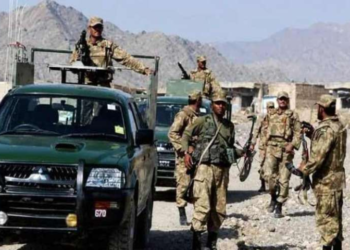
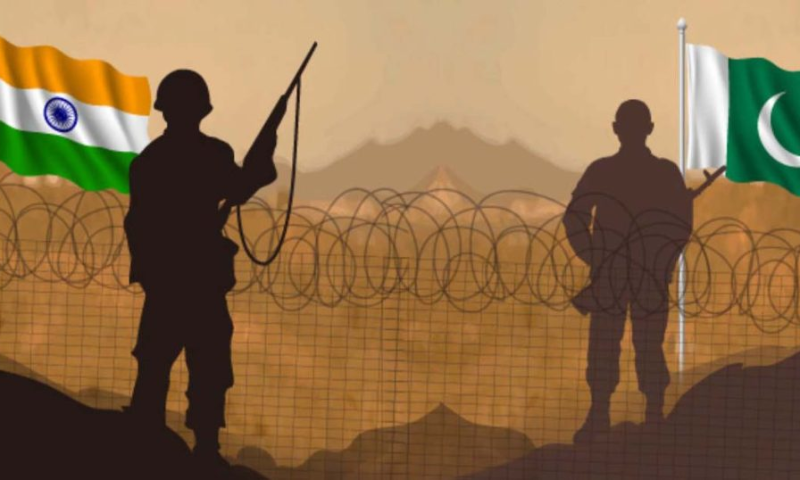
India and Pakistan exchanged missile strikes, drone attacks, and artillery fire during the brief conflict, which ended with a US-brokered ceasefire on May 10. The confrontation, dubbed “Operation Bunyan-um-Marsoos” by Pakistan, saw the downing of six Indian fighter jets, including three Rafale aircraft, and dozens of drones.
While New Delhi has maintained a cautious stance on Beijing’s direct involvement, Singh’s remarks signal renewed concerns about the strategic nexus between China and Pakistan. India’s relationship with China has remained tense since the 2020 border clash in Ladakh, though both sides agreed to partial disengagement in October 2024.
India’s Chief of Defence Staff had earlier acknowledged that satellite imagery and surveillance data could have been procured commercially by any party, including from Chinese sources. However, Singh’s statement is the first high-ranking military accusation of direct real-time Chinese assistance during the May conflict.
Pakistan has rejected claims of receiving Chinese military aid, while Beijing—which welcomed the ceasefire in May—has remained silent on the latest accusations. The Chinese Foreign Minister had reiterated Beijing’s commitment to supporting Pakistan’s sovereignty and territorial integrity during a visit days after the ceasefire, but made no reference to the conflict itself.
Lt Gen Singh also alleged that Turkiye provided tactical support to Pakistan during the hostilities, including the supply of Bayraktar drones, other unmanned systems, and trained personnel. While Ankara has strong defence ties with Islamabad and had expressed solidarity with Pakistan during the conflict, the Turkish Defence Ministry has not responded to requests for comment.
Singh’s statement has rekindled anti-Turkiye sentiment in parts of India, where nationalist groups previously launched symbolic boycotts of Turkish goods and tourism in protest.
The conflict came to an end following a ceasefire agreement announced by U.S. President Donald Trump, who claimed credit for defusing the crisis through intense backchannel diplomacy. India, however, has downplayed Trump’s role, insisting the ceasefire was a bilateral decision. Pakistan, in contrast, has formally nominated Trump for the 2026 Nobel Peace Prize, acknowledging his mediation in halting the escalation.
Despite the ceasefire, tensions between the regional rivals remain high, with Indian military officials warning of the need to upgrade air defence systems and strengthen multi-domain deterrence capabilities in light of emerging regional alignments.