New York, July 29, 2025 – In a fresh diplomatic outreach, Pakistan has extended an offer of composite dialogue to India, seeking a peaceful resolution to all outstanding issues, including the longstanding Kashmir dispute.
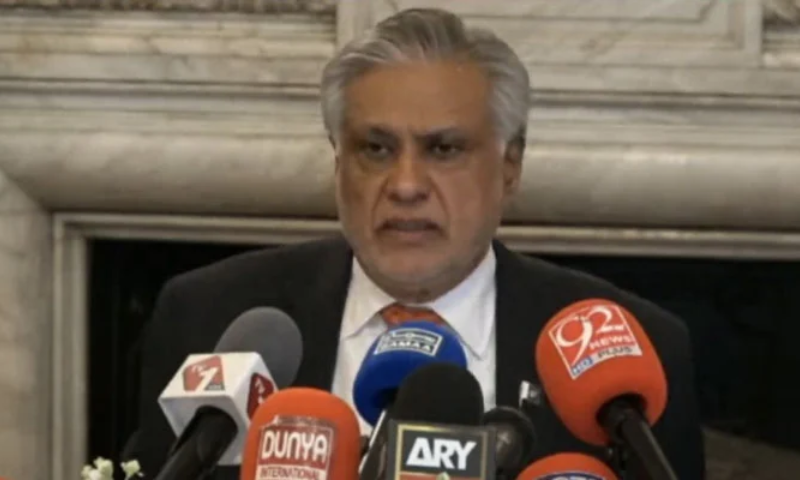
Speaking at a press conference in New York on Tuesday, Foreign Minister and Deputy Prime Minister Ishaq Dar emphasized that the proposed talks would not be confined to terrorism. “Pakistan has been one of the greatest victims of terrorism. Dialogue must be broad-based and address the root causes of conflict,” he said.
Dar also disclosed that during a recent meeting, U.S. Secretary of State Marco Rubio acknowledged Pakistan’s sacrifices in the war on terror. The two sides also discussed the Jammu and Kashmir issue, which Dar said remains central to lasting peace in South Asia.
“No durable peace is possible without resolving the Kashmir dispute,” he stated, recalling that former U.S. President Donald Trump had repeatedly raised the matter during his tenure.
Commenting on water-related tensions, Dar reaffirmed Pakistan’s position on the Indus Waters Treaty, describing it as a binding agreement that cannot be altered or terminated unilaterally. He warned that any move by India to divert or block Pakistan’s share of water would be unacceptable.
On the situation in the Middle East, Dar reiterated Pakistan’s refusal to recognise Israel and called for an immediate ceasefire in Gaza. He urged the international community to ensure the unhindered delivery of humanitarian aid and reaffirmed Pakistan’s unwavering support for an independent Palestinian state with Al-Quds Al-Sharif as its capital.
Dar described his U.S. visit as productive, highlighting Pakistan’s push for United Nations Security Council reform and advocating for greater representation of the Organisation of Islamic Cooperation (OIC) in global governance.
Pakistan’s call for dialogue comes amid lingering tensions following a major military confrontation between the two nuclear neighbours earlier this year.
Hostilities flared after the April 22 attack in Pahalgam, Indian Illegally Occupied Jammu and Kashmir (IIOJK), which killed 26 tourists. India blamed Pakistan without evidence and downgraded diplomatic ties. Islamabad denied involvement and offered an impartial investigation.
On May 7, the Indian Air Force (IAF) carried out air strikes on civilian areas inside Pakistan. In response, the Pakistan Air Force (PAF) shot down at least six IAF jets, including three Rafale fighters.
The confrontation escalated on May 9–10, when India targeted military sites in Pakistan. Islamabad retaliated with Operation Bunyanum Marsoos, striking key Indian military installations, missile depots, and airbases. The early morning counteroffensive stunned Indian defence planners, who had misjudged Pakistan’s resolve.
A fragile ceasefire was brokered on May 10 after urgent mediation by the United States. Both countries have since pulled back troops from the international border, but rhetoric from New Delhi remains aggressive.
Pakistan’s renewed call for dialogue signals a preference for diplomacy over conflict — and a hope to avoid further escalation in the region.