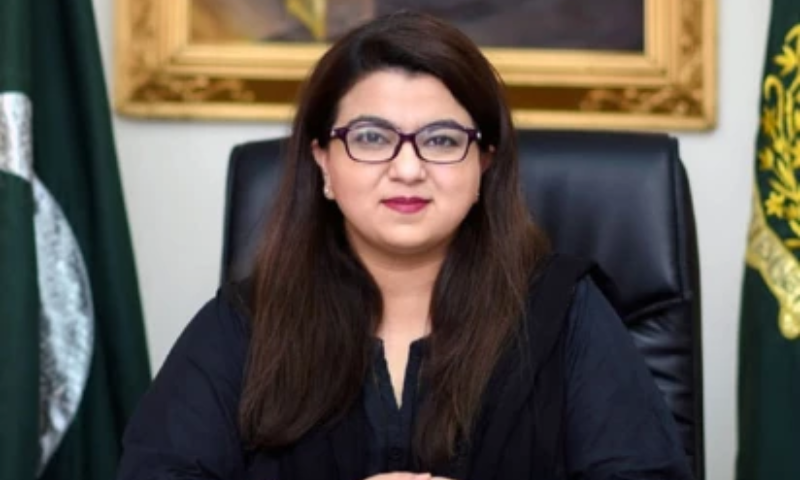
Islamabad, July 31, 2025: Federal Minister for Information Technology and Telecommunication, Shaza Fatima Khawaja, on Thursday hailed the approval of Pakistan’s first National Artificial Intelligence (AI) Policy 2025 as a major milestone in the country’s digital transformation journey.
Addressing a media briefing following the Federal Cabinet’s unanimous approval of the policy, she said the landmark initiative aims to usher Pakistan into a new digital era by creating a robust and inclusive AI ecosystem.
“This policy goes beyond technology—it is a transformative roadmap that will benefit health, education, industry, trade, and the economy,” Shaza Fatima stated, congratulating the people of Pakistan, especially the youth.
The National AI Policy 2025 outlines ambitious goals including:
- Training 1 million AI professionals by 2030
- Launching AI Innovation Fund and AI Venture Fund to support startups and research
- Creating 50,000 AI-powered civic projects and 1,000 local AI products in five years
- Awarding 3,000 annual scholarships and funding 1,000 research projects
- Ensuring inclusion of women and differently-abled individuals through accessible education and financing
- Strengthening cybersecurity and data protection frameworks
- Promoting global AI partnerships and alignment with international standards
Shaza Fatima emphasised that the policy reflects Prime Minister Shehbaz Sharif’s vision for a ‘Digital Pakistan’, and was shaped through the collaboration of national stakeholders, including the Pakistan Armed Forces and the Special Investment Facilitation Council (SIFC).
“It’s time for Pakistan to step forward as a serious global player in artificial intelligence. With clear planning and strong implementation, we can join the ranks of tech-driven nations,” she said.
The policy seeks to democratise AI access by launching educational and professional training initiatives across urban and remote regions. AI education will be introduced in schools, universities, and among professionals to ensure the workforce is equipped for the digital age.
On digital security, Shaza Fatima stressed that AI must be used safely and ethically. The policy includes measures to protect citizens’ data and counter cyber threats, which have increased with growing digitisation.
She also pointed out the need for local AI tools that reflect Pakistan’s culture, language, religion, and values, and announced plans to develop a national Large Language Model (LLM) to reduce reliance on foreign AI systems.
“Our youth are already engaging with global tools like ChatGPT, but we must build our own AI systems that represent Pakistan’s identity. Otherwise, we risk being sidelined in shaping the future,” she warned.
The minister highlighted the significance of digital infrastructure, including data centers, cloud computing, and advanced processing capabilities. She noted Pakistan’s progress in this area, citing the Pak-China data transit system, which could position the country as a regional internet traffic hub between Central Asia and China via Karachi.
She concluded by encouraging young people and professionals to actively participate in shaping Pakistan’s digital future, warning that silence or inaction could mean exclusion from the global AI discourse.
“This policy is not just about the government—it’s a national effort. We must all add our voices to ensure Pakistan’s presence in the intelligent world of tomorrow,” she said.