Islamabad, September 5, 2025: Pakistan on Friday voiced strong concerns over India’s failure to share comprehensive flood-related data, saying the information provided this year through diplomatic channels lacked the detail traditionally shared under the Indus Waters Treaty (IWT).
The statement came as Pakistan reels from one of the worst floods in its history, triggered after India opened the spillways of major dams. Islamabad said New Delhi conveyed warnings through diplomatic notes, including one today, but bypassed the designated mechanism of the Indus Water Commissioners.
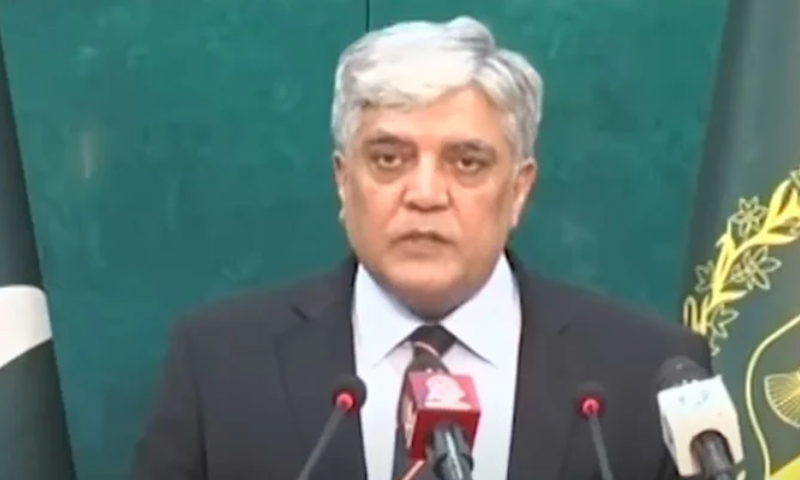
“India did not utilise the Commission’s channel for information-sharing,” Foreign Office Spokesperson Shafqat Ali Khan told reporters at the weekly briefing, urging New Delhi to fully comply with all treaty provisions.
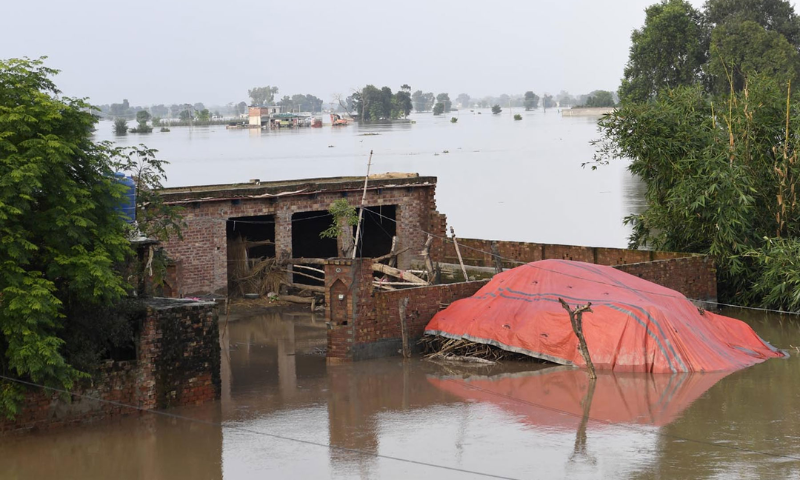
The catastrophic monsoon floods — the second in three years — have inundated vast swathes of north and central Pakistan, particularly Punjab. According to the National Disaster Management Authority (NDMA), 905 people have died since the onset of monsoon rains in late June, while more than a million residents have been displaced as waters submerged 1,400 villages. Torrents are now heading south towards Sindh, where authorities brace for a “super flood.”
Tensions over water sharing have deepened since India suspended its participation in the IWT last year following an attack in Indian Illegally Occupied Jammu and Kashmir, which New Delhi blamed on Islamabad. Pakistan rejected the allegations, and the incident sparked the worst military escalation in decades before a ceasefire was reached last week.
In June, however, the Permanent Court of Arbitration ruled that India cannot unilaterally suspend the treaty. The binding judgment, delivered on June 27, reaffirmed the Court’s jurisdiction and declared New Delhi’s move to place the pact in abeyance as invalid.
Signed in 1960 with World Bank mediation, the IWT governs water-sharing between the two nuclear-armed neighbours. The treaty allocates the eastern rivers — Sutlej, Beas and Ravi — to India, and the western rivers — Indus, Jhelum and Chenab — to Pakistan. It also lays down a detailed mechanism for information exchange and dispute resolution. Importantly, the pact contains no clause allowing either side to unilaterally suspend or terminate it.