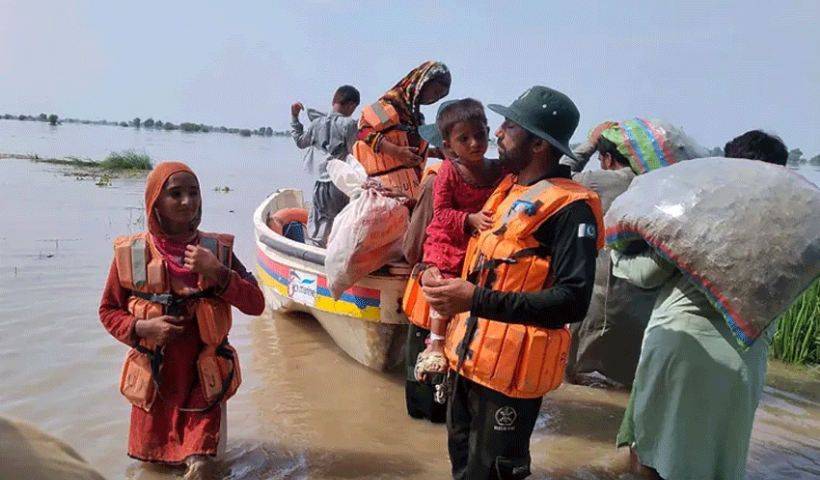
Lahore, September 7, 2025: Floods across Punjab intensified on Sunday as surging water levels in the Sutlej and Chenab rivers inundated hundreds of villages, forcing mass evacuations and devastating standing crops on thousands of acres.
The Ministry of Water Resources confirmed that India had released additional water into the Sutlej—an action Pakistan termed a violation of the Indus Waters Treaty. Though New Delhi informed Islamabad through diplomatic channels, authorities were forced to issue emergency alerts as very high flood levels were recorded near Harike and Ferozepur.
In Jhang district, floodwaters from the Chenab submerged over 300 villages, with residents of Balo Shahabal and nearby areas complaining of delayed rescue efforts. At Trimmu Headworks, the flow surged past 543,000 cusecs, heightening fears of more destruction.
A breach of the Chandrabhan protective dam in Alipur left Azmatpur and Malanwali villages under water, washing away cotton, sesame and onion crops and submerging hundreds of homes. Similar scenes were reported in Multan, where over 138 villages were affected and 500,000 people displaced. Officials warned that another 350,000 cusecs had entered the Chenab, cutting off land routes in Basti Taliwala.
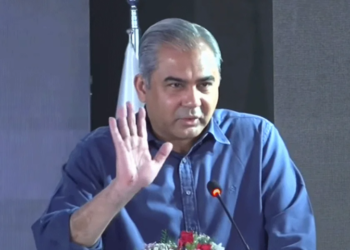
Pakistan Peoples Party Chairman Bilawal Bhutto-Zardari visited flood-hit areas, while Punjab Chief Minister Maryam Nawaz inspected relief operations in Gujrat. Prime Minister Shehbaz Sharif directed authorities to accelerate rescue and relief work, stressing “timely and effective assistance” for the displaced. He also linked the recurring disasters to climate change, saying Pakistan was paying the price for global emissions despite its minimal contribution.
According to the Water and Power Development Authority (WAPDA), the country’s water storage has crossed 12.4 million acre feet (MAF), with inflows rising in all major dams. Tarbela and Mangla are near capacity, while heavy flows continue through major barrages including Chashma, Tunsa, Guddu, Sukkur and Kotri. The Punjab Disaster Management Authority (PDMA) confirmed that the “first rail” of Chenab floodwater had crossed Head Muhammad Wala and was heading towards Panjnad, warning that Multan would remain under threat for the next 72 hours.
At least 25 districts of Punjab have been affected so far, with 60,000–70,000 people shifted to relief camps. PDMA chief Irfan Ali Kathia described the rescue efforts as the “largest in Punjab’s history” but acknowledged tragic incidents, including the death of a woman and four children in Jalalpur Pirwala.
Meanwhile, the National Disaster Management Authority (NDMA) issued fresh alerts, warning that a rain system near India’s Gujarat-Rajasthan border could bring heavy rainfall to Sindh, Balochistan and southern Punjab until September 10, with risks of flash floods in the Sulaiman and Kirthar ranges.
Bhutto-Zardari has also urged the federal government to exempt electricity bills for farmers in disaster-hit districts and to provide cash relief through the Benazir Income Support Programme. Prime Minister Shehbaz assured him that the government would take all necessary steps to support the agricultural sector, including possible loan relief measures.