Lahore, September 9, 2025: Flooding in multiple districts of Punjab has worsened after India released additional water into the Sutlej River, triggering fears of exceptionally high-level floods. The Provincial Disaster Management Authority (PDMA) issued a high alert, while the military and civil administration have also been placed on standby.
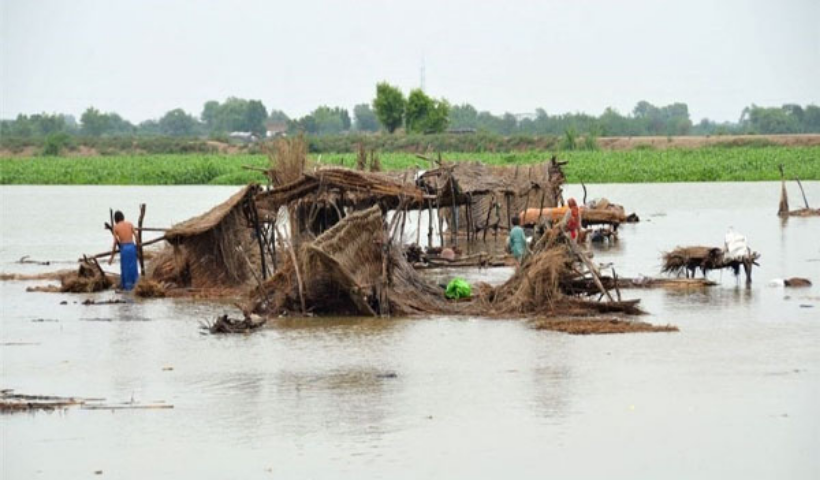
In Jalalpur Pirwala, a local embankment near Khan Bela collapsed under the force of the Chenab River, submerging more than 60 settlements. Rescue operations are underway to evacuate stranded residents, while mosque announcements fueled panic in the affected areas. In Shujabad, floodwaters continued their destruction for the seventh consecutive day, with rescue teams struggling to reach trapped families.
In Rajanpur, low-lying areas along the Indus River have gone under water, while a massive flood surge from Head Trimmu entered Rangpur in Muzaffargarh. In Jhang, the second wave of Chenab floods affected over 300 villages and destroyed standing crops on nearly 281,000 acres. Floodwaters from the Sutlej damaged settlements and hundreds of acres of farmland in Bahawalpur and Depalpur, while Ravi’s high flow wiped out crops in Sharaqpur Sharif. Dozens of villages in Shorkot and Liaqatpur were also submerged.
The water level has risen to alarming levels, with 609,000 cusecs recorded at Head Panjnad and 547,000 cusecs at Head Trimmu. The Ravi River also swelled, reaching a high-flood stage at Head Sidhnai.
Punjab Chief Minister Maryam Nawaz monitored the situation virtually late into the night and said nearly 2,000 people had been relocated to safety so far. She added that thermal imaging drones were being used to track rescue operations and minimize loss of life. According to the Power Division, multiple grids and feeders of FESCO, GEPCO, LESCO, and MEPCO were affected by flooding, though most have been partially or fully restored.
The PDMA warned that the threat of extremely high floods in Punjab’s rivers would persist until September 9 and urged citizens to move to safer locations and follow safety advisories.
At Ganda Singh Wala, water levels rose sharply after India’s release, with a surge of 327,000 cusecs submerging several villages. In Jalalpur Pirwala, the Chenab inundated more than 100 settlements, forcing helicopter and boat rescues. Thousands of people fled their homes as floodwaters reached city embankments. A red alert was issued, and to protect the city, Vehari Bridge Bund was deliberately breached. Authorities declared the next 12 hours critical and announced mosque alerts urging residents to evacuate immediately.
In Liaqatpur, Chenab’s raging torrents submerged 35 villages, while heavy rains worsened conditions for flood victims in Jalalpur Pirwala. Arifwala also faced a worsening flood situation as Sutlej waters surged. Near Tibi Lal Baig, flood-affected people cut through a road to divert waters, which then advanced toward the Arifwala–Bahawalnagar road.
Tragedy struck when four people drowned near Jalalpur Pirwala; bodies of a 16-year-old boy and a 15-year-old girl were recovered, while two others remained missing. In Taranda Muhammad Panah, a rescue boat capsized during operations, killing two women and leaving four children missing.