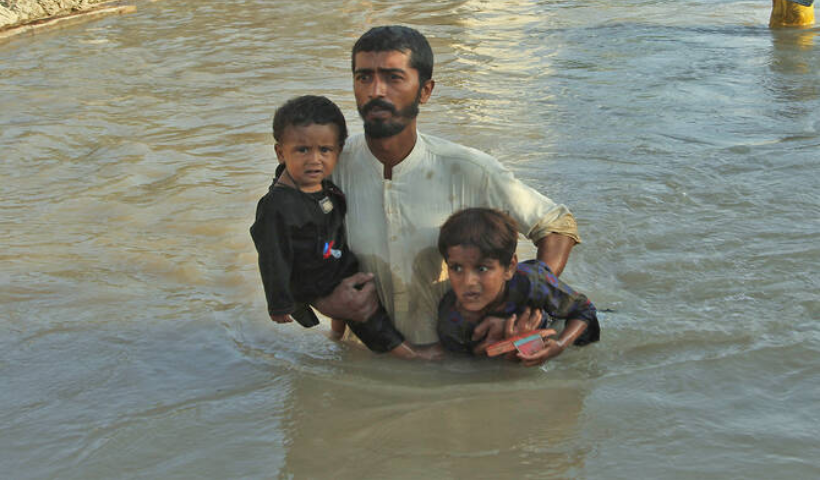
Karachi/Islamabad, September 10, 2025: Pakistan on Wednesday declared both a climate emergency and an agricultural emergency as weeks of devastating monsoon floods inundated multiple provinces, swollen river systems, and triggered mass rescues in Karachi, the country’s financial hub.
According to the National Disaster Management Authority (NDMA), at least 928 people have died since the monsoon season began on June 26. Thousands more are injured, and millions displaced.
Punjab, Pakistan’s most populous province and its agricultural heartland, has suffered the heaviest damage. The Provincial Disaster Management Authority (PDMA) reported 66 deaths, the displacement of 21 million people, and the flooding of nearly 1.95 million acres of farmland. Record rains have swelled the Chenab, Ravi, and Sutlej rivers, causing widespread inundation.
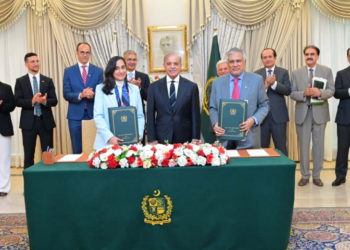
“The floods have caused immense destruction,” Prime Minister Shehbaz Sharif told a cabinet meeting. Announcing the dual emergencies, he said a high-level committee led by Planning Minister Ahsan Iqbal would coordinate relief and recovery efforts, bringing together federal ministers, bureaucrats, and provincial administrations. An apex meeting with provincial chief ministers will also be convened.
Sharif stressed that provinces must step up alongside the federal government:
“Only together can we reduce this damage.”
The Pakistan Business Forum (PBF) had already urged an agricultural emergency, warning that the floods destroyed up to 60% of the rice crop and severely damaged sugarcane and cotton. National production targets for rice, maize, sugarcane, and cotton are now “in jeopardy,” with wheat imports of up to 5 million tons likely needed.
A PBF assessment estimated losses of 60% in rice, 30% in sugarcane, and 35% in cotton, particularly across Punjab’s Faisalabad, Bahawalpur, and Sahiwal divisions. The group said the disaster could trim 0.8% off GDP this year.
Brokerage firm Arif Habib Ltd. cut its growth forecast to 3.2%, estimating agricultural losses of Rs302 billion ($1.0 billion) out of total flood damages of Rs409 billion ($1.4 billion). It also warned of rising import bills—especially cotton imports exceeding $1 billion—and projected inflation could climb to 7.2% from earlier estimates of 5.5%.
As Punjab’s floodwaters surge south, Sindh faces mounting threats. At Guddu Barrage, officials reported flows of over 500,000 cusecs on Wednesday, raising alarms for downstream districts.
In Karachi, torrential rains submerged neighborhoods, with 325 people rescued this week, according to Sindh PDMA. Local charities reported multiple deaths, including three people swept away in a van and four killed overnight in Malir.
Rainfall totals included 31.5 mm in DHA, 18 mm at a nearby air base, 15 mm in Keamari, and 13 mm in northern suburbs. Rescue 1122 teams evacuated residents from Surjani, Abdul Rahim Goth, and Saadi Town.
Sindh Chief Minister Murad Ali Shah said relief and health camps have been set up, treating more than 5,000 people, while over one million livestock have been vaccinated.
The NDMA warned of further rainfall in Sindh, Karachi, Hyderabad, Sukkur, and parts of Balochistan over the next 24–48 hours, with risks of urban flooding, traffic disruption, and flash floods.
Punjab’s disaster authority reported heavy flows across Indus tributaries:
- Chenab: 244,308 cusecs at Trimmu Headworks (Jhang)
- Ravi: 98,023 cusecs at Sidhnai Headworks (Multan)
- Sutlej: 543,186 cusecs at Punjnad Headworks (joining the Indus)
- Indus: 493,281 cusecs at Guddu Barrage (Sindh)
Authorities have ordered urgent evacuations in Muzaffargarh, Lodhran, Rajanpur, Liaqatpur, and Rahim Yar Khan. Residents in riverbeds and floodplains are being relocated, with police assistance if necessary. Relief camps are providing food, water, and medical aid.