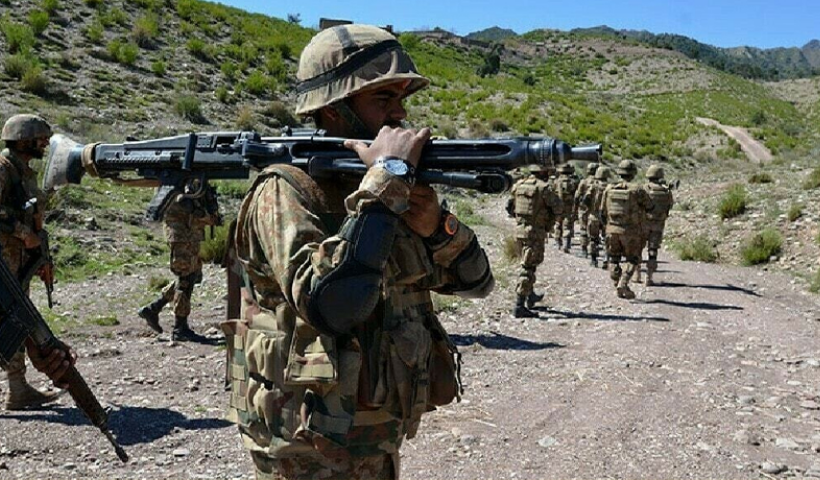
Rawalpindi, September 15, 2025: Security forces killed 31 terrorists linked to the Indian proxy group “Fitna al Khwarij” in two intelligence-based operations in Khyber Pakhtunkhwa (KP) on September 13 and 14, the Inter-Services Public Relations (ISPR) said on Monday.
According to the military’s media wing, security forces conducted an operation in Lakki Marwat district following credible intelligence about the presence of militants. “During the operation, troops effectively engaged the hideout, and after an intense exchange of fire, 14 Indian-sponsored Khwarij were sent to hell,” the ISPR stated.
A second intelligence-based operation was carried out in Bannu district, where security forces neutralised 17 more terrorists after a fierce gun battle. Sanitisation operations are underway to clear the area of any remaining militants.
ISPR reaffirmed that Pakistan’s armed forces remain committed to eliminating the menace of terrorism, particularly groups being supported and facilitated by India.
The country has witnessed a renewed wave of cross-border terrorism since the Taliban’s return to power in Afghanistan in 2021, with KP and Balochistan bearing the brunt of militant violence.
Prime Minister Shehbaz Sharif, reiterating his government’s resolve to eradicate terrorism, warned Kabul that it must “choose between siding with terrorists or standing with Pakistan,” stressing that there would be “zero tolerance for ambiguity” on the issue.
Pakistan has hosted Afghan refugees for over four decades—from the Soviet invasion to the Taliban takeover in 2021. While many refugees were born and raised in Pakistan, thousands continue to await relocation to third countries. Following a crackdown on undocumented Afghans in 2023, more than 554,000 Afghans have been repatriated since April 2025, including nearly 145,000 in August alone, under the Illegal Foreigners Repatriation Plan.
Security officials maintain that masterminds and facilitators of recent terror incidents are operating from Afghan soil with Indian backing. The porous 2,500-kilometre Pakistan-Afghanistan border, though vital for trade and people-to-people ties, has become a source of growing security concerns for Islamabad.
These concerns were echoed in a UN Security Council report by the Analytical Support and Sanctions Monitoring Team, which confirmed links between Kabul and the banned Tehreek-e-Taliban Pakistan (TTP), stating that the Afghan regime has been providing logistical, operational, and financial support to the group.