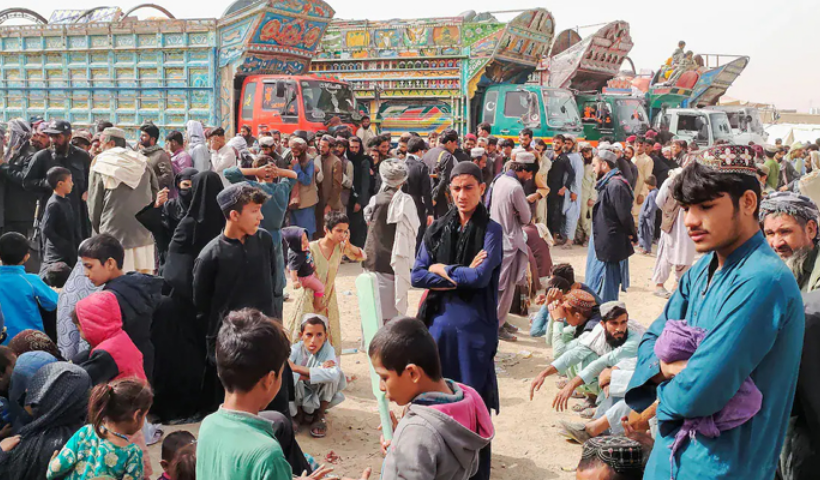
Islamabad, October 17, 2025: As Pakistan faces heightened border tensions with Afghanistan and a surge in cross-border terror attacks, Prime Minister Shehbaz Sharif on Friday said the country could no longer shoulder the burden of hosting Afghan refugees indefinitely. He directed authorities to ensure their immediate and orderly repatriation.
Chairing a high-level meeting in Islamabad on the repatriation of Afghan nationals, the premier reaffirmed Pakistan’s commitment to regional peace but lamented that the country had “paid a heavy price for decades of instability in Afghanistan.”
The meeting was attended by Field Marshal Syed Asim Munir, federal ministers, the Prime Minister of Azad Jammu and Kashmir, chief ministers of Punjab, Sindh, Balochistan, and Gilgit-Baltistan, a representative of the Khyber Pakhtunkhwa government, and senior civil and military officials.
“Pakistan has suffered thousands of lives lost and billions in economic damages during the war against terrorism,” PM Shehbaz said, expressing grave concern over recent attacks launched from Afghan soil.
He noted that despite multiple diplomatic engagements — including visits to Kabul by Pakistan’s deputy prime minister and defence minister — Afghan authorities had failed to stop their territory from being used for attacks against Pakistan.
The prime minister paid tribute to the armed forces for repelling recent incursions and commended Field Marshal Asim Munir’s leadership and the military’s professionalism. “The people of Pakistan, who sacrificed so much in the war on terror, are now asking when this burden [of refugees] will finally end,” he remarked.
Officials informed the meeting that the repatriation of Afghan refugees had begun in phases, with 1,477,592 individuals sent back to Afghanistan as of October 16. Authorities confirmed that no further extensions would be granted, and only Afghans with valid visas would be allowed to stay in Pakistan.
Exit points are being expanded to facilitate faster movement, while sheltering or hosting undocumented Afghans was declared a punishable offence.
PM Shehbaz directed that elderly persons, women, children, and minorities be treated respectfully during the process, stressing that “the public should be partners in ensuring compliance with government policy.”
He also praised the provincial governments for their cooperation and urged continued support for the federal policy to ensure a dignified and timely return of Afghan refugees.
Heightened Tensions with Afghanistan
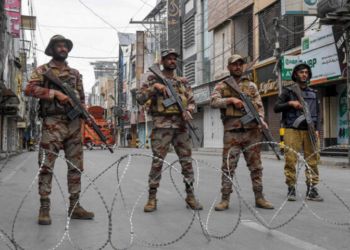
The directive comes amid escalating tensions between Islamabad and Kabul, as the Taliban regime in Afghanistan continues to show reluctance in curbing the activities of militant groups operating from its soil. Pakistan has witnessed a surge in cross-border terrorist attacks since the Taliban’s return to power in 2021, particularly in Khyber Pakhtunkhwa and Balochistan.
The two countries share a 2,500-kilometre porous border, which serves as a vital trade route but also a security challenge. Islamabad has repeatedly urged Kabul to prevent militant outfits — including the Tehreek-e-Taliban Pakistan (TTP) — from using Afghan territory to launch attacks inside Pakistan.
A recent United Nations Security Council (UNSC) monitoring report also highlighted links between the Taliban regime and the TTP, pointing to logistical, operational, and financial cooperation.
Pakistan has hosted Afghan refugees for more than four decades, from the Soviet invasion in 1979 through the Taliban’s 2021 takeover. Many were born and raised in Pakistan, while others await relocation to third countries.
Following a crackdown on undocumented migrants in 2023, over 554,000 Afghans have been repatriated since April 2025 under Pakistan’s Illegal Foreigners Repatriation Plan, including around 145,000 in August alone.
Security sources claim that masterminds and facilitators of several recent terrorist attacks in Pakistan are based in Afghanistan and receive support from India, further straining regional relations.