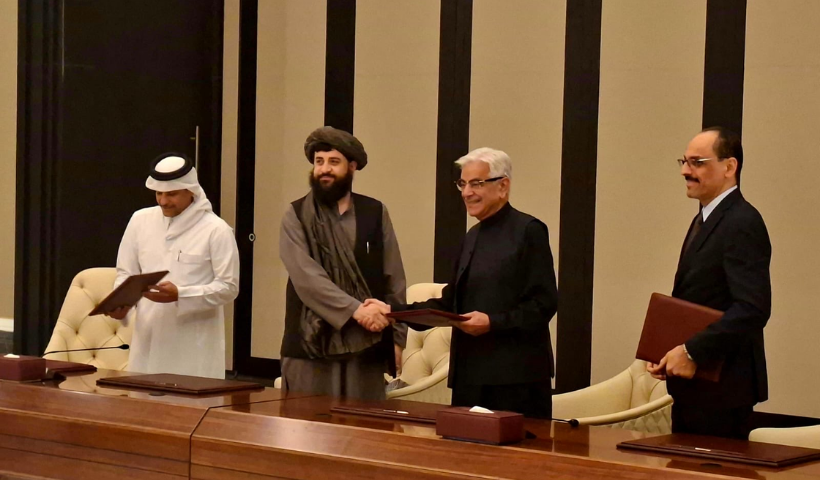
Doha/Islamabad/Kabul, October 19, 2025: Pakistan and Afghanistan have reached a landmark ceasefire agreement following high-stakes negotiations in Doha, marking a potential breakthrough in efforts to restore peace and stability along their volatile border, Qatar’s Foreign Ministry announced late Sunday night.
The agreement, mediated by Qatar and Turkiye, is seen as a major step toward ending months of escalating hostilities between the two neighbours. According to the Qatari Foreign Ministry, the deal includes an immediate cessation of hostilities and the establishment of mechanisms to consolidate lasting peace and stability.
“During the negotiations, the two sides agreed to an immediate ceasefire and the establishment of mechanisms to consolidate lasting peace and stability between the two countries,” the statement read.
“They also agreed to hold follow-up meetings in the coming days to ensure the sustainability of the ceasefire and verify its implementation in a reliable and sustainable manner.”
Pakistan’s Defence Minister Khawaja Asif, who led Islamabad’s delegation, confirmed the development, expressing optimism that the agreement would help ease border tensions and strengthen bilateral cooperation.
“As per the understanding, both countries have agreed to respect each other’s territorial sovereignty,” Asif said, adding that terrorist activities originating from Afghan soil must cease immediately. He announced that delegations from both sides will reconvene in Istanbul on October 25 to finalize a permanent monitoring framework.
Asif thanked Qatar and Turkiye for facilitating the talks, which brought together senior defence and intelligence officials from both sides. The Afghan delegation was led by Defence Minister Mullah Yaqoob, accompanied by the Taliban regime’s intelligence chief.
Sources said Pakistan conveyed to the Afghan side that the presence of militant groups in Afghanistan was “unacceptable”, emphasizing the need for verifiable security guarantees.
Deputy Prime Minister and Foreign Minister Ishaq Dar hailed the accord as “the first step in the right direction”.
“We look forward to establishing a concrete and verifiable monitoring mechanism in the next meeting to be hosted by Turkiye,” Dar wrote on X (formerly Twitter). “It is important to put all efforts in place to prevent any further loss of lives.”
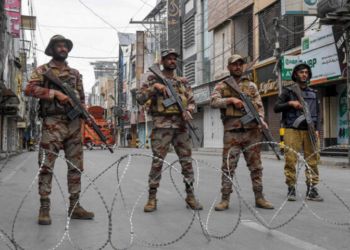
The ceasefire follows a period of heightened tensions after Taliban forces and India-backed Tehreek-e-Taliban Pakistan (TTP) militants launched an unprovoked cross-border attack on October 12. Pakistan’s armed forces responded with precision strikes against militant positions in Afghanistan’s Kandahar province and Kabul, reportedly killing over 200 militants, while 23 Pakistani soldiers embraced martyrdom in the clashes, according to the Inter-Services Public Relations (ISPR).
In a separate statement, Information Minister Attaullah Tarar said Pakistan had also targeted verified camps of the proscribed Gul Bahadur group in the border areas of North and South Waziristan, eliminating “60 to 70 militants based on confirmed intelligence reports.”
Following the ceasefire announcement, Prime Minister Shehbaz Sharif reaffirmed Pakistan’s readiness to engage in dialogue with the Taliban regime “on reasonable terms” to ensure long-term regional peace.
Pakistan has witnessed a sharp rise in cross-border terrorist incidents since the Taliban’s return to power in Kabul in 2021, particularly in the border provinces of Khyber Pakhtunkhwa and Balochistan. The two countries share a 2,500-kilometre porous border, which remains vital for regional trade but has also been a flashpoint for militancy and security challenges.
Analysts say the Doha accord, if implemented in good faith, could mark a turning point in Pakistan-Afghanistan relations and contribute to broader regional stability — provided both sides honour their commitments to curb militancy and respect territorial integrity.