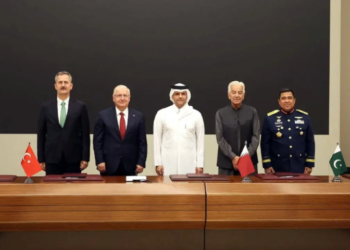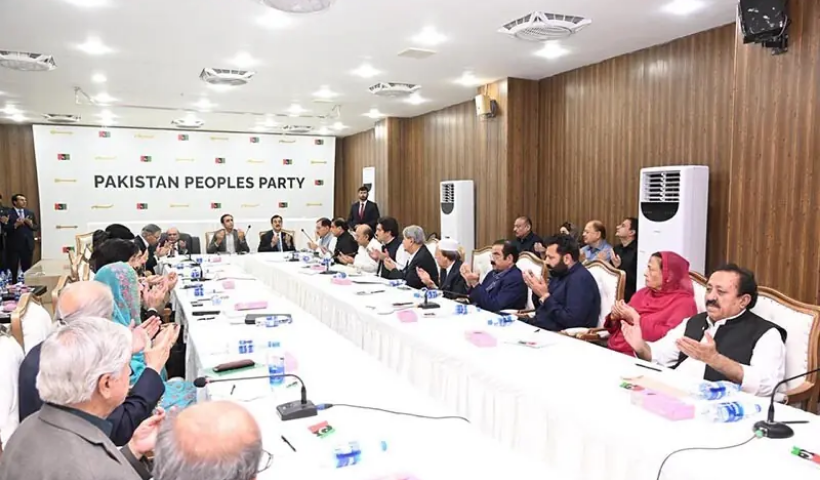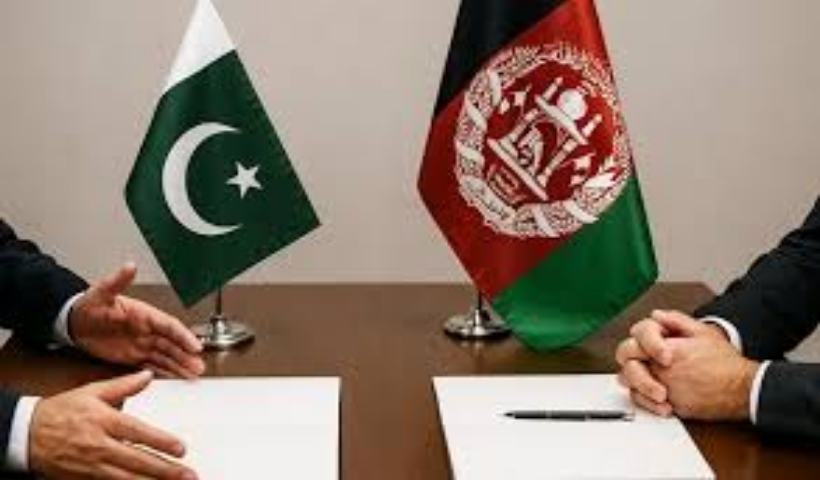
Istanbul/Islamabad, November 7, 2025: Turkish and Qatari mediators are holding fresh discussions with an Afghan Taliban delegation on Pakistan’s set of demands, primarily focused on ending cross-border terrorism, as efforts continue to secure an agreement before the scheduled conclusion of the ongoing talks, officials and diplomatic sources confirmed on Friday.
The two-day negotiations, being held under tight media restrictions at Istanbul’s Conrad Hotel, mark the third round of engagement between Pakistan and the Afghan Taliban following last month’s border clashes. Intelligence chiefs of both countries are leading their respective sides, while the mediators seek to finalise a framework for monitoring and verification of counterterrorism commitments. Officials indicated the talks could be extended beyond today if necessary.
Pakistan presents evidence-based case
During his weekly media briefing in Islamabad, Foreign Office spokesperson Tahir Hussain Andrabi said the Pakistani delegation had presented a detailed and evidence-based dossier to the mediators.
“Pakistan has handed over justified and logical demands to the mediators with a singular aim to end cross-border terrorism,” Andrabi stated. “The mediators have endorsed Pakistan’s stance based on the evidence provided and international legal principles.” He added that the mediators were now discussing Pakistan’s demands “point by point” with the Afghan side.
‘Encouraging progress’ but no breakthrough yet
Diplomatic sources described the progress as “encouraging,” noting that “an understanding may be achieved on some outstanding points.” However, they cautioned that agreement on verifiable enforcement against terrorist groups remains unresolved.
According to officials familiar with the discussions, Pakistan has urged the Taliban to disassociate from the banned Tehreek-i-Taliban Pakistan (TTP) and take concrete action against anti-Pakistan elements operating from Afghan territory. Islamabad has sought a clear decree from Kabul committing to this stance.
Since the talks resumed on Thursday morning, the mediators have primarily engaged the Afghan side in efforts to bridge remaining gaps. “Interlocutors are working to achieve a balanced understanding,” an Afghan source said.
Potential areas of convergence reportedly include counterterrorism cooperation and border security protocols, though mutual mistrust and Kabul’s ambiguous position on the TTP continue to complicate the process.
Talks follow deadly border clashes
The latest round follows weeks of shuttle diplomacy after deadly border clashes in October plunged Pakistan-Afghanistan relations to their lowest point since the Taliban’s 2021 takeover of Kabul.
The hostilities erupted on October 11, when militants launched an attack on Pakistan from Afghan soil. The assault followed Taliban allegations of Pakistani airstrikes inside Afghanistan — an accusation Islamabad has neither confirmed nor denied.
Pakistan has consistently demanded that the Taliban prevent militant groups from using Afghan soil to stage attacks, a charge the Taliban leadership denies.
Meanwhile, Pakistan continues to suffer casualties among its security forces in intelligence-based counterterrorism operations.
Following the October 11 attack, several cross-border exchanges of fire occurred, prompting Islamabad to target camps of the Gul Bahadur group inside Afghanistan. A ceasefire was reached on October 15, paving the way for dialogue in Doha.
Since mid-October, Pakistan and the Afghan Taliban have held three rounds of talks, first round at Doha (October 17–19) which achieved initial ceasefire framework, second round at Ankara (October 25–29) – no workable solution achieved and at Istanbul (November 6–7), ongoing, under joint mediation by Turkey and Qatar.
The dialogue process was revived after an October 31 joint statement by Turkey announced that “further modalities of implementation” would be discussed at the principal-level meeting in Istanbul on November 6.
Despite progress, the fragile ceasefire was briefly tested on Thursday when cross-border firing at the Chaman–Spin Boldak crossing left two people, including a woman, dead on the Pakistani side.
Talks, however, have continued, with mediators expressing hope of achieving a breakthrough before the current round concludes.