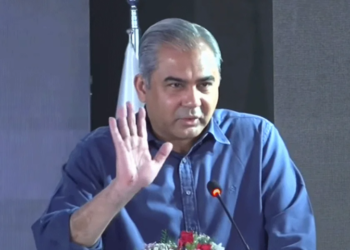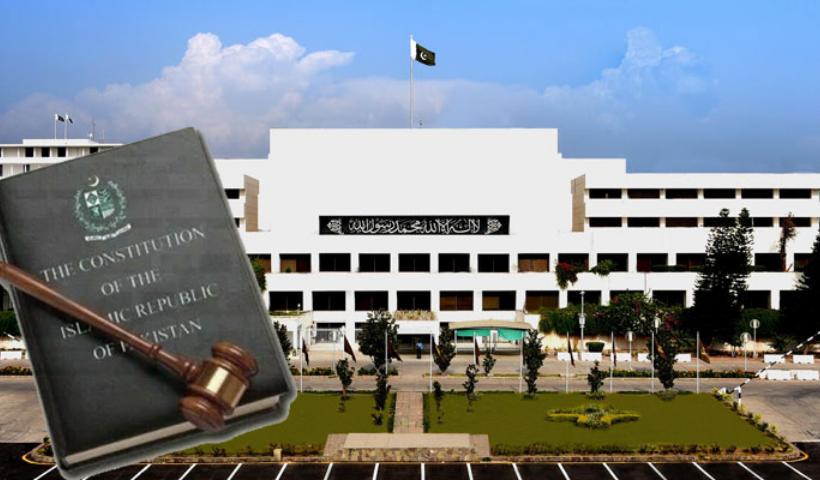
Islamabad, November 10, 2025: The Senate on Sunday began deliberations on the controversial 27th Constitutional Amendment Bill under the chairmanship of Yousaf Raza Gilani, amid strong opposition protests and warnings that the proposed changes could undermine the judiciary’s independence.
Addressing the upper house, PTI Senator Barrister Ali Zafar cautioned that the amendment would “sound the death knell for the Supreme Court,” arguing that the Constitution serves as the vital contract between the state and the people.
“The way you are amending the Constitution is like destroying a structure,” Zafar said, likening the government’s move to “demolishing a building.”
He recalled that while past military regimes had eroded the Constitution, the 18th Amendment had helped restore its spirit. Zafar maintained that an independent judiciary is the guarantor of democracy, and warned that the proposed reforms would reduce the Supreme Court to a “Supreme District and Sessions Court.”
Opposition senators attended the session wearing black armbands to protest what they described as a direct assault on judicial autonomy. Zafar further condemned provisions empowering the executive to transfer judges, saying such powers would allow the government to “control the judiciary through forced retirements.”
The government formally presented the 27th Amendment Bill in the Senate on Saturday after cabinet approval, proposing sweeping structural changes to Pakistan’s judicial framework and military command.
Under the proposal, a new post titled Chief of Defence Forces would replace the Chairman Joint Chiefs of Staff Committee (CJCSC), revising Article 243 to alter the chain of command.
The amendment also seeks the creation of a Federal Constitutional Court (FCC) tasked with adjudicating constitutional disputes and interpreting constitutional questions — powers currently held by the Supreme Court.
Amendments to Article 175A and Article 200 would reshape the process of judicial appointments and transfers, granting the president and prime minister central roles in the selection of judges. Parliament would determine the number of judges in the FCC.
According to sources, the joint parliamentary committee on law and justice has already approved the clauses establishing the FCC, while discussions on Article 243 are ongoing.
Coalition partners — including the ANP, BNP, and MQM — have submitted additional proposals. ANP suggested renaming Khyber Pakhtunkhwa by removing “Khyber,” while MQM sought amendments related to local government funding.
Federal Law Minister Azam Nazeer Tarar told reporters that “85 percent of the committee’s work has been completed,” adding that remaining proposals would be reviewed before the draft’s finalization later tonight.
Meanwhile, opposition parties have announced nationwide protests against the bill, calling it “an attack on the Constitution.”
Chairman Pakhtunkhwa Milli Awami Party (PKMAP), Mahmood Khan Achakzai said, “We are people who love Pakistan. I have taken an oath to defend the Constitution five times. This attack is on the very foundations of the country.”
Senator Raja Nasser Abbas drew parallels with military takeovers in the past, warning, “This is creating another god. Our nation is now heading towards fascism.”
PM Shehbaz orders withdrawal of “Prime Minister immunity” amendment
In a related development, Prime Minister Shehbaz Sharif has directed the immediate withdrawal of a separate amendment submitted by PML-N senators that proposed granting immunity to the prime minister from criminal prosecution.
In a statement on X, the premier clarified that the proposal was “not part of the cabinet-approved draft” and had been submitted without prior consultation.
“On my return from Azerbaijan, I learnt that some senators belonging to our party have submitted an amendment regarding immunity for the Prime Minister,” Shehbaz wrote.
“While I acknowledge their intent in good faith, I have instructed that it be withdrawn immediately.”
The prime minister reaffirmed his position on political accountability, declaring, “As a matter of principle, an elected Prime Minister must remain fully accountable, both before the court of law and the people.”