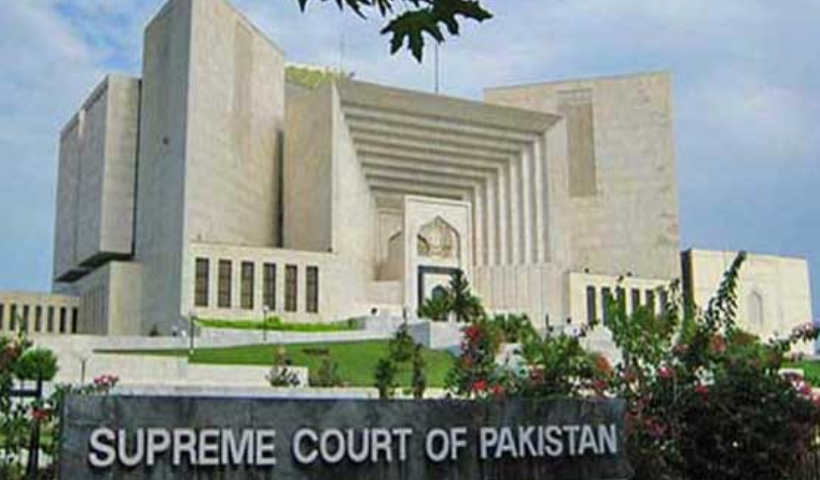
Islamabad, November 15, 2025: The Supreme Court has ruled that the state is constitutionally and religiously bound to ensure that every Pakistani woman receives her rightful share in inheritance, calling for a nationwide mechanism to help women secure this “divinely bestowed” right.
The directive was issued in a seven-page judgment authored by Justice Athar Minallah for a case heard on August 29 by a two-member bench comprising him and Justice Irfan Saadat Khan. The verdict was authored before Justice Minallah resigned on November 13 in protest against the newly passed 27th Amendment, which shifts constitutional interpretation from the Supreme Court to a new Federal Constitutional Court.
“It is incumbent upon the state under the Constitution and the clear Injunctions of Islam to ensure the effective and unfettered realisation of women’s right to inheritance,” the judgment stated.
The court dismissed an appeal filed by Abrar Hussain challenging earlier decisions of trial, appellate and Sindh High Court forums, all of which had rejected his claim in a property dispute with his sister, Bibi Shahida.
Shahida lodged a complaint in 2015, stating that after their father’s death in 2002—and later the demise of two other siblings—Hussain continually refused to grant her lawful share. Instead, he allegedly took sole possession of the property, rented out parts of it without consent, and kept the rent income for himself.
Justice Minallah noted that Hussain “had no case on merits and yet persisted in litigation, thereby prolonging the deprivation of his siblings of their lawful inheritance.” The court imposed a Rs500,000 cost on Hussain, to be deposited within seven days and distributed among the legal heirs.
The ruling emphasised that the state must create a “proactive and accessible mechanism” to identify and reach out to women deprived of inheritance, enabling them to claim their rights “without delay, fear or dependence on lengthy litigation”.
The judgment underscored that those who deprive women of their inheritance “through coercion, deceit or undue influence” must be held accountable.
The court referred to the Federal Shariat Court’s landmark ruling earlier this year, which struck down customary practices such as Chaddar, Parchi and Haq Bakhshwai — traditions used to deny women their inheritance rights — declaring them “un-Islamic” with no legal validity.
Inheritance, the SC stressed, is “not a concession granted by human law but a divinely ordained command, explicitly declared in the Holy Quran.” Any obstruction of this right is “a transgression against Divine Will”.
The judgment condemned cultural practices that deprive women of their rightful shares, calling them “remnants of ignorance which the message of Islam came to abolish,” and asserted that the state bore a “sacred constitutional duty to uproot such practices”.
“A society that turns a blind eye to deprivation of inheritance rights to its women defies the spirit of the Constitution and the express Command of Almighty Allah,” the ruling said. “A state that fails to safeguard the inheritance rights to its women fails in its duty to uphold the principles of equity, faith and justice.”
The trial court in 2019 had declared Shahida, Hussain and their remaining siblings as legal heirs. It ordered partition of the property—or sale if division was not feasible—and directed Hussain to pay mesne profits from the rent he collected. His appeals were dismissed by an appellate court in 2021 and later by the SHC in March 2023.