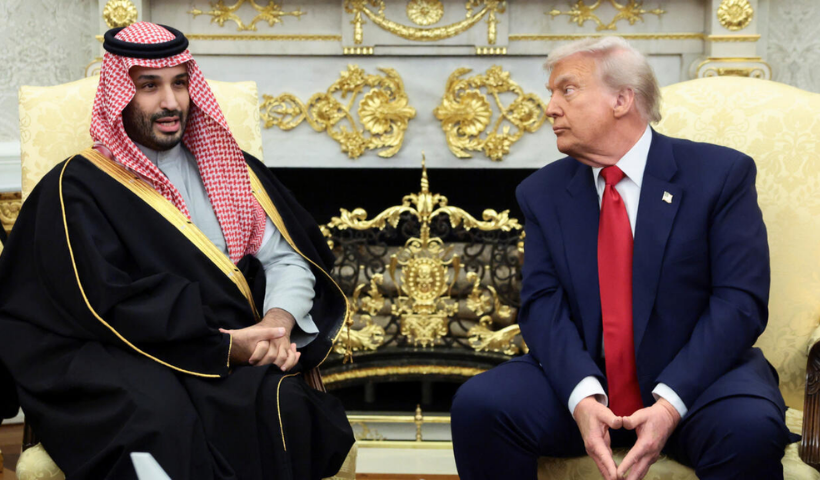
Washington, November 19, 2025: US President Donald Trump on Tuesday announced that the United States is formally designating Saudi Arabia as a “major non-NATO ally,” marking a significant upgrade in bilateral defence cooperation between Washington and Riyadh.
“Tonight, I’m pleased to announce that we’re taking our military cooperation to even greater heights by formally designating Saudi Arabia as a major non-NATO ally,” Trump said during a black-tie dinner at the White House in honour of Saudi Crown Prince Mohammed bin Salman. “I’m just telling you now for the first time, because they wanted to keep a little secret for tonight.”
Saudi Arabia now joins a select group of 19 countries, including Israel, Jordan, Kuwait and Qatar, that enjoy the designation, which grants military and economic privileges but does not entail a US defence guarantee.
Trump also claimed that US strikes on Iranian nuclear facilities in June had made Saudi Arabia “safer,” framing the new designation as part of a broader regional security strategy.
The Saudi crown prince, in his remarks, thanked Trump for the “warm welcome” and highlighted the long-standing partnership between the two nations. “This relationship started close to nine decades ago,” he said. “Today is a special day. We think the horizon of economic cooperation between the US and Saudi Arabia is bigger and wider.”
Bin Salman reiterated a pledge to expand Saudi investments in the United States to $1 trillion, up from the $600 billion commitment he made during Trump’s 2025 visit to Riyadh, though he offered no timeline.
According to a White House fact sheet, the two countries also signed a Strategic Defence Agreement, which “fortifies deterrence across the Middle East,” facilitates the operations of US defence firms in Saudi Arabia, and secures “new burden-sharing funds” from Riyadh to offset American costs. The pact falls short of the formal, Congress-approved mutual defence treaty Saudi Arabia had sought.
The White House further announced Trump’s approval for future deliveries of F-35 fighter jets to Saudi Arabia, along with Riyadh’s agreement to purchase 300 US-made tanks. The sale of the stealth jets—48 of which Saudi Arabia has requested—would be the first of its kind to the kingdom and represents a dramatic shift in longstanding US policy.
Such a move could reshape the Middle East’s military balance and test Washington’s commitment to preserving Israel’s “qualitative military edge,” as Israel has been the only regional operator of the F-35 until now.
Both nations also signed a joint declaration marking the completion of negotiations on civil nuclear energy cooperation, paving the way for a long-term partnership. Riyadh has long sought access to US nuclear technology as it aims to match the capabilities of the UAE and rival Iran.
However, progress on a full nuclear pact remains slow. Saudi Arabia has resisted Washington’s requirement that it forgo uranium enrichment and reprocessing of spent fuel—conditions the US typically demands to prevent proliferation risks.