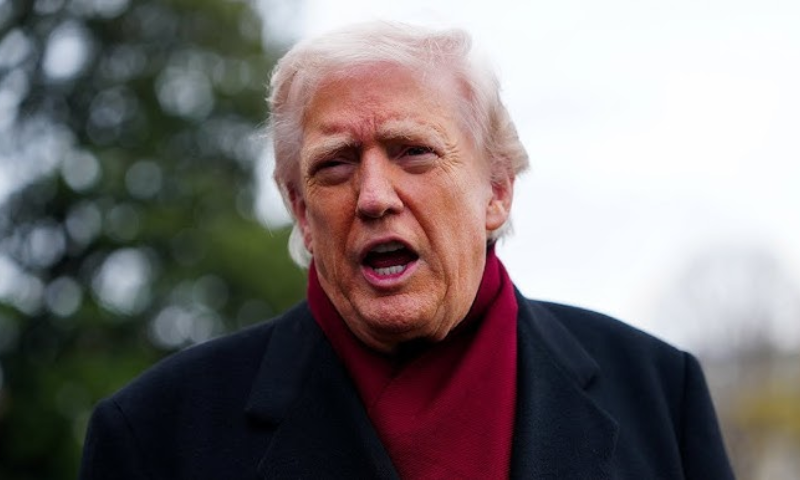
Johannesburg/Geneva, November 23, 2025: US President Donald Trump has clarified that his administration’s proposed plan to end the Russia-Ukraine war is not his “final offer” for Kyiv, following concerns from Ukrainian allies over elements of the draft.
Earlier, leaders from Europe, Canada, and Japan described the plan as containing components “essential for a just and lasting peace” but said it would “require additional work,” citing worries about border adjustments and proposed caps on Ukraine’s military.
On Sunday, security officials from the UK, France, Germany, the US, and Ukraine are scheduled to meet in Geneva to discuss the plan further. Trump has reportedly given Ukraine until November 27 to accept the 28-point proposal, which Russian President Vladimir Putin has suggested could serve as a “basis” for settlement.
When asked at the White House whether the current draft is his final offer, Trump said, “No, not my final offer. One way or another we have to get it [the war] ended, so we’re working on it.”
US Secretary of State Marco Rubio and special envoy Steve Witkoff will join the Geneva talks, alongside the UK’s National Security Adviser Jonathan Powell.
A joint statement issued during the G20 summit in South Africa on Saturday, signed by leaders from Canada, Finland, France, Ireland, Italy, Japan, the Netherlands, Spain, the UK, Germany, and Norway, as well as two top EU officials, emphasised:
- The draft “is a basis which will require additional work” for a sustainable peace.
- Proposed limits on Ukraine’s armed forces could leave the country vulnerable.
- Implementation of elements relating to the EU and NATO would require consent from their respective members.
UK Prime Minister Sir Keir Starmer, who spoke to both Zelensky and Trump, said his teams would coordinate on the 28-point plan in Geneva. He expressed concern over caps on Ukraine’s military, stressing that Kyiv must retain the ability to defend itself if a ceasefire is implemented.
Widely leaked details of the US draft include:
- Ukrainian forces withdrawing from parts of Donetsk currently under Kyiv’s control.
- De facto Russian control of Donetsk, Luhansk, and the Crimea peninsula annexed in 2014.
- Freezing borders of Kherson and Zaporizhzhia along current battle lines.
- Limiting Ukraine’s military to 600,000 personnel, with European fighter jets stationed in neighboring Poland.
- Security guarantees for Kyiv, although details remain unspecified.
- Russia’s reintegration into the global economy, including potential re-entry into the G7.
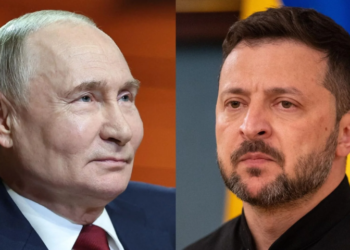
President Volodymyr Zelensky described the situation as “one of the most difficult moments in our history,” warning that Ukraine might face a stark choice: compromising dignity or risking the loss of a key ally. He appointed Andriy Yermak, his head of office, to lead Ukraine’s negotiating team.
Kyiv remains critically dependent on US-made advanced weaponry and intelligence support to repel ongoing Russian assaults. Moscow has confirmed receipt of the US plan but has not engaged in detailed discussions, with Putin asserting that Russia is willing to “show flexibility” while remaining prepared to continue fighting.
Since launching a full-scale invasion in February 2022, Russian forces have slowly advanced in southeastern Ukraine despite heavy casualties.