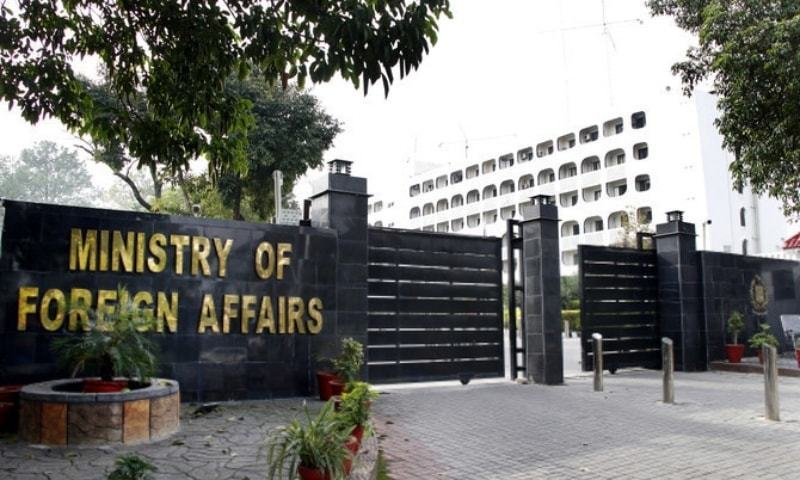
Islamabad, November 28, 2025: The Foreign Office (FO) clarified on Friday that the ongoing ceasefire understanding with Afghanistan is not a “traditional” agreement between two warring states, but rather hinges entirely on whether Afghan soil is used for terrorist activity against Pakistan.
Speaking at the weekly press briefing, FO Spokesperson Tahir Andrabi said Pakistan’s concerns stem from continued cross-border attacks despite multiple rounds of mediation-led talks.
Ties between Pakistan and the Afghan Taliban have plunged to their lowest level since the group took power in August 2021. Border crossings have remained sealed since October 11, halting trade and people-to-people movement after weeks of clashes, ground fighting and Pakistani airstrikes along the 2,600-km frontier, the deadliest escalation since the Taliban takeover.
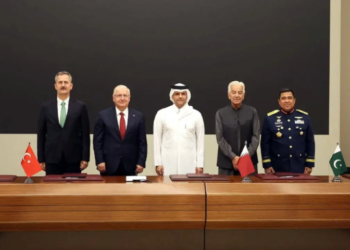
In response to the flare-up, Turkiye and Qatar initiated mediation efforts.
- Round 1 in Doha: Produced a fragile ceasefire.
- Round 2 in Doha: Resulted only in a broad agreement to create a verification mechanism.
- Round 3: Ended without any concrete breakthrough.
The situation deteriorated again this week after Kabul accused Pakistan of fresh airstrikes, claims rejected by Islamabad. The Afghan Taliban also issued threats of retaliation.
Addressing these developments, Andrabi stressed that the ceasefire should not be understood in conventional military terms.
“The ceasefire between Pakistan and Afghanistan does not imply a traditional ceasefire implemented after two belligerent states in a war,” he said. “It means there would be no terrorist attacks by Afghan-sponsored proxies inside Pakistan. But major attacks have occurred even after this ceasefire.”
He added that assaults by TTP, FAK and Afghan nationals on Pakistani soil directly contradict the spirit of the ceasefire.
“If Afghan nationals are attacking, as they did in Islamabad and elsewhere, we cannot be optimistic,” he noted.
“This must be understood entirely in the context of terrorism originating from Afghanistan.”
The spokesperson affirmed that Pakistan’s security forces remain on high alert and prepared for any contingency.
Earlier this month, Pakistan’s information ministry revealed that all militants behind the attack on Cadet College Wana in South Waziristan were Afghan citizens. The attackers breached the college’s main gate but were neutralized before causing mass casualties.
Similarly, Minister of State for Interior Talal Chaudhry said the suicide bomber who targeted Islamabad’s district courts in G-11 was “not a Pakistani national.” The blast killed 12 people and injured 36.
Prime Minister Shehbaz Sharif blamed both Afghanistan and India for sponsoring terrorism in Pakistan, vowing a “befitting response” to the enemies of the state. Defence Minister Khawaja Asif also warned that Pakistan “cannot rule out action against terrorist sanctuaries inside Afghanistan.”
Pakistan condemns terror attack in Washington, DC
Meanwhile, Pakistan strongly condemned a deadly shooting in Washington, DC, in which a U.S. National Guard member was killed and another critically injured — reportedly by an Afghan national.
In a statement, the FO expressed solidarity with the U.S. government and families of the victims.
“Our thoughts and prayers are with the departed soldier, and we wish the injured a swift recovery,” the statement read.
“Pakistan remains committed to working with the United States and the international community to address the shared challenge of terrorism.”
U.S. President Donald Trump confirmed that 20-year-old Sarah Beckstrom succumbed to her injuries, while 24-year-old Andrew Wolfe remains in critical condition.
Calling it an act of terrorism, the FO said, “This targeted attack was undoubtedly an act of terrorism. Pakistan has endured countless similar incidents with clear linkages to Afghanistan. This underscores the need for enhanced global cooperation.”
The FO added that the incident signals a “troubling resurgence” of transnational terror networks.
Separately, President Trump said his administration intends to “permanently pause” migration from what he called “Third World countries,” though he did not specify which nations would be affected or define the term.
In a post on his Social Truth platform, Trump said the step aims to allow the U.S. immigration system to “recover” and reverse what he described as “millions of illegal admissions” under former President Joe Biden.
He also pledged to deport individuals who “are not a net asset to the United States.”
The announcement has raised questions internationally, as Trump did not elaborate on how the policy would be implemented or which countries may fall under the ban.