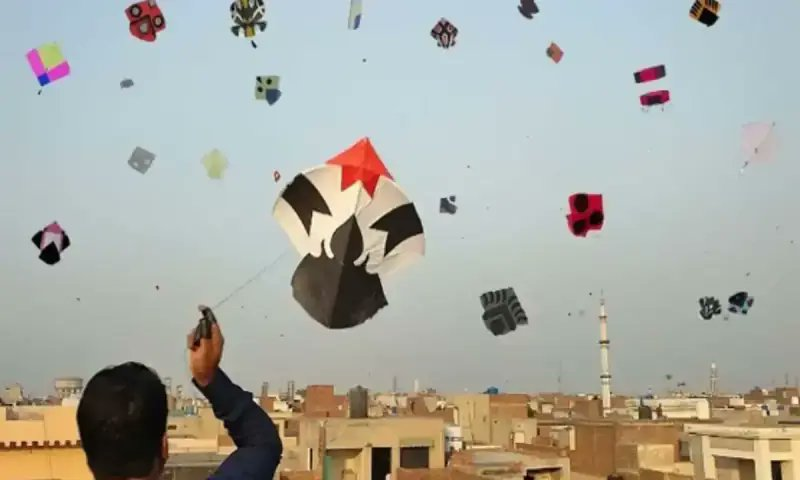
Lahore, December 10, 2025: The Punjab government on Wednesday announced that the three-day Basant festival will be celebrated from February 6 to 8, 2026, allowing kite flying under strict safety and regulatory measures across the province.
The announcement comes days after the provincial government promulgated an ordinance ending a 25-year ban on kite flying in Punjab.
According to official sources, special QR codes will be issued for both kites and kite strings, while aerial firing and unruly behaviour will be strictly prohibited during the celebrations.
Recently, the Lahore High Court rejected a petition seeking the immediate suspension of the ordinance and directed the government’s lawyer to submit a report on December 22 regarding preparations for the festival.
Kite flying had been banned in Punjab since 2001 after numerous fatalities and serious injuries were reported over the years due to chemical- and metal-coated strings. Under the new ordinance, kite flying will be permitted only with strings made purely from cotton.
The provincial government has warned of severe penalties for the manufacture, sale, or use of chemically or metal-coated strings. In Lahore, violators may face imprisonment ranging from three to five years, along with fines of up to Rs2 million.
The ordinance also places special emphasis on safety measures for motorcyclists.
Children under the age of 18 will not be allowed to fly kites, and parents or guardians will be held responsible for any violations. For minors, the first offence will attract a fine of Rs50,000, which will increase to Rs100,000 for a second offence. Failure to pay the fine may result in legal action against the parent or guardian.
Additionally, kite-flying associations will be required to register with the relevant district deputy commissioner. Kites may only be purchased from registered shopkeepers, each of whom will be linked to a unique QR code. The kites themselves will also carry QR codes to identify the seller.
Manufacturers of kite strings will similarly be required to register, with QR codes enabling authorities to trace the source of production, the ordinance added.