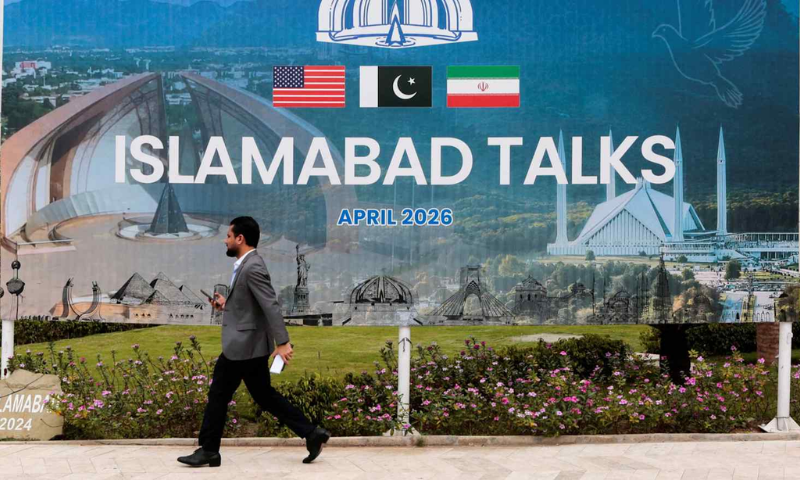
Islamabad/Rawalpindi, April 19, 2026: Authorities in Islamabad and Rawalpindi on Sunday suspended all public, private, and goods transport services until further notice, placing the twin cities on high alert ahead of the expected second round of talks between the United States and Iran.
Pakistan has recently taken a central diplomatic role after brokering a 14-day ceasefire between Washington and Tehran, followed by high-level negotiations in Islamabad. While the initial talks did not produce a final agreement, the ceasefire remains in place, with efforts ongoing to secure a lasting truce.
The heightened security measures come after Donald Trump announced that American negotiators would arrive in the capital on Monday for the next phase of dialogue.
Islamabad Deputy Commissioner Irfan Nawaz Memon confirmed the suspension of heavy and public transport across the capital, urging citizens to cooperate with security agencies. In Rawalpindi, Deputy Commissioner Hassan Waqar Cheema announced a similar halt to all transport services as a precautionary measure.
The Metro Bus Authority also suspended the Red Line Metro Bus service operating between the two cities, with operations halted from Saddar Station in Rawalpindi to Pak Secretariat in Islamabad until further orders.
Authorities have rolled out an extensive security plan across both cities. In Rawalpindi alone, over 10,000 police personnel have been deployed, with more than 600 special pickets established and strict monitoring at all entry and exit points. Senior officers, including SSP Operations Malik Tariq Mehboob, are overseeing field operations.
Islamabad Police have also intensified security, with SSP Investigation Muhammad Usman Tariq Butt and SSP Operations Ali Raza conducting inspections of key duty points, including the high-security Red Zone.
City Police Officer Khalid Hamdani is leading overall command and control arrangements. Elite commandos, snipers, and quick response units—including Elite Force and Dolphin Force teams—have been deployed to ensure comprehensive coverage. Officials indicated that up to 18,000 security personnel may be involved, with support from the Pakistan Rangers and the Frontier Corps.
Strict protocols have been enforced, including mandatory anti-riot gear for personnel and a ban on mobile phone usage while on duty. Only authorized individuals with valid identification will be allowed access to designated security zones.
Authorities have ordered the temporary closure of hostels, hotels, inns, and guest houses, warning of legal action in case of non-compliance. Seminaries near sensitive areas are also under consideration for closure or evacuation.
The Red Zone and its extended areas have been completely sealed, while major arteries—including Islamabad Expressway (between Koral and Zero Point) and key sections of Srinagar Highway—may face intermittent closures. Entry of heavy transport into the capital has been banned from all directions.
Key routes such as Jinnah Avenue near Khyber Plaza and Club Road from Kashmir Chowk have already been sealed. Residents of central sectors have been advised to use alternative routes, including Margalla Road and 9th Avenue, while diversions via Srinagar Highway, Stadium Road, and Murree Road have been outlined.
The ongoing tensions trace back to late February, when the United States and Israel launched joint strikes against Iran, triggering a broader regional conflict. Tehran responded with retaliatory attacks and restrictions on the strategic Strait of Hormuz.
A ceasefire mediated by Pakistan on April 8 brought a temporary halt to hostilities, paving the way for negotiations in Islamabad. With the second round of talks imminent, authorities say the extraordinary security and transport restrictions are temporary measures aimed at ensuring law and order during a highly sensitive diplomatic engagement.
Residents have been urged to follow official advisories and cooperate with law enforcement as the capital braces for another round of high-stakes diplomacy.