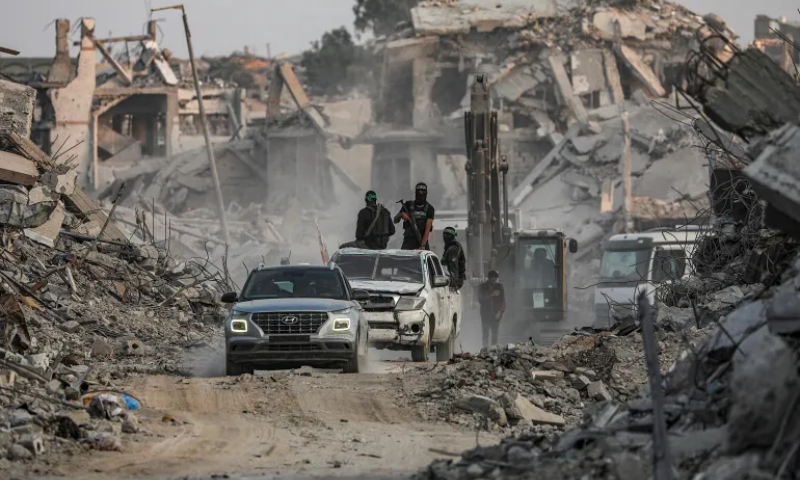
Jerusalem, December 14, 2025: Hamas has confirmed the killing of senior commander Raed Saad in an Israeli attack near Gaza City, marking the highest-profile assassination of a senior figure in the Palestinian group since the October ceasefire. At least 25 others were reportedly wounded in the strike.
Hamas’s Gaza chief, Khalil al-Hayya, condemned the attack, accusing Israel of violating the ceasefire. “In the wake of Israel’s continued violations, including the latest assassination of a Hamas commander, we call on mediators, especially the US administration and President Donald Trump as the main guarantor of the agreement, to ensure Israel respects the ceasefire and implements it,” he said in a video statement on Sunday.
Since the truce began on October 10, authorities in Gaza report that Israel has carried out nearly 800 attacks, killing at least 386 people and restricting humanitarian aid, leaving hundreds of thousands of Palestinians struggling, particularly after Storm Byron flooded 27,000 tent shelters.
Al-Hayya stressed the importance of advancing phase one of the ceasefire, which includes the delivery of aid, rehabilitation of hospitals and infrastructure, and the opening of the Rafah crossing with Egypt in both directions. He added that any international peacekeeping force should be limited to monitoring the ceasefire and separating the two sides at Gaza’s borders, rejecting any form of external guardianship over Gaza.
In a separate statement, the Israeli military said Saad had been working to rebuild Hamas’s military capabilities, describing him as one of the architects of the October 7, 2023, attacks on Israel and as head of Hamas’s weapons-manufacturing unit. Hamas sources identified him as the second-in-command of the group’s armed wing after Izz al-Din al-Haddad.
The killing comes as both Hamas and Israel were expected to move toward phase two of the ceasefire, which includes Israeli withdrawal, Palestinian disarmament, and formal cessation of hostilities. Khaled Meshaal, Hamas’s head abroad, has been engaging with the US to ensure the group’s vision guides the disarmament process.
While Hamas has expressed willingness to “freeze or store” weapons during the truce, senior officials emphasize that any international stabilization force should not have authority over Palestinian territory, but can supervise ceasefire compliance and report violations.
Al-Hayya reiterated that Hamas and other Palestinian factions remain committed to the truce but reject any external control over Gaza, underscoring the group’s stance on sovereignty and phased implementation of the ceasefire agreement.