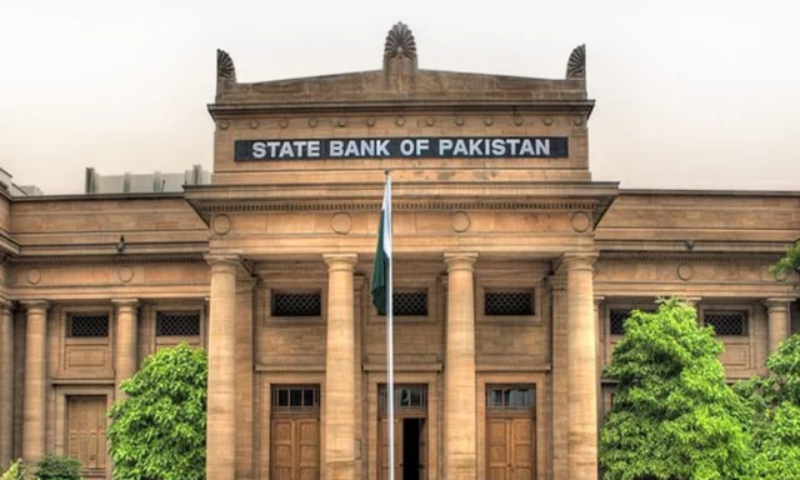
Karachi, December 15, 2025: The State Bank of Pakistan (SBP) on Monday reduced its policy rate by 50 basis points to 10.5 per cent, effective December 16, citing contained inflation and signs of improving economic activity, while cautioning that risks from the global environment and sticky core inflation remain.
Announcing the decision after its meeting, the Monetary Policy Committee (MPC) said average inflation remained within the medium-term target range of 5–7 per cent during July–November FY26, supported by relatively benign global commodity prices and anchored inflation expectations.
Despite continued rigidity in core inflation, the MPC assessed that the real policy rate remains adequately positive, creating space to cautiously support sustainable economic growth without undermining price stability.
Market participants viewed the move as a measured step. Waqas Ghani Kukaswadia, Research Head at JS Global, said the modest cut reflects the central bank’s cautious approach. “SBP is signalling flexibility while remaining mindful of inflation risks and external account vulnerabilities,” he said, adding that the decision is positive for equities and could spur optimism in the stock market.
The central bank noted that economic activity is gaining traction, as reflected in strong high-frequency indicators and a better-than-expected 4.1 per cent year-on-year growth in large-scale manufacturing during Q1-FY26. On this basis, real GDP growth for FY26 is expected to remain in the upper half of the projected 3.25–4.25 per cent range.
However, the MPC warned that the global environment remains challenging, particularly for exports amid evolving trade dynamics.
On the external front, the current account recorded a modest deficit of $0.7 billion during July–October FY26, broadly in line with expectations. While imports increased alongside the economic recovery and remittances remained resilient, exports came under pressure due to a sharp decline in food shipments, especially rice. Despite subdued financial inflows, SBP’s foreign exchange reserves rose above $15.8 billion following the receipt of $1.2 billion from the IMF and are projected to reach $17.8 billion by June 2026.
The MPC also highlighted fiscal developments, noting Q1-FY26 surpluses driven by a sizeable SBP profit transfer. However, it flagged challenges in achieving revenue targets and underscored the need for tax reforms and the privatisation of state-owned enterprises. The Committee reiterated that coordinated monetary and fiscal discipline, alongside structural reforms, remains critical to sustaining macroeconomic stability and long-term growth.
Despite the rate cut, the business community expressed dissatisfaction. Muhammad Ikram Rajput, President of the Korangi Association of Trade and Industry (KATI), termed the reduction inadequate, saying it fell well short of industry expectations. He argued that bringing the policy rate into single digits is essential to revive industrial activity and place the economy back on a sustainable growth path, noting that the MPC had kept the policy rate unchanged at 11 per cent for seven months since May 2025.