By Viktor Abaturov
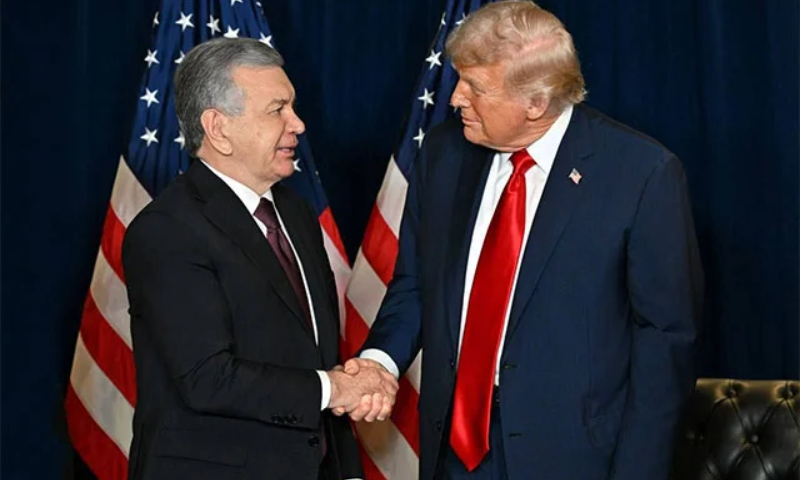
The inaugural meeting of the Peace Council in Washington marked a notable moment in contemporary diplomacy—one that blended global responsibility with pragmatic statecraft. At the invitation of Donald Trump, President of the United States, Shavkat Mirziyoyev of the Republic of Uzbekistan paid a working visit to Washington from February 17–19 to participate in the Council’s first session. The visit combined a substantive political agenda with an ambitious economic program, underscoring how diplomacy today increasingly operates at the intersection of peacebuilding and development.
A new multilateral platform for Gaza
The Peace Council is an intergovernmental initiative proposed by President Trump as part of the Gaza peace framework endorsed by the UN Security Council in November 2025. Beyond coordinating humanitarian assistance, the Council aims to establish durable mechanisms for stabilization, reconstruction, and socio-economic recovery in Gaza—while reducing the risk of renewed escalation in the Middle East.
The Council’s Charter was signed on January 22, 2026, on the sidelines of the World Economic Forum in Davos. A geographically diverse group of states joined as founding members, reflecting broad international interest in a structured, multilateral approach to one of the world’s most persistent crises. Uzbekistan’s participation among these states is significant. It reaffirms Tashkent’s commitment to peaceful diplomacy, respect for international law, and shared responsibility in maintaining global stability.
Uzbekistan recognized Palestine in 1994 and has consistently supported the right of the Palestinian people to establish an independent state in line with UN resolutions. This principled position has been matched by practical action. In 2023, Uzbekistan allocated $1.5 million through UNRWA. Later that year, 100 wounded Palestinian women and children were evacuated to Uzbekistan for medical treatment and rehabilitation. By 2025, Tashkent had developed a comprehensive state support mechanism for Palestinian citizens received in the country, covering asylum procedures, healthcare, education, and employment assistance.
At the February 19 meeting in Washington, leaders and representatives from more than 40 countries focused on humanitarian relief, infrastructure restoration, and the sustainability of post-conflict recovery. President Trump announced that nine countries—including Uzbekistan—had jointly pledged $7 billion for Gaza, with the United States committing an additional $10 billion to support the Council’s work.
In his address, President Mirziyoyev expressed full support for the initiative and emphasized a crucial principle: any external governance framework for Gaza must rest on internal public support to ensure legitimacy and long-term effectiveness. Uzbekistan also declared its readiness to contribute to rebuilding housing, schools, kindergartens, and healthcare facilities—linking immediate humanitarian needs with longer-term development goals.
For decades, the Palestinian question has remained unresolved despite repeated international efforts. The Peace Council represents one of the most structured multilateral attempts in recent years to move beyond crisis management toward sustainable recovery. Uzbekistan’s role among the founding states reflects its growing recognition as a constructive and responsible diplomatic actor.
Economic statecraft as strategic partnership
Alongside political dialogue, the economic dimension of President Mirziyoyev’s visit was equally consequential. In recent years, Uzbekistan and the United States have steadily rebuilt institutional mechanisms of strategic partnership. Cooperation with the U.S. Export-Import Bank resumed in 2017 after a 13-year hiatus, while agreements with major U.S. companies helped advance e-commerce, trade financing, and digital infrastructure.
A major milestone came in September 2025 during the 80th UN General Assembly in New York, where negotiations between the two presidents produced a portfolio of contracts and prospective projects exceeding $100 billion. These agreements span aviation, energy, mining, finance, and innovation—signaling a shift from episodic cooperation to long-term industrial partnership.
During the Washington visit, President Mirziyoyev met with senior U.S. officials, including Commerce Secretary Howard Lutnick and U.S. Trade Representative Jamieson Greer. Discussions centered on expanding financing for major projects, supporting high-tech exports, advancing Uzbekistan’s WTO accession, and launching a bilateral Investment Platform—formally established during the visit.
Tangible results and future potential
The numbers tell a compelling story. Between 2017 and 2025, bilateral trade grew 4.7-fold to $1 billion. U.S. foreign direct investment and loans surged nearly 64-fold, with cumulative inflows exceeding $2.9 billion. As of February 2026, more than 300 enterprises with U.S. capital operate in Uzbekistan, concentrated in manufacturing, mining, construction, services, and agriculture.
Yet the most promising phase may still lie ahead. Uzbekistan’s integration into global value chains—particularly in textiles, agro-processing, critical minerals, information technology, and renewable energy—offers significant untapped potential. Technology cooperation is especially strategic, with the United States already accounting for nearly half of Uzbekistan’s IT exports.
Privatization and public-private partnership initiatives further expand the horizon. By 2030, the private sector’s share of Uzbekistan’s economy is projected to reach 85 percent, opening new avenues for U.S. investors and financial institutions.
A dual achievement
President Mirziyoyev’s visit to Washington illustrates how modern diplomacy increasingly blends peacebuilding with economic transformation. Uzbekistan’s engagement in the Peace Council enhances its international standing and underscores its readiness to contribute to resolving global challenges. Simultaneously, the expanding portfolio of U.S.-Uzbek projects elevates bilateral relations to a new level—defined by deeper institutional cooperation, industrial integration, and long-term strategic trust.
In an era of geopolitical uncertainty, such dual-track diplomacy may prove not only pragmatic, but essential.