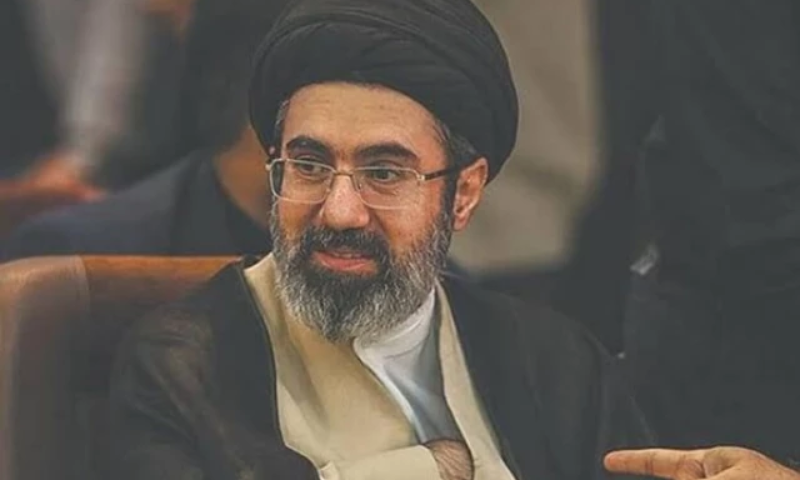
Tehran/Washington, March 12, 2026: Iran’s newly appointed Supreme Leader Mojtaba Khamenei on Thursday warned that all United States military bases in the region should be closed immediately, saying they would be targeted if they remained operational.
In his first official message since assuming the position following the death of Ali Khamenei, Mojtaba Khamenei said the closure of the Strait of Hormuz should continue as a strategic tool to pressure Iran’s adversaries amid the ongoing war involving the United States and Israel.
He said the Iranian people supported a policy of “effective and deterrent defence” and warned that Tehran was studying the possibility of opening new fronts where “the enemy lacks experience and will be extremely weak.”
Khamenei also praised regional allies involved in attacks against Israel, including groups aligned with the so-called resistance front. He specifically mentioned support from Hezbollah in Lebanon and forces in Yemen and Iraq.
The Iranian leader vowed to avenge those killed in recent attacks, including victims of a strike on a school in Minab, and said retaliation would continue until justice was achieved. However, he stressed that the conflict should not damage Iran’s relations with neighbouring countries, noting that the country shares land or sea borders with 15 states and seeks constructive ties with them.
Iran’s armed forces would continue targeting military bases used in attacks against the country, he said, while urging neighbouring states hosting US facilities to shut them down to avoid further escalation.
Following his remarks, the naval commander of the Islamic Revolutionary Guard Corps, Alireza Tangsiri, pledged to maintain the strategy of blocking the Strait of Hormuz and deliver “harsh blows” to what he described as the aggressor.
Separately, Secretary of Iran’s Supreme National Security Council Ali Larijani warned that any attempt to cripple Iran’s power infrastructure could trigger widespread retaliation across the region, claiming that such an action could lead to regional blackouts within minutes.
Meanwhile, Iran’s Parliament Speaker Mohammad Bagher Ghalibaf warned that any attack on Iranian islands would provoke a decisive response, saying Tehran would respond without restraint if its territorial integrity was threatened.
Iranian military officials also claimed that recent operations targeted Israeli facilities, including the Palmachim Airbase and Ovda Airbase, as well as a security complex linked to Israel’s domestic intelligence agency Shin Bet near Tel Aviv.
Rising costs and regional tensions
According to a report by Al Jazeera, officials from the administration of US President Donald Trump told lawmakers that the first six days of the war against Iran had already cost Washington at least $11.3 billion, with the total expected to rise significantly as operations continue.
Some US lawmakers have suggested the White House could seek up to $50 billion in additional funding for the conflict, although detailed projections about the war’s overall cost and duration remain unclear.
Gulf states call for diplomacy
Despite strong criticism of Iranian attacks, Gulf Arab governments have emphasised restraint and diplomacy to avoid a wider regional war.
Officials from several Gulf states argue that Tehran’s justification for targeting their territories due to their alliances with Washington is flawed, while stressing that a prolonged conflict would damage stability across the region.
Meanwhile, the Bahrain Defence Force said its air defence systems had intercepted and destroyed 105 missiles and 176 drones launched toward the kingdom since the start of the conflict.
Oil markets shaken
The conflict has also rattled global energy markets. Oil prices surged above $100 per barrel again amid fears of supply disruption after Iran reportedly attacked oil tankers and energy facilities across the region.
The International Energy Agency has recommended releasing 400 million barrels from global strategic reserves in an effort to stabilise markets, while the US government has authorised the release of 172 million barrels from its strategic reserves.
With the Strait of Hormuz — a route through which about one-fifth of the world’s oil passes — effectively blocked, concerns are growing about a prolonged energy crisis if hostilities continue to escalate.