Washington, March 14, 2026: Donald Trump said on Saturday that American and allied warships were heading toward the Strait of Hormuz to ensure the vital waterway remains “open and safe” for global shipping amid escalating tensions with Iran.
The US president said Washington would continue striking Iranian military targets and warned Tehran against interfering with commercial traffic through the strategic passage, which carries about a fifth of the world’s energy supplies.
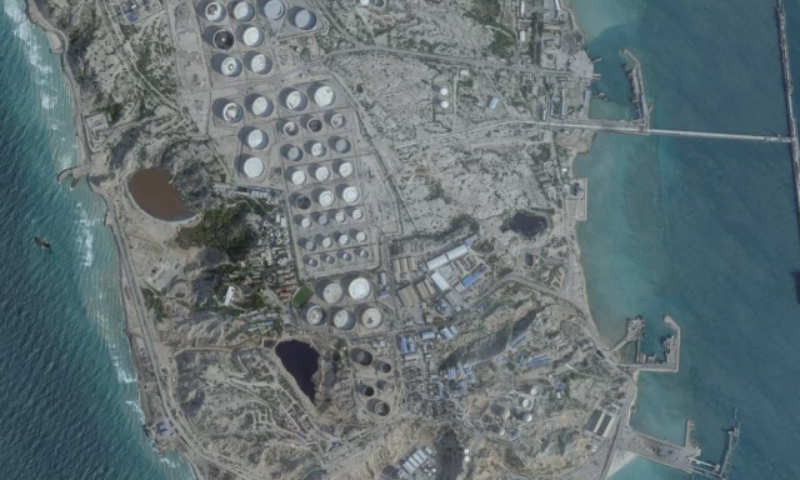
Trump earlier threatened to target oil infrastructure at Kharg Island if Iran did not halt attacks on vessels passing through the Strait of Hormuz. In a post on Truth Social, he claimed US forces had “totally obliterated” military targets on the island, which handles roughly 90 percent of Iran’s oil exports and lies about 500 kilometres northwest of the strait.
Describing the operation as “one of the most powerful bombing raids in the history of the Middle East,” Trump also asserted that Iran had been “totally defeated” in the ongoing US-Israeli military campaign and was seeking a deal that he would not accept.
“Should Iran, or anyone else, do anything to interfere with the free and safe passage of ships through the Strait of Hormuz, I will immediately reconsider this decision,” Trump warned, adding that the US Navy would soon begin escorting oil tankers through the waterway.
The escalation comes as regional tensions continue to mount. The United States Embassy in Baghdad was struck by a missile attack on Saturday, according to Iraqi security sources cited by Reuters. Smoke was seen rising from the compound, though the extent of the damage remained unclear. Another security source told Al Jazeera that the embassy’s air defence system was destroyed in the strike.
Meanwhile, Iran said it had shot down five drones over its airspace, bringing the total number of US and Israeli drones it claims to have downed since the start of the war to 114, according to Iranian state television.
Iranian media reported that more than 15 explosions were heard on Kharg Island during recent US strikes, which reportedly targeted air defences, a naval base and airport facilities but caused no damage to oil infrastructure.
Iran’s armed forces warned that any attack on the country’s oil or energy facilities would be met with strikes on installations belonging to companies cooperating with the United States in the region.
The conflict has also spread across the region. Iran’s Islamic Revolutionary Guard Corps said it carried out additional attacks on Israel alongside Hezbollah, while Israel reported striking more than 200 targets across western and central Iran, including missile launchers, air-defence systems and weapons production sites.
The war has also taken a toll on US forces. The US military confirmed that all six crew members aboard a refuelling aircraft that crashed in western Iraq had died. Separately, five US Air Force tanker aircraft stationed in Saudi Arabia were reportedly damaged by an Iranian missile strike.
Global energy markets remain on edge as the conflict threatens supply routes. Despite the escalation, Iran has continued exporting crude oil, with satellite imagery showing several large tankers loading at Kharg Island earlier this week. Analysts estimate Iran exported between 1.1 million and 1.5 million barrels of oil per day during the early weeks of the conflict.
The war, which began on February 28 with large-scale US and Israeli strikes on Iran, has since evolved into a broader regional confrontation involving Lebanon and Gulf states. More than 2,000 people have been killed, most in Iran, while millions have been displaced across the region.
Meanwhile, Iran’s new supreme leader, Mojtaba Khamenei, has vowed to keep the Strait of Hormuz closed and warned neighbouring countries hosting US bases that they could become targets if the conflict expands further.
European governments are also considering plans to deploy naval escorts for oil tankers in the strait as they seek to protect energy supplies and commercial shipping routes.