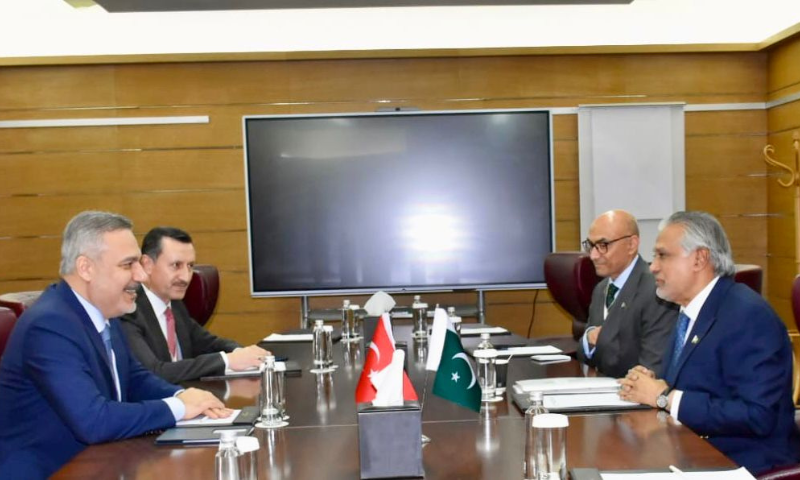
Seoul, March 19,2026: The Head of Pakistan’s Employment Permit System (EPS) Center held a detailed meeting with the Overseas Employment Corporation (OEC) to discuss enhanced cooperation on the Employment Permit System (EPS) and the points-based selection mechanism, with a focus on expanding the dispatch of Pakistani workers to South Korea.
The meeting centered on addressing key concerns of job seekers while exploring avenues to increase employment opportunities for Pakistani workers under Korea’s EPS framework.
Officials explained that under the EPS, referrals of job seekers are made through a computerized system operated by local employment centers in Korea. Employers receive up to three candidates for each vacancy based on their labor demand and retain full authority to make the final hiring decision. It was emphasized that no external institution or individual can influence this process.
A major concern discussed was the relatively low referral ratio for Pakistani candidates. Officials noted that Korean employers tend to prioritize workers with higher Korean language proficiency to ensure faster workplace adaptation, improved productivity, and reduced risk of industrial accidents. The EPS Center expressed optimism that sending more linguistically skilled Pakistani workers would enhance their reputation and create a sustainable cycle of increased hiring in the long term.
Addressing delays in referrals, the EPS Center clarified that job seekers are recommended strictly according to employer demand, with priority given to candidates who have remained longer on the roster, provided they meet job requirements.
The meeting also reviewed the points-based selection system, under which candidates are chosen purely on merit. Selection is determined by scores achieved in the Korean Language Test and the Skills Competency Assessment. From this year, the minimum passing score for the language test in the manufacturing sector has been raised to 60 marks. Additionally, while the basic skills component will be simplified, greater emphasis will be placed on interviews to strengthen candidate evaluation.
Officials further noted that despite the presence of existing job seeker rosters, new candidates continue to be added. This is partly due to post-pandemic adjustments, as South Korea has already admitted a large number of foreign workers and is now moderating intake levels. Consequently, the government has revised quotas, with the Ministry of Employment and Labor and the Human Resources Development Service of Korea planning to reduce overall selection numbers.
On policy matters, it was clarified that apart from minor differences in industrial sectors, selection criteria and operational procedures remain uniform across all participating countries.
The meeting concluded with a shared commitment to improving coordination and enhancing the prospects of Pakistani workers in South Korea through better preparation, particularly in language skills and technical competencies.