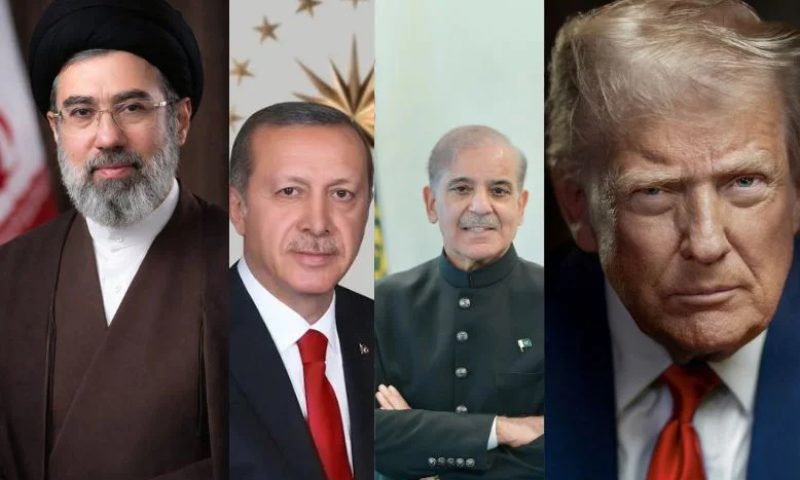
Islamabad/Ankara/Tehran, March 25, 2026: Pakistan has conveyed a proposal from the United States to Iran, with Islamabad and Turkey under consideration as possible venues for talks aimed at de-escalating the ongoing Gulf conflict, a senior Iranian official told Reuters on Wednesday.
The official, speaking on condition of anonymity, indicated that while Tehran has publicly rejected negotiations with the administration of Donald Trump, backchannel diplomacy remains active. However, later developments suggested Iran had responded negatively to the US proposal, outlining specific conditions for ending the conflict.
According to sources, the contents of the proposal remain undisclosed, though reports suggest it may include curbs on Iran’s nuclear programme, ballistic missile development, and regional activities. Israeli officials have also reportedly been briefed on the framework.
Despite these diplomatic efforts, Iran’s Ambassador to Pakistan Reza Amiri Moghadam denied that any direct or indirect negotiations had taken place so far, describing media reports as speculative.
He noted, however, that consultations by friendly countries were natural in efforts to end what Tehran termed “illegitimate aggression.”
Iran has laid out five key conditions for ending the conflict, including a complete halt to hostilities, guarantees against renewed aggression, reparations, resolution across allied fronts, and international recognition of its control over the Strait of Hormuz.
Meanwhile, Malaysian Prime Minister Anwar Ibrahim welcomed Pakistan’s offer to host dialogue, calling it a “timely and constructive” initiative.
In a statement, he praised Prime Minister Shehbaz Sharif for stepping forward at a critical moment, noting that Pakistan’s ties with key stakeholders position it as a credible mediator.
Anwar urged both Washington and Tehran to engage sincerely, emphasizing that negotiations must aim at ending the conflict rather than managing it tactically. He also stressed the importance of consistent application of international law and protection of civilian populations.
Pakistan’s offer to host talks follows an intensive diplomatic effort involving political and military leadership. Deputy Prime Minister Ishaq Dar has been in frequent contact with Iran’s Foreign Minister Abbas Araghchi, while Prime Minister Shehbaz Sharif has held multiple discussions with Iranian President Masoud Pezeshkian.
Reports also point to engagement between Pakistan’s military leadership, including Chief of Army Staff Asim Munir, and US officials as part of efforts to prevent further escalation.
Officials say Pakistan’s mediation role builds on a history of facilitating sensitive diplomatic engagements, including past efforts involving Afghanistan and regional rivals.
The proposed talks come amid a nearly month-long conflict involving the United States, Israel, and Iran, which has destabilised the Middle East and impacted global energy markets.
According to Rafael Grossi, head of the International Atomic Energy Agency, any forthcoming negotiations are expected to cover a broader agenda, including missile programmes, regional militias, and security guarantees.
While uncertainty persists, the possibility of talks in Islamabad or Ankara signals a renewed diplomatic opening. Global stakeholders are increasingly pushing for negotiations to prevent further escalation in a conflict with far-reaching regional and international consequences.