Islamabad, April 10, 2026: The Ministry of Religious Affairs and Interfaith Harmony has initiated a “Zero-Defect” Hajj operation for 2026, marking a major strategic shift toward modernizing pilgrimage management. As part of this initiative, 1,152 Khuddam-ul-Hujjaj have successfully completed field deployment and a three-day specialized training programme.
Under the newly introduced “Smart Service Model,” each welfare staff member has been equipped with specialized skills tailored to their respective job descriptions. The initiative aims to ensure seamless service delivery in the Holy Land by transforming traditional support staff into “Smart Guardians and Guides” for the pilgrims, known as Dhuyuf-ur-Rahman (Guests of Allah).
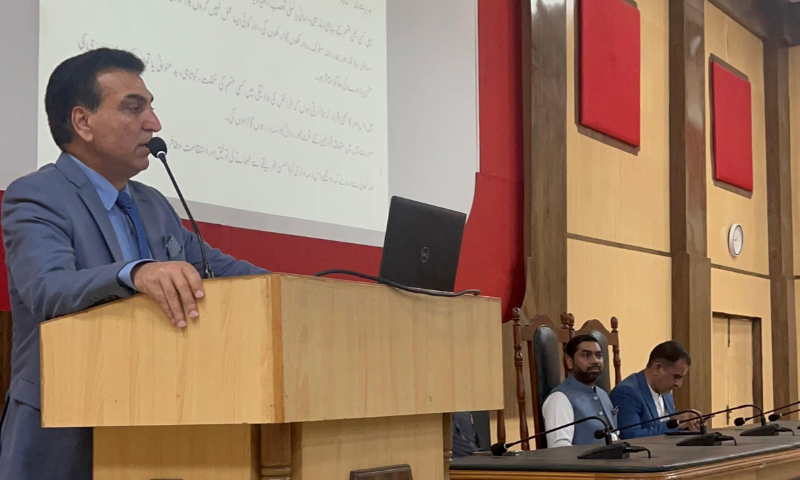
Coordinator Makkah and Khuddam-ul-Hujjaj, Zulfiqar Khan, stated that the training was conducted in line with the directives of the federal minister and secretary for religious affairs. The programme was carried out in two phases: a 10-day generalized orientation followed by a rigorous three-day specialized session divided into three key modules.
On the first day, participants received audio-visual briefings on building inspections, induction procedures for pilgrims, and wheelchair distribution mechanisms. Supervisors (Nazmeen) were also provided comprehensive training on the “Mashair Strategy” to ensure smooth movement of pilgrims between Makkah, Mina, and Arafat.
The second day focused on logistics and digital monitoring. Practical exercises covered bus requisitioning, drop-point management, and kitchen menu supervision. A key component of the training was the Digital Complaint Management System (CMS), designed for real-time grievance redressal.
The final day emphasized tracing lost baggage and handling operational responsibilities in Madinah Munawwarah. To assess the effectiveness of the training, participants underwent a comprehensive evaluation through a quiz at the conclusion of the programme.
To enhance transparency and efficiency, the ministry has enforced a strict Code of Conduct. The use of prescribed uniforms and GPS tracking has been made mandatory for all staff to enable real-time monitoring of field movements.
The coordinator underscored that the service of pilgrims must take precedence over personal voluntary prayers. He also reiterated a “zero-tolerance” policy against professional misconduct, warning that any official found involved in corruption, accepting gifts, or neglecting duties would face immediate repatriation, forfeiture of allowances, and permanent blacklisting from future Hajj assignments.
The initiative reflects Pakistan’s commitment to leveraging technology and professional training to ensure a safe, efficient, and spiritually fulfilling pilgrimage experience for its citizens during Hajj 2026.