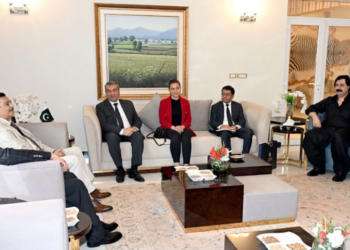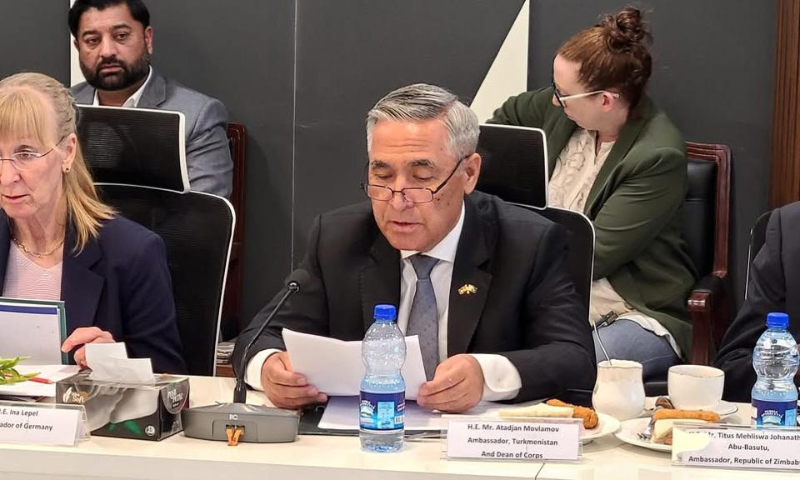
Islamabad, April 15, 2026: A high-level roundtable on human capital development was held at the National Vocational and Technical Training Commission (NAVTTC), bringing together key policymakers, diplomats, and international development partners to advance collaboration in technical and vocational education and training (TVET).
The event was attended by Rana Mashood Ahmed Khan, heads of diplomatic missions, and representatives of international organizations accredited to Pakistan. Discussions focused on strengthening partnerships to equip youth with market-driven skills and enhance workforce competitiveness.
At the outset, the Pakistani side presented an overview of NAVTTC’s initiatives, achievements, and ongoing reforms under the Technical and Vocational Education and Training Sector Support Program, aligned with the country’s Vision 2025. The briefing highlighted efforts to modernize skills development frameworks and improve employability through industry-oriented training.
Participants explored specific avenues for cooperation between NAVTTC and partner countries, particularly in the areas of training, certification, and workforce mobility. Emphasis was placed on fostering joint skill development programs, scholarships, and the establishment of centers of excellence to meet evolving labor market demands.
Addressing the gathering, A. Movlamov outlined Turkmenistan’s policies in technical and vocational education and training. He emphasized reforms aimed at aligning skills development with contemporary labor market needs, promoting industrial partnerships, gender equality, and international collaboration.
The ambassador also underscored Turkmenistan’s foreign policy rooted in its principle of Permanent Neutrality, highlighting its commitment to regional cooperation. He stressed the importance of professionally trained specialists to support major regional initiatives, including the Turkmenistan–Afghanistan–Pakistan–India Gas Pipeline and the Turkmenistan–Afghanistan–Pakistan Power Interconnection Project, which are expected to contribute significantly to Pakistan’s energy security.
At the conclusion of the roundtable, participants expressed a strong interest in further strengthening dialogue and agreed to intensify collaboration between relevant government agencies, educational institutions, and international partners. The event reaffirmed Pakistan’s commitment to human capital development as a cornerstone of sustainable economic growth.