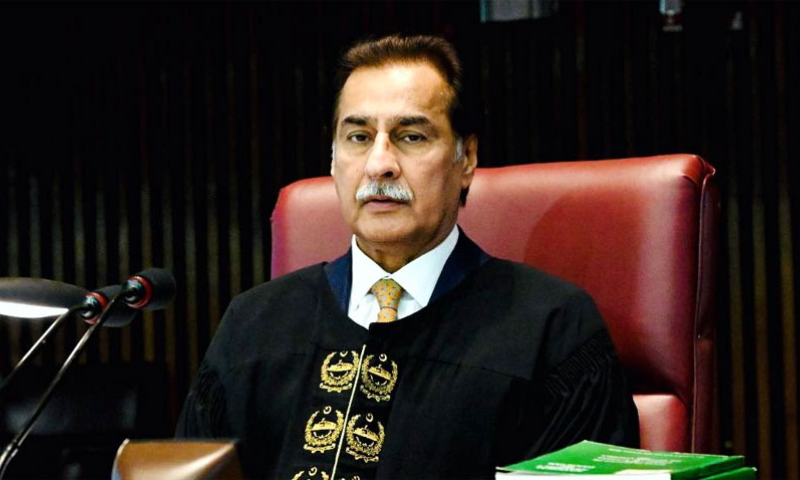
Islamabad, June 3,2026: The National Assembly Secretariat has achieved projected savings of approximately Rs4.5 billion during the current fiscal year through a comprehensive programme of austerity measures, institutional reforms, and digital transformation initiated under the leadership of Speaker National Assembly Ayaz Sadiq.
According to an official statement issued on Wednesday, the savings represent 27.3 percent of the Secretariat’s total budgeted expenditure for the financial year 2025-26 and reflect efforts aimed at enhancing efficiency, transparency, and prudent utilization of public resources.
The National Assembly Secretariat’s projected expenditure for FY 2025-26 stood at Rs16.3 billion, including Rs9.4 billion in employee-related expenses such as salaries, allowances, and payments for Members of the National Assembly and Secretariat staff, while Rs6.9 billion was allocated for operational and administrative costs.
Through targeted austerity measures, the Secretariat generated estimated savings of Rs2 billion in employee-related expenditure and Rs2.5 billion in non-employee expenditure.
As part of its restructuring programme, the Secretariat has reduced its sanctioned workforce from 1,725 positions to 1,344 positions.
Of the planned reduction of 381 posts, 301 positions have already been abolished, while the remaining 80 posts are scheduled to be eliminated during FY 2026-27.
The statement emphasized that no employee was laid off or forced to resign during the process, describing the initiative as an example of effective human resource management focused on improving institutional efficiency without affecting existing staff.
A significant portion of the savings resulted from strengthened financial controls, cost-effective procurement practices, energy conservation measures, and tighter oversight of operational expenditures.
The Secretariat also credited the implementation of the “Paperless Parliament” initiative for reducing costs associated with printing, paper consumption, record management, and administrative processes.
Under the initiative, parliamentary agendas, bills, reports, committee papers, and other official documents are now circulated electronically, improving efficiency while supporting environmental sustainability.
The National Assembly Secretariat stated that it has become Pakistan’s first AI-enabled parliament through the integration of advanced digital technologies and artificial intelligence tools.
The initiative includes the use of AI-powered systems to enhance legislative research, document management, information accessibility, and administrative operations.
Officials said the technological transformation is strengthening institutional capacity and improving service delivery for lawmakers and parliamentary stakeholders.
The Secretariat also implemented strict austerity measures related to official transport and travel expenditures.
Enhanced monitoring of the transport fleet, optimized vehicle utilization, reduced fuel consumption, and tighter maintenance controls contributed significantly to overall savings.
Speaker Ayaz Sadiq said financial discipline, transparency, digital transformation, and responsible governance remain central priorities of the National Assembly.
He stated that the reforms demonstrate Parliament’s commitment to the efficient use of public funds and set an example for other public institutions in promoting accountability, innovation, and operational excellence.
The National Assembly Secretariat reiterated its commitment to continuing reforms aimed at improving efficiency, embracing technological innovation, and ensuring the optimal utilization of national resources.