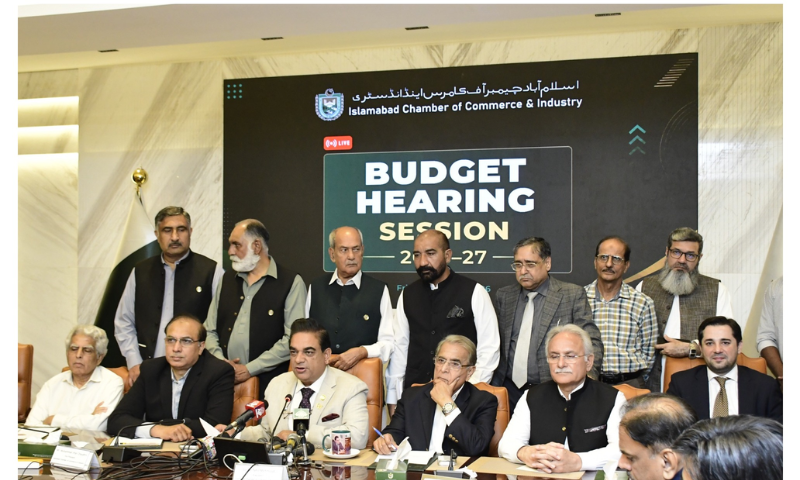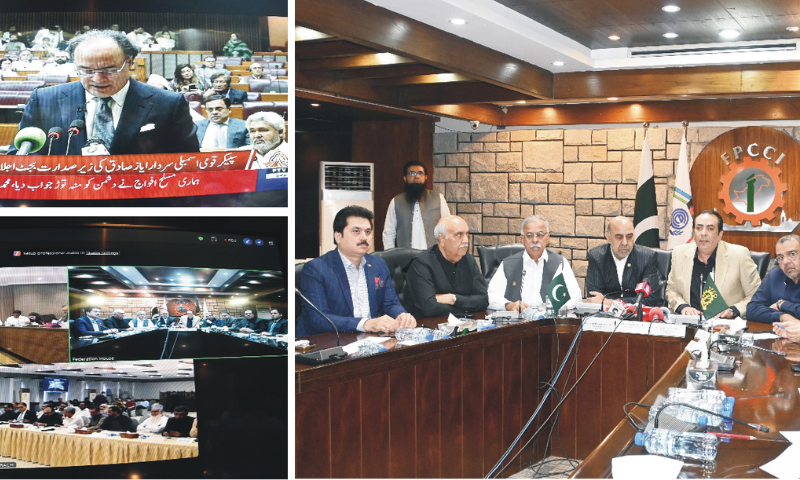
Islamabad, June 12, 2026: The Federation of Pakistan Chambers of Commerce and Industry (FPCCI) has welcomed the federal government’s efforts toward macroeconomic stabilization in the Budget 2026-27, while cautioning that ambitious revenue targets and higher petroleum levies could fuel inflation and hinder economic growth.
Speaking at a post-budget session, FPCCI President Atif Ikram Sheikh acknowledged the presentation of the Rs18.7 trillion federal budget and congratulated Prime Minister Shehbaz Sharif and the government’s economic team on presenting their fifth consecutive budget.
He said the continuity of economic policymaking was an encouraging sign and noted that Pakistan’s economy had shown positive indicators, including GDP growth of 3.7 percent, a reduction in the fiscal deficit to 0.7 percent of GDP, and a 23 percent decline in public debt servicing costs.
“While these indicators reflect progress toward fiscal discipline and economic stability, the federal budget must now facilitate a transition from stabilization to sustained economic and industrial growth,” he said.
The FPCCI president appreciated the inclusion of several proposals put forward by the business community, describing them as steps toward a more growth-oriented economic framework.
Among the measures welcomed by FPCCI are:
- Abolition of the Capital Value Tax (CVT) on foreign assets.
- Elimination of the Federal Excise Duty (FED) on international business-class travel.
- Reduction and rationalization of the Super Tax, including its abolition on income slabs up to Rs500 million and a reduction from 10 percent to 8 percent on higher income brackets.
- Complete waiver of Super Tax for exporters.
- Elimination of the surcharge on salaried individuals and reductions in income tax rates across multiple salary slabs.
- Extension of the 0.25 percent final tax regime for IT exports until June 2029.
- A 50 percent reduction in withholding tax rates for filers in the construction sector.
- Introduction of a simplified one percent fixed sales tax scheme for retailers with annual sales below Rs200 million.
- Rationalization of the minimum tax regime for exporters.
Concerns over tax collection and inflation
Despite welcoming several budgetary measures, Atif Ikram Sheikh expressed concern over the broader economic environment and the government’s revenue assumptions.
He pointed out that the country’s investment-to-GDP ratio remained stagnant at 14.38 percent, while the savings rate had declined to 14.13 percent. He also noted that urban poverty had increased from 11 percent to 17 percent, reflecting continued economic pressures on households and businesses.
The FPCCI president voiced strong reservations over the Federal Board of Revenue’s tax collection target of Rs15.2 trillion, representing a 17 percent increase over the current fiscal year.
He also raised concerns about the government’s petroleum levy target of Rs1.7 trillion, an increase of 18 percent, warning that higher fuel-related taxation could exacerbate inflationary pressures, particularly at a time of elevated international oil prices.
FPCCI noted that several major proposals aimed at enhancing industrial competitiveness and export growth were not incorporated into the budget.
These include:
- Restoration of the Final Tax Regime (FTR) for exporters.
- Further reductions in corporate tax rates.
- Reduction of turnover tax under Section 113.
- Elimination of the minimum tax regime and further tax.
- Withdrawal of the repeal of Section 8B of the Sales Tax Act.
- Broader and more comprehensive digitalization of the economy.
Atif Ikram Sheikh said the budget sends mixed signals regarding support for industrialization, employment generation, and long-term economic growth.
“The next phase of reforms must focus on productivity enhancement, export diversification, investment promotion, and reducing the cost of doing business,” he stressed.
He added that it was premature to issue a final verdict on the budget, as FPCCI would conduct a comprehensive review of the Finance Bill over the next 48 hours in consultation with chambers of commerce, trade associations, and other stakeholders across the country.
The federation said it would release a detailed assessment and recommendations after completing its review, while reaffirming its commitment to constructive engagement with the government to strengthen Pakistan’s economy and improve competitiveness.