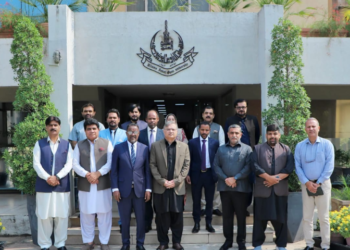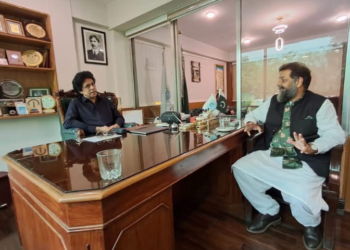
Islamabad, June 23, 2026: The Senate Standing Committee on Cabinet Secretariat on Tuesday reviewed Pakistan’s disaster preparedness framework, climate resilience measures, and early warning systems during a meeting held at the headquarters of the National Disaster Management Authority (NDMA) in Islamabad.
The meeting, chaired by Senator Rana Mehmood Ul Hassan, was attended by Senators Mohammad Abdul Qadir, Saadia Abbasi and Samina Mumtaz Zehri, while Senator Anusha Rahman participated via video link.
During the session, officials from the NDMA and the National Emergencies Operation Center (NEOC) briefed lawmakers on the country’s growing vulnerability to climate change and the increasing frequency of climate-induced disasters.
Committee members were informed that Pakistan remains among the countries most vulnerable to the impacts of climate change, facing escalating threats from heatwaves, glacier melting, droughts, flash floods and extreme weather events.
NDMA officials highlighted ongoing efforts to monitor weather and climate patterns in collaboration with national and international partners. The Authority has developed forecasting capabilities aimed at providing timely warnings and minimizing the impact of natural disasters.
The Committee was informed that above-normal temperatures are expected in parts of Sindh, Balochistan and southern Punjab in the coming months, while Gilgit-Baltistan and Khyber Pakhtunkhwa remain at heightened risk of glacier lake outburst floods (GLOFs) and flash floods.
Members received a detailed briefing on NDMA’s technological initiatives designed to strengthen disaster preparedness and response.
Officials outlined the use of real-time monitoring platforms, mobile applications, emergency alert systems and forecasting tools that provide citizens and relevant authorities with timely warnings regarding potential hazards.
The Authority also highlighted ongoing efforts to strengthen climate-resilient infrastructure, enhance emergency response capacities and improve preparedness mechanisms at federal, provincial and district levels.
Senator Anusha Rahman stressed the importance of stronger coordination between the NDMA and provincial governments to ensure effective disaster management across the country.
Responding to the concerns, NDMA Chairman Lieutenant General Inam Haider Malik informed the Committee that regular coordination mechanisms, preparedness plans and emergency stockpiles have already been established to facilitate timely responses during emergencies.
Committee members also discussed vulnerable tourist destinations and mountainous regions, particularly Kumrat and Swat, emphasizing the need for preventive measures to reduce the risks posed by floods and glacier-related disasters.
Representatives of Rescue 1122 Balochistan appreciated NDMA’s support in disaster management operations and called for greater inter-agency coordination, resource sharing and the inclusion of academic institutions in disaster risk reduction efforts.
The Committee also took up deliberations on the National Disaster Management (Amendment) Bill, 2025.
Members expressed concerns regarding the timely distribution of relief supplies during emergencies and stressed the need for greater transparency, accountability and coordination among disaster management institutions.
The Committee recommended broader consultation with provincial governments before finalizing the proposed amendments.
In light of reservations raised by the government regarding certain provisions of the bill, the Committee decided to defer further consideration until the receipt of a formal government response.
A significant portion of the meeting focused on glacier monitoring and flood forecasting technologies.
Representatives of Tollhawk, a United States-based company, briefed the Committee on sensor-based technologies capable of providing advance warnings of floods and helping prevent large-scale destruction.
In response, NDMA officials highlighted glacier monitoring systems currently operating under a project supported by the United Nations Development Programme (UNDP).
The NDMA Chairman informed lawmakers that approximately 350 monitoring devices have been installed across glacier regions; however, the number remains insufficient to effectively monitor Pakistan’s estimated 13,500 glaciers.
Committee members were informed that substantial additional infrastructure and technological investment would be required to achieve comprehensive glacier monitoring coverage nationwide.
The matter was subsequently referred to the Ministry of Climate Change with a recommendation to convene a joint technical meeting involving all relevant stakeholders to develop a coordinated strategy.
Concluding the meeting, Committee Chairman Senator Rana Mehmood Ul Hassan emphasized the urgent need to bridge coordination gaps between federal and provincial authorities to ensure a more effective, timely and integrated response to disasters.
He noted that with climate-related risks increasing across Pakistan, stronger institutional cooperation, enhanced technological capabilities and proactive preparedness measures would be essential to safeguarding lives, livelihoods and critical infrastructure.
The Committee reaffirmed its commitment to supporting initiatives aimed at strengthening Pakistan’s disaster management framework and improving resilience against the growing challenges posed by climate change.