Islamabad, July 2, 2026: The Senate Standing Committee on Economic Affairs on Thursday decided to write directly to the prime minister, the National Accountability Bureau (NAB) and the Federal Investigation Agency (FIA) over alleged irregularities, delays and corruption in foreign-funded development projects, particularly after a heated exchange over a letter from the Economic Affairs Division (EAD) questioning the committee’s jurisdiction.
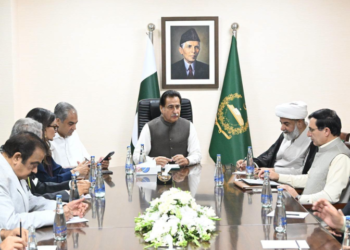
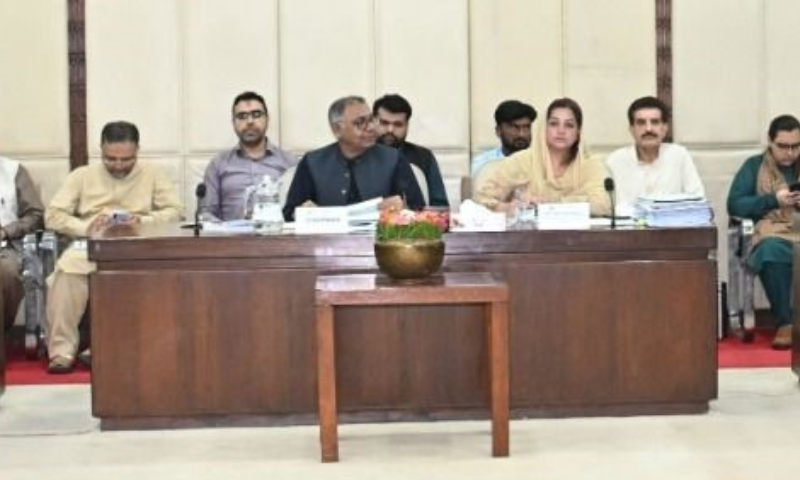
The committee met at Parliament House under the chairmanship of Senator Saifullah Abro to review the mechanism adopted by the federal and provincial governments for obtaining foreign loans and to assess progress on foreign-funded development projects in Sindh. At the outset, the committee directed the EAD to ensure the presence of the Secretary of Sindh’s Irrigation Department in future proceedings.
A major part of the meeting was dominated by discussion on a letter issued by the EAD that questioned the committee’s jurisdiction to pursue action on significant irregularities and alleged corruption identified in foreign-funded projects across the country.
Senator Kamran Murtaza expressed displeasure that a section officer had written to the committee saying the matter did not fall within its jurisdiction. He said the committee first needed to determine whether it had the authority to proceed and demanded that the letter be read out in the meeting.
Chairman Senator Saifullah Abro questioned whether the Secretary Economic Affairs stood by the contents of the letter and directed that it be read before the committee. He also ordered that the concerned section officer, along with a representative of the Ministry of Law and Justice, be summoned to explain the matter.
Senator Kamil Ali Agha described the episode as an attempt to create confusion and divert attention from the serious irregularities and alleged corruption identified by the committee in various foreign-funded projects. He said the letter reflected an adversarial approach to parliamentary oversight and warned that such actions could undermine efforts to ensure transparency, accountability and proper utilisation of foreign-funded resources.
The Secretary Economic Affairs told the committee there was no disrespect intended towards parliament and said Senate recommendations had always been implemented. He explained that the EAD had earlier been asked to write to the FIA and NAB in relation to a matter involving the Power Division, but the division could not directly write against another ministry without seeking legal opinion from the Ministry of Law. He accepted responsibility for the letter and its contents, while acknowledging that its wording could have been drafted with greater care and sensitivity.
Senator Kamran Murtaza said the committee had no objection to the ministry seeking legal opinion and would respect that opinion once received, but asked whether the ministry’s position implied that senators had exceeded their authority. He also argued that foreign-funded loans were largely utilised for projects in Punjab, while the financial burden arising from cost escalations and corruption was ultimately borne by provinces such as Balochistan and Khyber Pakhtunkhwa. He further alleged that project designs were often changed after loan approvals, that no action was taken against responsible officials, and that contract prices were initially kept artificially low so that costs could later be increased.
Senator Dilawar Khan said the committee had identified major irregularities in projects financed through foreign loans and questioned why the EAD had sought legal opinion instead of acting on the committee’s recommendations. He maintained that the Rules of Business, 1973 did not require the division to seek legal advice before implementing Senate committee directives.
Chairman Abro said alleged corruption in foreign-funded projects had already been established during previous committee meetings and that EAD officials present at those meetings had acknowledged it. He recalled that the committee had instructed the EAD to refer projects involving allegations of corruption to NAB and the FIA for further investigation, adding that the committee itself had the authority to directly refer such matters to the Public Accounts Committee (PAC), NAB and FIA, but had instead asked the EAD to act in order to strengthen its oversight role.
He further said Prime Minister Shehbaz Sharif had suspended nine senior officers and four members of the National Highway Authority on the basis of the committee’s findings and had not sought legal opinion before taking action. He warned that the committee would mention the non-cooperation of both the EAD and the Power Division in its communication to the PAC, NAB and FIA.
After detailed deliberations, the committee unanimously decided that it would write directly to NAB and the FIA seeking inquiries into two Power Division projects and other foreign-funded projects. It also directed the EAD to submit within three days all correspondence exchanged with the concerned ministry, along with an implementation report. The committee said its report and recommendations would subsequently be forwarded to the prime minister, PAC, NAB and FIA for further action.
The committee also reviewed procurement reforms and progress on Sindh-based projects. A representative of the Public Procurement Regulatory Authority (PPRA) informed members that major procurement reforms had been proposed to enhance transparency, curb corruption and reduce delays in project implementation, while provinces were also expected to adopt the federal procurement framework to ensure greater uniformity.
However, Chairman Abro pointed out that provinces were still not uploading tenders and bid evaluation reports online. He specifically noted that although Sindh’s Irrigation and Highways Departments had recently adopted the e-PADS procurement system, concerns over transparency in procurement continued to persist.
The committee expressed displeasure over incomplete information submitted by Sindh’s Irrigation Department regarding Sindh Road Sector Projects, including the Asian Development Bank-funded Emergency Flood Assistance Project (EFAP). Members sought details of 25 packages under Phase-II of the project, but the department’s representative failed to provide the required information.
The committee was informed that advertisements for certain packages were published on April 25, 2025, while the bid submission deadline was fixed for April 28, 2025. It expressed serious concern over the limited time given to prospective bidders, questioning how proposals could reasonably be prepared and submitted within just three days, including a weekend.
The committee recommended that the Sindh Irrigation Department provide complete details of all 25 packages, including the tendering process, engineering estimates, bid costs and copies of the published advertisements.
Reviewing the progress of ongoing Bus Rapid Transit (BRT) projects in Sindh, the committee also directed the Sindh government to provide comprehensive details regarding the procurement of buses for all BRT projects, including fare structures and the complete tendering process.
The meeting was attended by Senators Haji Hidayatullah Khan, Rana Mahmood-ul-Hassan, Syed Waqar Mehdi, Kamran Murtaza and Kamil Ali Agha, while Senators Dilawar Khan and Ahmed Khan attended as special invitees. Senior officials from the Economic Affairs Division, the Government of Sindh and other concerned departments were also present.