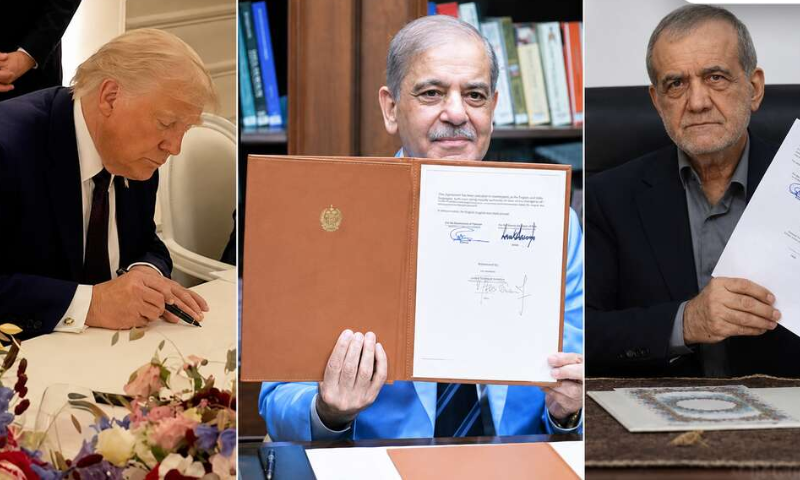
Tehran, July 18, 2026: Iran said on Saturday that at least 50 people have been killed and more than 500 injured in United States strikes since early July, while announcing that implementation of the Islamabad Memorandum of Understanding (MoU) has been suspended following what it described as repeated US violations.
According to Iran’s Health Ministry, the casualties occurred in attacks carried out since July 6, as the United States military continued a seventh consecutive night of strikes on targets across Iran.
Iranian authorities said the latest US attacks damaged critical civilian infrastructure, including a desalination plant in Jask, Hormozgan province, leaving around 10,000 residents in 20 villages without access to drinking water.
Deputy Foreign Minister Kazem Gharibabadi said the United States had violated all of its commitments under the Islamabad MoU, prompting Tehran to suspend implementation of the agreement.
“The US has violated and suspended all its commitments within the framework of the Islamabad MoU,” Gharibabadi was quoted as saying by Iran’s Fars News Agency. He added that Iran had also suspended its own commitments while focusing on defending the country.
Foreign Ministry spokesman Esmaeil Baghaei also accused Washington of breaching every aspect of the agreement over the past week, maintaining that Iran had not sought war and had only acted in self-defence.
The latest escalation came as the conflict spread further across the Gulf region, with Iran launching another wave of missile and drone attacks targeting US-linked facilities in Kuwait, Bahrain and Jordan.
Kuwait said two power generation and water desalination facilities were struck during the attacks, while several firefighters were injured while responding to fires triggered by the strikes. Bahrain activated air raid sirens and urged residents to seek shelter, while Jordan reported intercepting 10 Iranian ballistic missiles.
Iran’s Islamic Revolutionary Guard Corps (IRGC) claimed responsibility for attacks on US military-linked facilities, including Al Ahmadi port in Kuwait, Sheikh Isa Air Base in Bahrain and a US military installation in Jordan. The claims could not be independently verified.
Earlier, the US military’s Central Command (CENTCOM) said it had conducted another round of overnight strikes targeting surveillance sites, military logistics infrastructure, underground weapons storage facilities and maritime capabilities inside Iran.
The renewed fighting has further heightened tensions around the Strait of Hormuz, one of the world’s most important energy shipping routes. Iran maintains that it retains the right to regulate shipping through the strategic waterway under the interim peace arrangement, while the United States insists that international navigation must remain unrestricted.
US President Donald Trump has reimposed a naval blockade on Iranian ports and revoked sanctions waivers related to Iranian oil exports following the collapse of the ceasefire arrangement.
Iran has accused the United States of deliberately targeting civilian infrastructure, while warning that it would respond to such attacks by striking similar infrastructure in countries supporting US military operations.
The continued exchange of attacks has raised concerns over regional stability, global energy supplies and the risk of a broader conflict across the Middle East.