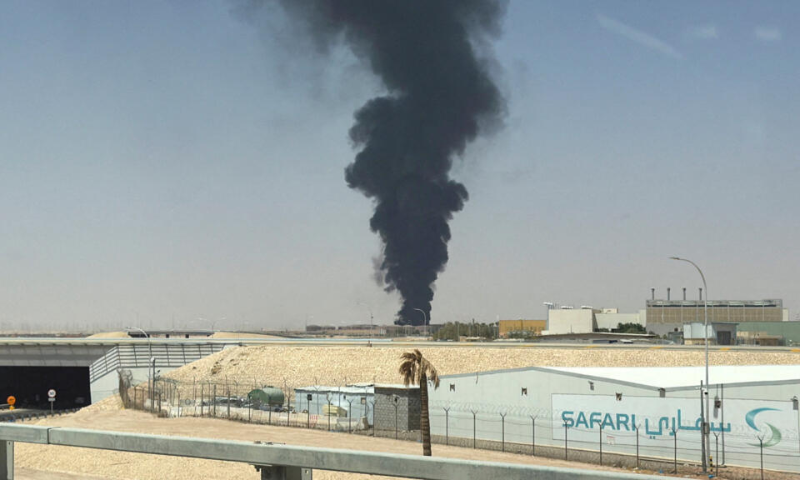
Riyadh, September 19, 2026: A large plume of smoke was seen near Riyadh’s main airport on Saturday after explosions were heard and Saudi Arabia issued overnight alerts warning residents of a potential aerial threat, amid an escalation in attacks by Yemen’s Houthi movement.
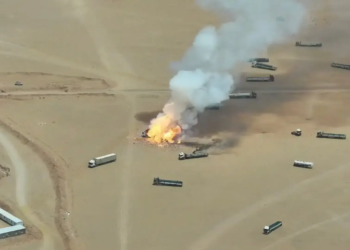
Reuters footage and photographs showed a large column of black smoke rising near the airport, with the airport highway, main terminal and other facilities visible in the foreground. Flames were also seen at one point rising from behind what appeared to be fuel tanks.
Flight-tracking website FlightRadar24 reported major disruption at King Khalid International Airport, with cancellations and delays. The airport was placed at the site’s maximum disruption level of 5.0, indicating major problems, long delays and several cancelled flights.
There was no immediate comment from the Saudi government’s media office in response to Reuters’ questions about the smoke and the overnight alerts.
Saudi Civil Defence issued phone alerts overnight warning of potential danger in Riyadh and Al-Kharj, east of the capital, before issuing an all-clear on Saturday morning.
“The area is under a hostile aerial threat,” said a message received by Riyadh residents shortly before 3am, urging them to remain indoors.
AFP journalists subsequently heard two explosions, while a Reuters journalist in Riyadh’s Olaya district also reported hearing booms before the all-clear was issued.
“I heard the alarm, then my windows shook,” a 27-year-old Riyadh resident told AFP, describing the incident as frightening.
Another resident described the incident as terrifying, saying anxiety was heightened because the all-clear did not come immediately.
Saudi Arabia has not publicly identified the source of the threat mentioned in the overnight alerts or provided details about the cause of the smoke.
Although Riyadh has received some alerts this year following the start of the US-Iran war, Saturday’s incident was reportedly the first such escalation since the Houthis intensified their campaign in July.
The incident came days after Riyadh accused the Houthis of targeting Makkah on Wednesday, describing it as a “cowardly terrorist attack” on the holy city. The Houthis denied the allegation, calling it a “worn-out lie”.
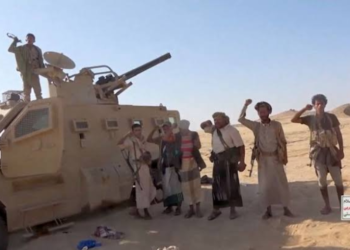
The Houthis, who control Yemen’s most populous areas and much of the north, have launched attacks towards Saudi Arabia since declaring a naval blockade against Riyadh in July, targeting Saudi-linked vessels in the Red Sea.
The attacks have raised fresh concerns over global oil supplies and maritime trade through Bab al-Mandab, a key alternative route for Gulf exports, while shipping through the Strait of Hormuz remains disrupted.
The Houthis have said their maritime campaign does not target shipping generally, but specifically Saudi-linked vessels.
On Friday, Houthi military spokesperson Yahya Saree said the group had foiled unspecified “criminal attempts” in the Yemeni capital Sanaa, blaming Saudi Arabia and vowing a response.
The group, which seized Yemen’s entire Red Sea coast in a rapid advance this month, has accused the Saudi Air Force of carrying out hundreds of airstrikes against its positions in recent days.
The UN Security Council on Friday condemned what it described as continued Houthi attacks against Saudi Arabia, including strikes affecting civilian and energy infrastructure that resulted in civilian casualties. It also condemned the group’s military escalation inside Yemen.
According to Axios, the United States last week declined a Saudi request to strike the Houthis. Washington subsequently approved a $24.3 billion sale of 48 F-35 fighter jets to Saudi Arabia, with the US State Department saying the aircraft would help the kingdom deter current and future threats.
The latest escalation comes as the Houthis strengthen their positions along Yemen’s newly captured Red Sea coastline. AFP reported that members of the group said they had been installing radar systems and digging tunnels in the area.
The United Nations said on Friday that renewed fighting had displaced more than 112,000 people, while nearly 3,000 others had crossed the sea to Djibouti.
Yemen’s war began in 2014 after the Houthis seized Sanaa and other areas, prompting a Saudi-led military intervention in March 2015.
A fragile truce reached in 2022 collapsed in July after the Houthis challenged Riyadh’s control of Yemeni airspace by allowing an Iranian aircraft to land in Yemen, according to the report.
The renewed conflict has since expanded into a wider regional security crisis, with the threat to maritime routes and energy infrastructure adding to concerns over the impact on global trade and supplies.