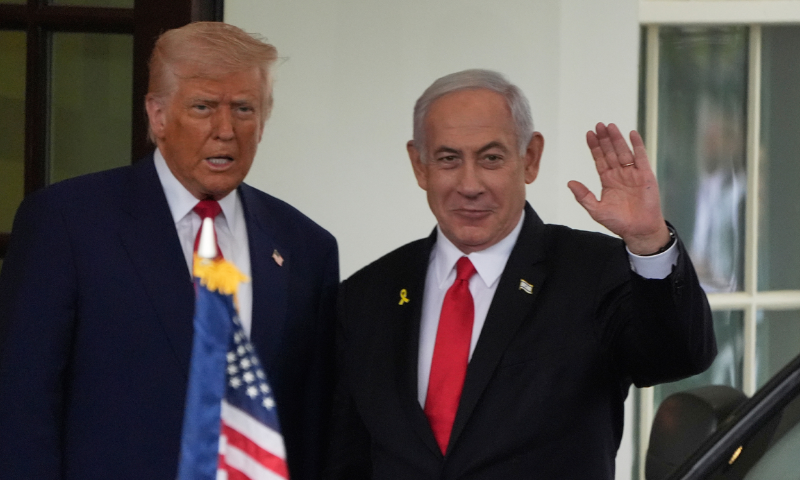
Washington, July 8, 2025: Israeli Prime Minister Benjamin Netanyahu and former U.S. President Donald Trump have reignited controversy by discussing the potential relocation of Palestinians from the Gaza Strip during a high-profile meeting at the White House on Monday.
The dinner meeting, held in the Blue Room, came as indirect negotiations between Israel and Hamas in Qatar gained some traction toward a proposed 60-day ceasefire aimed at halting the 22-month war in Gaza.
Speaking to reporters, Netanyahu claimed that the U.S. and Israel were working with other nations to offer Palestinians “a better future,” implying that residents of Gaza could be resettled abroad.
“If people want to stay, they can stay, but if they want to leave, they should be able to leave. It shouldn’t be a prison. It should be an open place and give people a free choice,” Netanyahu said, adding that talks were underway with countries willing to accept Palestinians.
Trump, who previously sparked outrage by proposing to transform Gaza into a “Riviera of the Middle East,” said “surrounding countries” were cooperating on the plan. “So something good will happen,” he remarked.
Critics have widely condemned the idea of “voluntary migration” as a form of ethnic cleansing. Legal experts argue such a move would violate international law.
“International law clearly prohibits the forced transfer of populations, both within and outside occupied territories,” said legal scholar Ralph Wilde, speaking to Al Jazeera. “Given Israel’s unlawful presence in Gaza and the West Bank, any attempt to displace Palestinians—whether labeled voluntary or not—constitutes a war crime, a crime against humanity, and potentially genocide.”
Former Israeli diplomat Alon Pinkas also warned against the proposal, calling it “a recipe for catastrophe.” He downplayed the seriousness of the proposal, suggesting it was more rhetoric than policy. “The fact that the Israeli defense minister or even the prime minister says something doesn’t mean a concrete plan exists,” he said.
Tensions between humanitarian concerns and political ambitions were evident throughout the meeting. Analysts say the discussion served dual purposes: promoting a controversial geopolitical agenda while helping both leaders reinforce domestic support.
“Much of this is about optics,” noted Al Jazeera correspondent Phil Lavelle in Washington. “Netanyahu is keen to present himself as being back in Trump’s good graces, especially amid international scrutiny and domestic pressure.”
The timing of the meeting coincided with ongoing indirect talks between Israeli and Hamas negotiators in Qatar. The proposed ceasefire deal includes the phased release of hostages and prisoners, partial Israeli troop withdrawals from Gaza, and discussions about a permanent end to hostilities.
However, key disagreements remain. Hamas demands a full Israeli withdrawal and the release of all Palestinian prisoners. Netanyahu, by contrast, insists the war will only end if Hamas disarms, surrenders, and goes into exile—conditions the group has rejected.
Despite Trump’s optimism about a breakthrough, Netanyahu appeared cautious, reaffirming his opposition to a fully sovereign Palestinian state and declaring that Israel will maintain security control over Gaza indefinitely.
Trump’s special envoy, Steve Witkoff, is expected to join the negotiations in Doha later this week. Qatari Foreign Ministry spokesperson Majed Al-Ansari warned that the talks will “need time,” with no clear timeline for a breakthrough.
In a symbolic moment during the dinner, Netanyahu handed Trump a letter nominating him for the Nobel Peace Prize—an apparent nod to the former president’s longstanding desire for global recognition.