By Muhammad Mohsin Iqbal
For a long time, Afghanistan has knowingly or unknowingly entangled Pakistan in a web woven largely at the behest of India. Since the inception of Pakistan in 1947, Afghanistan has rarely missed an opportunity to exploit vulnerabilities, often aligning itself with New Delhi in order to exert pressure on Islamabad. Though both nations are equal neighbors bound by Islamic identity and cultural affinities, their bilateral relations have been marked by discord more than harmony.
History testifies that Afghanistan was the only country to oppose Pakistan’s admission into the United Nations in 1947. This opposition stemmed from Kabul’s refusal to accept the Durand Line of 1893 as the legitimate international boundary. The line, drawn by the British between the Emir of Afghanistan and British India, divided tribes and territories, yet it was accepted as binding under international law. Pakistan inherited this boundary at independence, but successive Afghan governments contested it, leading to an undercurrent of hostility. Tensions deepened in 1949 when Afghanistan unilaterally declared that it would no longer recognize the Durand Line agreements, and in 1950 Kabul extended open support to the idea of “Pashtunistan,” fueling secessionist sentiment within Pakistan.
In 1961, relations reached a nadir when Pakistan closed its borders after repeated Afghan-backed incursions. Trade and transit were halted, and diplomatic ties were suspended, resuming only in 1963 after mediation by Iran. Yet the shadow of mistrust never lifted. The Soviet invasion of Afghanistan in December 1979 altered the dynamics altogether. Pakistan became the frontline state in supporting the Afghan resistance, hosting nearly three million Afghan refugees and providing logistic support to the Mujahideen. While Pakistan bore the social, economic, and security burdens of this prolonged conflict, gratitude from Kabul was sparse. Instead, Afghan soil became a theatre for external powers to play out their rivalries, often at the cost of Pakistan’s internal stability.
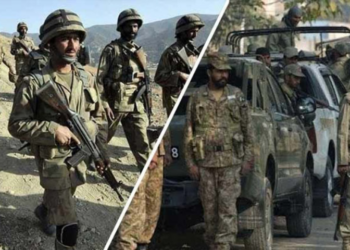
After the withdrawal of Soviet forces in 1989, the ensuing civil war in Afghanistan once again spilled into Pakistan’s territory. Later, with the emergence of the Taliban in the mid-1990s, Pakistan sought to cultivate ties for the sake of regional stability, yet the post-9/11 U.S. invasion of Afghanistan turned the country into a sanctuary for anti-Pakistan elements. Groups operating across the border conducted guerrilla-style attacks on Pakistani security forces, a bitter reminder that mistrust and conflict continued to dominate relations.
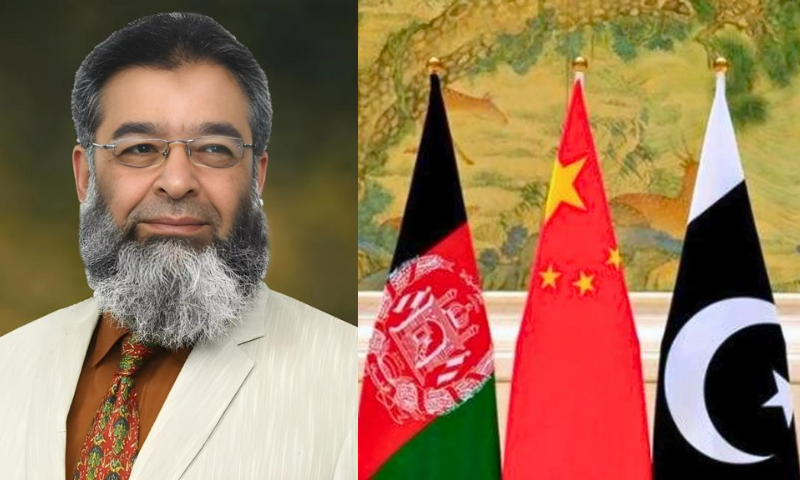
Against this turbulent history, the present regional alignment offers a new dimension. China, through its Belt and Road Initiative and particularly the China–Pakistan Economic Corridor (CPEC), has invested heavily in this region. Beijing, with its pragmatic outlook, cannot afford to see its vast capital sink amidst instability. It has therefore encouraged dialogue under a single table and a single agenda, bringing together Pakistan, Afghanistan, and China with the twin goals of peace and economic cooperation.
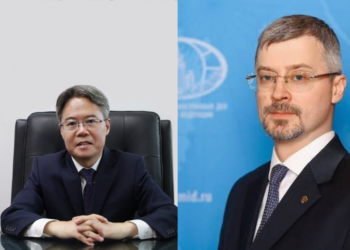
In this context, the recent meetings between the foreign ministers of the three countries deserve particular mention. Pakistan’s Foreign Minister has persistently emphasized that durable peace in Afghanistan is indispensable for regional stability and for the security of CPEC projects. His Afghan counterpart, while representing a nation long fractured by internal strife, has expressed willingness to rebuild trust and work towards a future that avoids perpetual hostility with its eastern neighbor. Meanwhile, China’s Foreign Minister has acted as a bridge, urging both sides to focus on connectivity, trade, and counterterrorism as common grounds. These trilateral ministerial dialogues have signaled not only Beijing’s commitment to safeguard its investments but also the possibility of transforming years of mistrust into constructive engagement.
At present, Pakistan finds itself in a rare position of diplomatic advantage. For perhaps the first time in decades, the United States appears to have momentarily stepped out of India’s spell, reassessing the balance of power in South Asia. Afghanistan too, weary of endless internal strife and isolation, has tilted towards China and shown readiness to sit with Pakistan for constructive dialogue. For New Delhi, this signals a gradual erosion of influence in a region it has long sought to dominate by using Kabul as a counterweight to Islamabad. In this grand game of chess, India is facing a losing battle as the board rearranges itself in favor of Pakistan’s regional diplomacy.
The course of history suggests, however, that optimism must be tempered with caution. Pakistan’s relations with Afghanistan have often oscillated between fleeting cooperation and recurring confrontation. While the present moment carries the fragrance of success, it also demands vigilant handling. For Islamabad, this is a test of how adroitly it can translate diplomatic openings into long-term gains. The lessons of history remain clear: goodwill cannot be sustained on rhetoric alone; it requires mechanisms that address core disputes, ensure equitable distribution of economic dividends, and secure borders against infiltration.
Yet the signs are encouraging. The willingness of Afghanistan to engage with Pakistan under China’s facilitation, reinforced through the direct involvement of the three foreign ministers, signals an acknowledgment that old hostilities have led neither to prosperity nor peace. If this trilateral framework succeeds, it will not only stabilize the frontier regions but also unlock the potential of trade routes connecting South Asia, Central Asia, and beyond. For Pakistan, this would mean not just security on its western border but also the prospect of becoming the economic crossroads of the region.
Time will ultimately determine how much Pakistan can benefit from this situation. The challenge is to convert tactical successes into strategic permanence, ensuring that the sacrifices of the past yield dividends for future generations. For now, however, Pakistan stands on firm ground, its flag raised high in regional diplomacy, and the door to a new chapter in its fraught relationship with Afghanistan appears, at long last, to be opening.