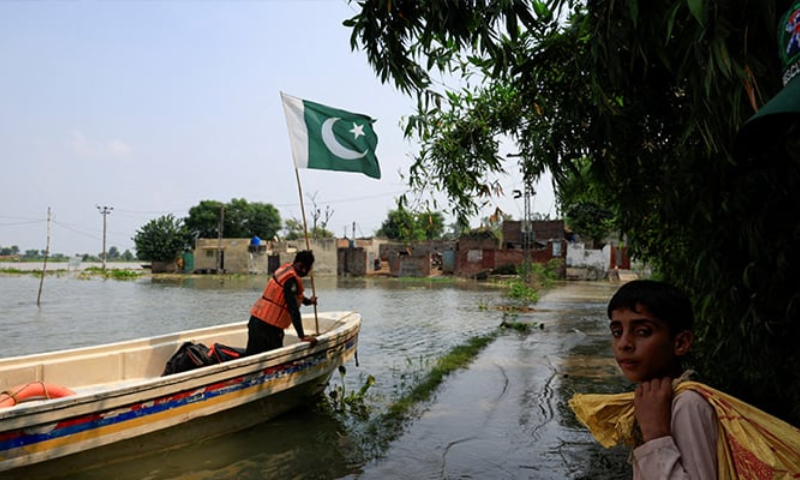
Islamabad, August 26, 2025: Nearly 150,000 people have been evacuated to safer locations after the National Disaster Management Authority (NDMA) issued warnings over rising waters in the Sutlej and Ravi rivers, triggered by heavy rainfall and India’s release of water into both streams.
Authorities cautioned that flooding could intensify in adjoining districts as water levels continue to swell. Acting on early alerts, the Provincial Disaster Management Authority (PDMA) Punjab launched large-scale evacuation drives in vulnerable areas, relocating tens of thousands from Bahawalnagar, Kasur, Okara, Pakpattan, Bahawalpur, and Vehari. Hundreds of riverbank villages have already been cleared.
According to the NDMA, around 40,000 people had shifted voluntarily soon after the first advisories. Emergency response teams have been deployed, while all relevant departments remain on high alert. Citizens have been urged to avoid rivers, low-lying areas, and unnecessary travel, and to follow safety instructions broadcast via television, radio, mobile alerts, and the NDMA Disaster Alert app.
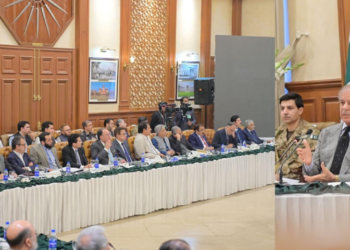
Punjab Chief Minister Maryam Nawaz Sharif on Monday directed authorities to ensure timely evacuation of stranded residents in anticipation of incoming flood torrents.
The NDMA reported that the Sutlej is at a “very high flood” stage at several points, with other stretches facing high to medium-level flooding. The Ravi is witnessing medium floods at some sites and low-level rises elsewhere, with its tributaries — Basantar, Bein, and Deg — also in low to medium flood.
The Indus River is experiencing medium flooding at Sukkur and low flooding at Kalabagh, Chashma, Guddu, and Kotri barrages. The Chenab is in low flood at Head Marala, while the Jhelum, Kabul, and Nari rivers remain normal. Hill torrents in the Suleman Range and Dera Ghazi Khan are currently inactive.
Reservoirs are filling rapidly, with Tarbela almost at full capacity and Mangla nearing the same. Smaller dams, including Khanpur, Rawal, and Simly, are also reporting rising water levels.
Authorities in Punjab have instructed commissioners and deputy commissioners in Lahore, Sahiwal, Multan, Bahawalpur, and Dera Ghazi Khan to remain vigilant. Mosque announcements are urging residents to relocate, while relief camps and fodder facilities for livestock have been established.
The latest flood warnings follow two official communications from New Delhi this week, informing Islamabad of water discharges. India’s Madhopur Headworks has already increased inflows into the Ravi, while releases into the Sutlej have inundated parts of southern Punjab. An Indian source, however, did not specify the dams involved.
Diplomatic sources said India’s High Commission in Islamabad conveyed the alerts on “humanitarian grounds” rather than through the Indus Waters Commission, as required under the 1960 Indus Waters Treaty (IWT). This comes after New Delhi unilaterally announced in April that the treaty was being placed in “abeyance” following an attack on tourists in Indian Illegally Occupied Jammu and Kashmir (IIOJK) — an allegation Pakistan rejects.
The suspension of the treaty escalated bilateral tensions, culminating in the most serious military clash in decades this May before a US-brokered ceasefire. Reuters reported that India is also weighing projects to curb water flows into Pakistan, raising further alarm in Islamabad.
Pakistan has already been battered by severe monsoon flooding this year, with 799 deaths reported since late June. The northwest accounts for nearly half the casualties, while Gilgit-Baltistan has seen accelerated glacial melting and Karachi was partially submerged last week.
In IIOJK, heavy rains this month have killed at least 60 people, while nearly 400 have died in northwestern Pakistan alone. The NDMA has warned of more downpours until September 10.
The Foreign Office on Monday termed India’s unilateral suspension of the IWT a “serious breach of international law” with dangerous implications for regional peace. It emphasized that New Delhi remains bound to fully comply with the treaty, which was brokered by the World Bank in 1960.
Under the pact, the three eastern rivers — Sutlej, Beas, and Ravi — were allocated to India, while Pakistan received rights over the western rivers — Indus, Jhelum, and Chenab. Crucially, the treaty has no provision allowing either side to suspend it unilaterally.
Pakistan has warned that any disruption of water flows threatens its agriculture and hydropower, while India insists the treaty will not be restored unless Islamabad renounces support for cross-border militancy.